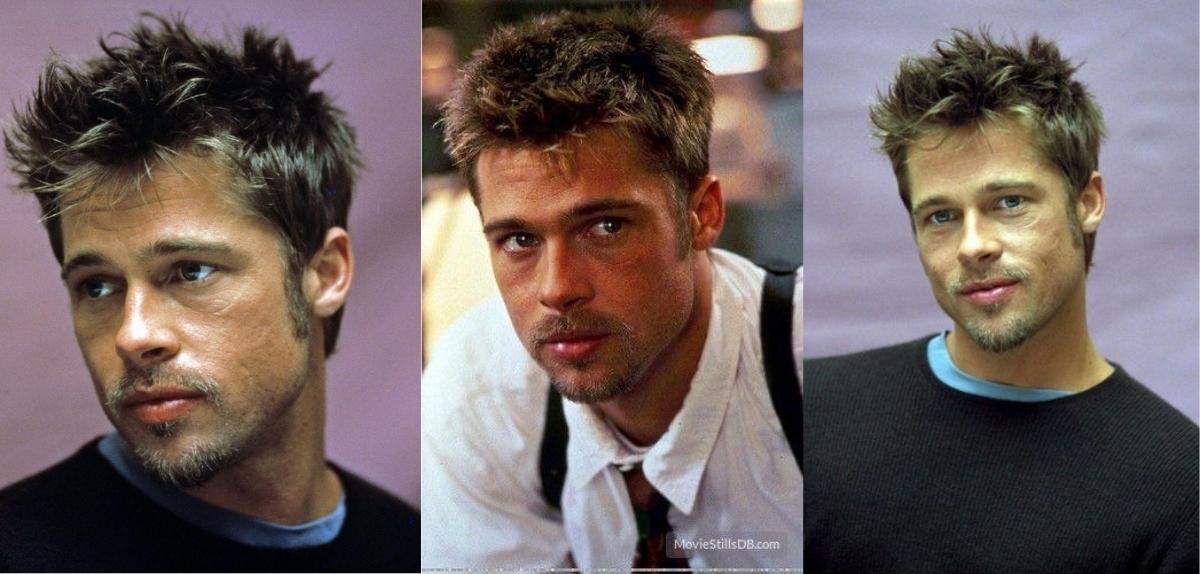
Tyler Durden’s hair has been copied, misunderstood, and butchered in barbershops for over two decades. Most people remember it as “short and messy,” but that description barely scratches the surface. The reason it works has less to do with length and more to do with texture, restraint, and knowing when to stop styling.
I’ve seen this cut done right maybe one out of ten times. When it’s wrong, it’s usually too clean, too shiny, or trying too hard. When it’s right, it looks accidental. Like Brad Pitt didn’t sit still long enough for anyone to finish.
This guide breaks it down the way a good barber would—plain language, no fluff, no trend-chasing.
What Defines the Tyler Durden Haircut?

The Fight Club haircut lives in a weird in-between space. It’s not a buzz cut, and it’s not a styled crop either. The top is usually 1–2 inches long, cut with choppy layers and softened with point or razor cutting. The sides are short but not aggressively faded. No hard lines. No polish.
The finish is dry, gritty, and slightly uneven. Think grown-out buzz cut meets 90s grunge. If it looks freshly washed or symmetrical, it’s off.
This style works best on straight or slightly wavy hair. Very curly hair can still pull it off, but it needs more length and less product. Thinning hair works too, as long as the cut is light and layered—heavy product will only expose gaps.
Step 1: Nail the Cut Before You Touch a Product
If you remember one thing, remember this: styling cannot fix a bad cut.
When you sit in the chair, avoid showing a single photo and staying quiet. Say what you want:
- A textured crop with visible movement
- Choppy layers, not blended smooth
- Point cutting or razor work on top
- Short sides, but not skin fades or sharp tapers
A barber who understands this look will keep it slightly rough. If they start detailing the hairline too much, stop them.
If you walk out looking “clean,” you’ve already gone too far.
Step 2: Start Dirty (Even If Your Hair Is Clean)
Tyler Durden’s hair never looks soft—and that’s intentional.
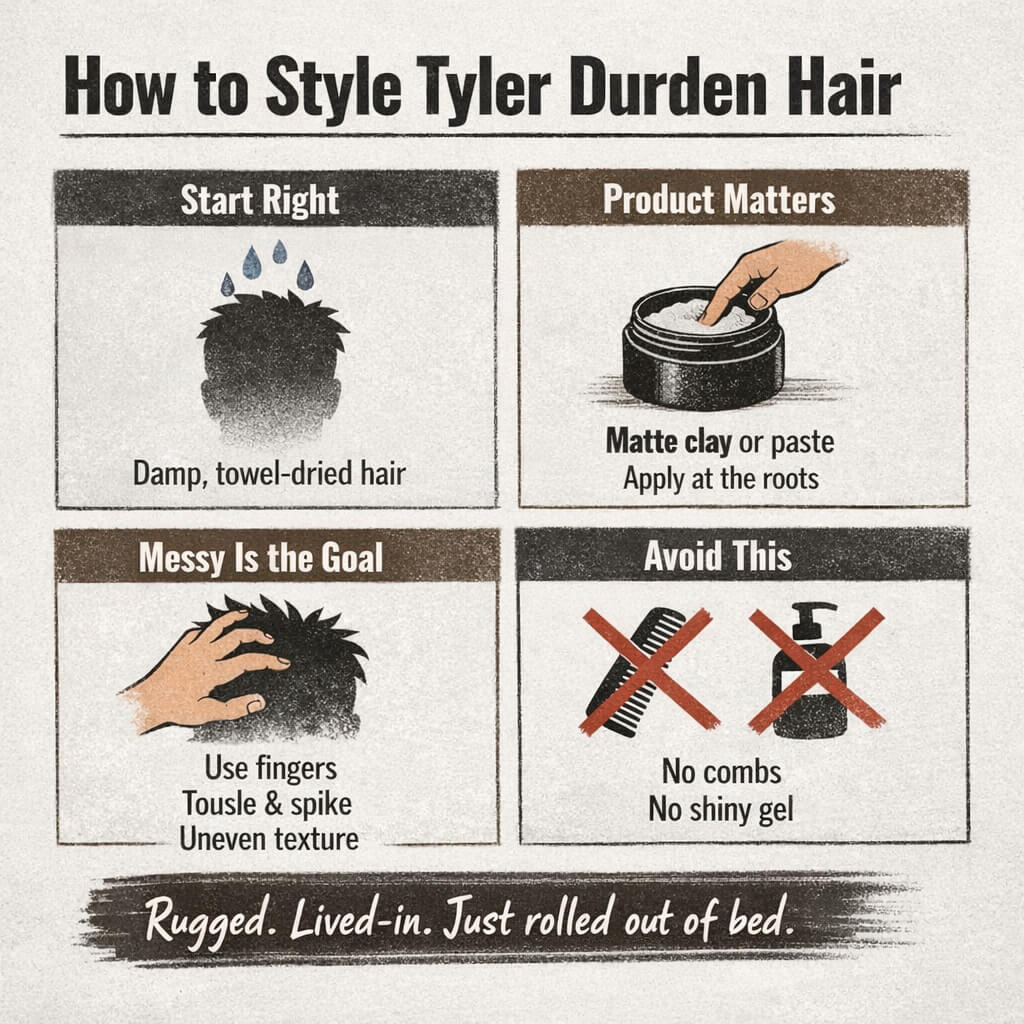
On damp hair, spray a sea salt spray evenly from roots to ends. This creates the dry, gritty base that gives the hair structure. If your hair is freshly washed and feels too smooth, add a light dusting of dry shampoo at the roots. It’s a trick a lot of stylists use but rarely admit.
Avoid anything shiny. Pomades, creams, and gels will instantly ruin the effect.
Step 3: Rough Dry for Natural Chaos
This step is where most people accidentally over-style.
Use a blow dryer on medium heat and dry your hair with your hands only. No brushes. No shaping. Just scrunch, push, and lift as it dries.
Focus on root lift, especially at the crown. Let the hair fall where it wants. If one side sticks up and the other doesn’t, leave it alone.
Stop drying at about 90%. Over-drying kills texture and makes the hair look flat and intentional.
Step 4: Build Separation with Matte Hold
Now you add structure—but lightly.
Take a pea-sized amount of matte clay, paste, or fiber wax. Warm it in your palms and apply it by pinching and twisting random sections of hair. You’re creating piecey separation, not spikes you could measure with a ruler.
This is where the famous “soap spike” comes from—thin, broken-up strands that stand slightly apart.
If your hair falls flat by midday, a small amount of volumizing powder at the roots adds lift without stiffness.
Step 5: Mess It Up Until It Looks Right
This is the most important step, and it’s the one most tutorials skip.
Once the hair looks finished, ruin it. Run your hands through it. Push it forward, then back. Flatten one side slightly. Tyler Durden’s hair never looks like it was styled carefully—and that’s why it works.
If it looks too deliberate, add more salt spray or dry shampoo and scrunch again. You want it to feel a little wrong. A little lived-in.
How to Maintain the Look Without Overdoing It
- Wash your hair less often (every 2–3 days works for most people)
- Get it trimmed every 4–6 weeks to keep the shape without cleaning it up
- Replace product buildup with dry shampoo instead of rewashing
This style actually looks better on day two or three. If it looks its best right after a shower, something’s off.
The Cut Is Half the Style

Tyler Durden’s hair isn’t just a haircut—it’s an attitude. It sits comfortably inside 90s grunge, masculine grooming, and anti-establishment style, but it only works if you resist the urge to perfect it.
Don’t chase symmetry. Don’t chase shine. And don’t fix what doesn’t need fixing.
If someone tells you your hair looks like you didn’t try very hard, you nailed it.