Dr. Martin Luther King Jr. stood before cameras, microphones, and crowds of thousands with a consistent, polished appearance. Every photograph tells the same story: a man whose grooming was as deliberate as his words. So what haircut did Martin Luther King have?
He wore a low taper with a short, natural top and a groomed thin mustache. It was a conservative, professional version of the “Regular” or “Business” cut common for African American men in the 1950s and 1960s. This style became a quiet but powerful part of his public identity throughout the Civil Rights era.
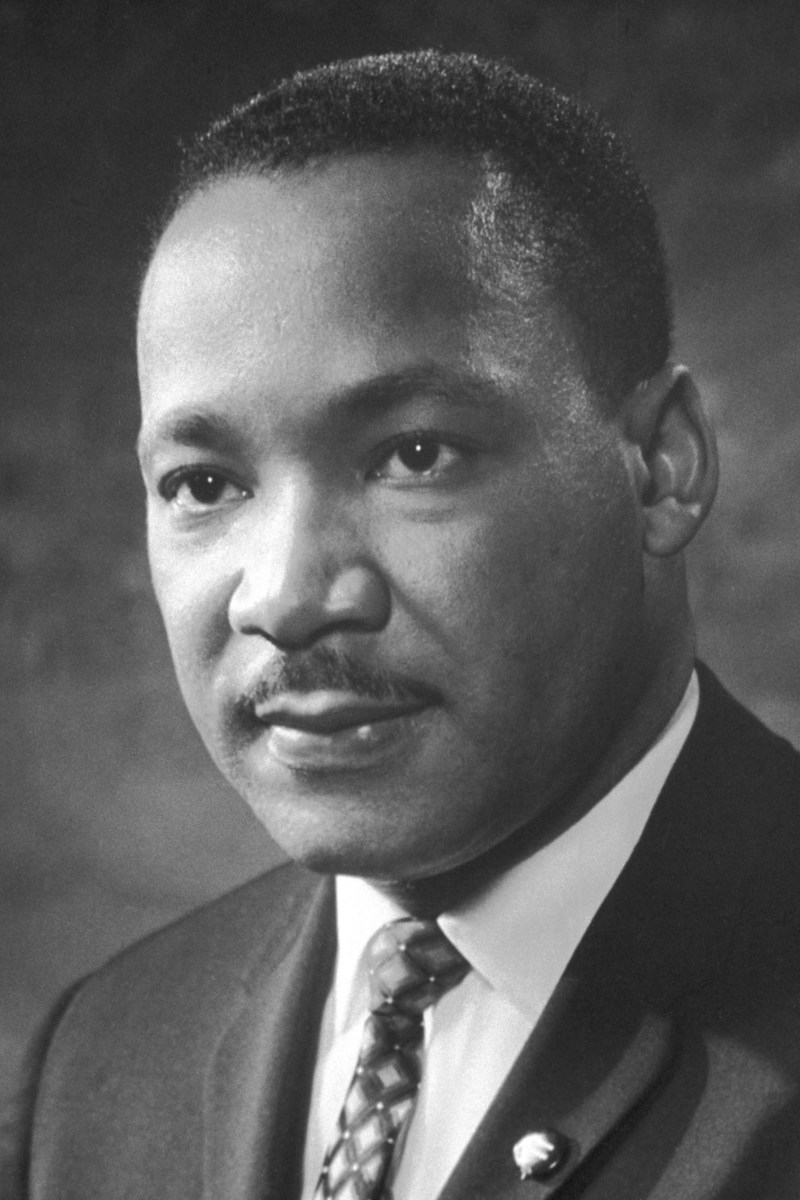
Dr. Martin Luther King Jr., showing his signature tapered haircut and thin mustache. Source: Wikimedia Commons (Public Domain)
Anatomy of the MLK Haircut
Understanding Dr. King’s haircut means looking at it piece by piece. Each element served a purpose and reflected the grooming standards of his time.
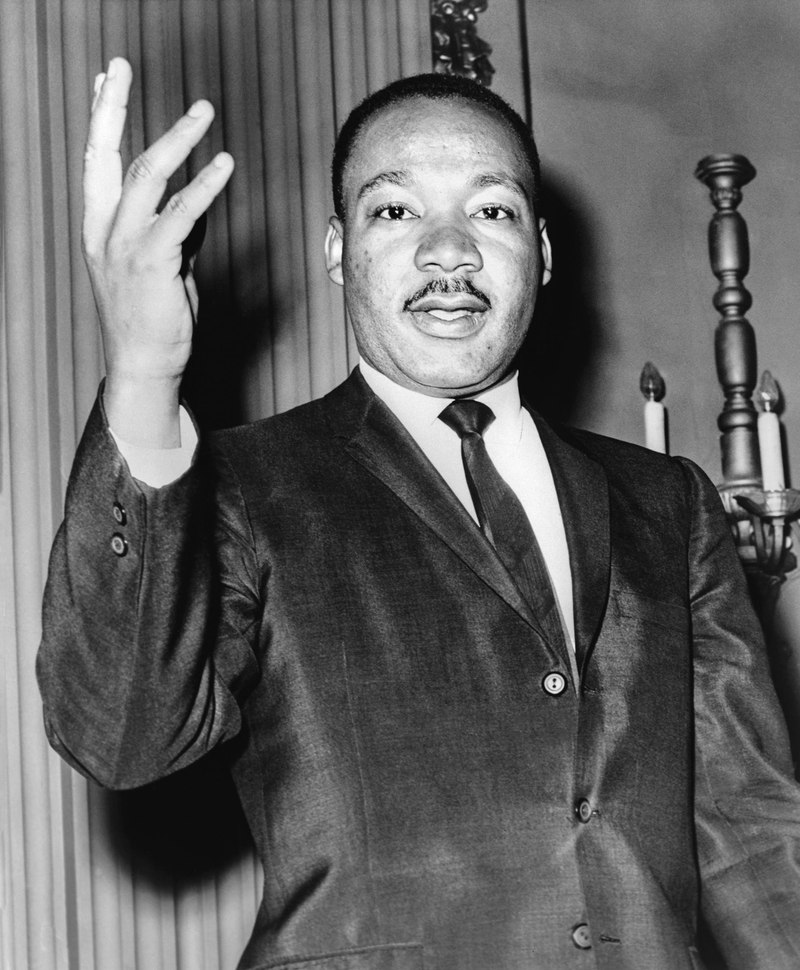
Martin Luther King Jr. portrait showing the overall structure of his classic tapered haircut. Source: Wikimedia Commons (Public Domain)
The Sides: The Gradual Taper
The sides of Dr. King’s haircut featured a gradual taper. Hair shortened in steps toward the ears and neckline. This was not the skin-tight fade popular in modern barbering.
Instead, the taper left a subtle gradation of length. The hair at the temples and nape was shorter but never shaved to the skin. This created a clean, rounded silhouette that looked neat from every angle.
In 1960s barbering terminology, this was simply called a “taper.” Today, barbers would classify it as a low taper with about a number two guard at the shortest point.
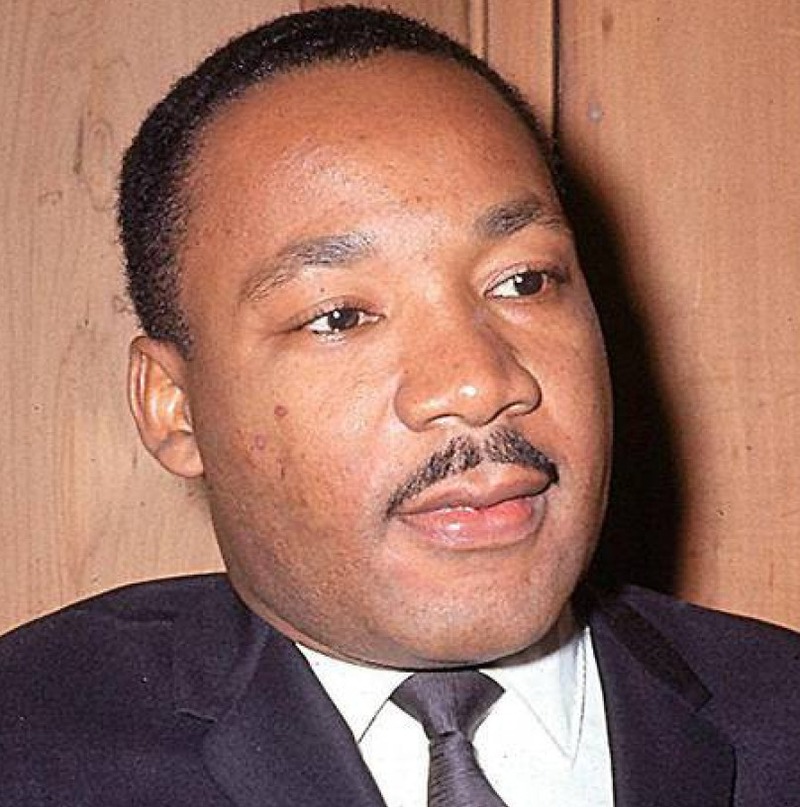
Color portrait of Dr. King showing the gradual taper on the sides. Source: Wikimedia Commons (Public Domain)
The Top: Natural Texture, Uniform Length
The top of Dr. King’s hair was kept at a uniform short length. Based on photographic evidence, the length ranged between one-half inch and one inch.
He wore his hair in its natural texture without chemical straightening. This detail matters. During the 1950s and 1960s, many African American men used chemical relaxers or “conk” treatments to alter their hair texture.
Dr. King chose to keep his hair natural and unprocessed. The top was combed neatly, usually with a subtle part on the left side. The overall effect was tidy, controlled, and professional.
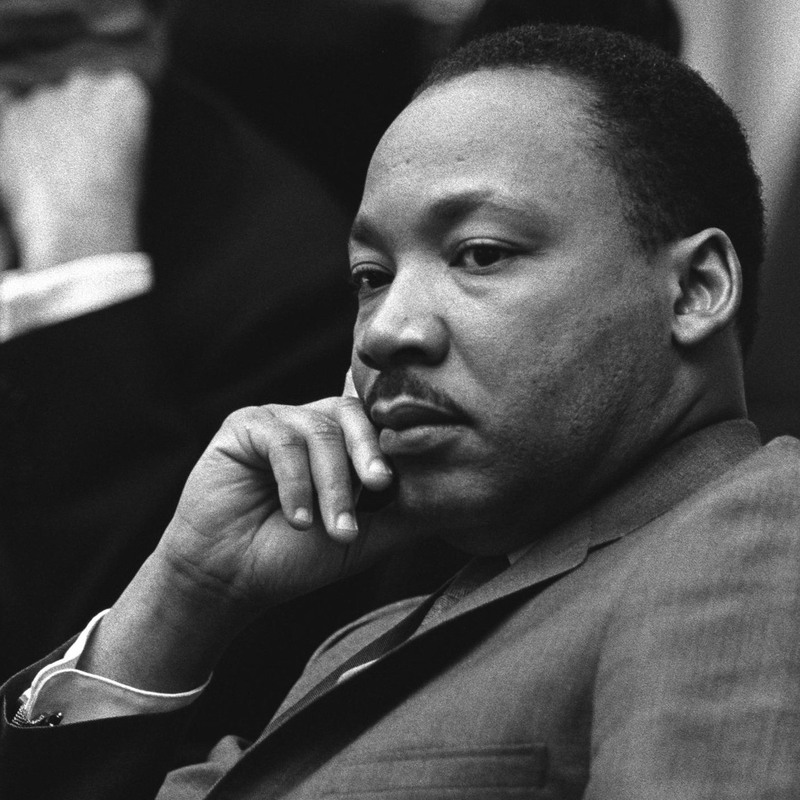
Close-up portrait of Dr. King showing natural hair texture on top. Source: Wikimedia Commons (Public Domain)
The Lineup: A Softer, Hand-Finished Perimeter
Modern haircuts often feature razor-sharp edge-ups and crisp lineup work along the hairline. Dr. King’s cut had none of that.
His hairline followed a natural, hand-finished perimeter. The edges were tidy but not carved into geometric precision. This was the standard of the era.
Clippers and trimmers were used to maintain the outline, but the result was softer and more organic. The absence of hard lines gave his cut a timeless, understated quality that suited his public role.
The Mustache: “Make It Like a Butterfly”
You cannot discuss Dr. King’s grooming without mentioning his signature thin mustache. It was narrow, well-defined, and sat just above his upper lip.
His longtime barber, Nelson Malden, styled it personally. Malden recalled that Dr. King would give specific instructions: “Make it like a butterfly.”
This meant the mustache was trimmed with slightly flared corners at the edges, resembling outstretched wings. The detail speaks to the care Dr. King put into his appearance. Even a small grooming choice was intentional and precise.
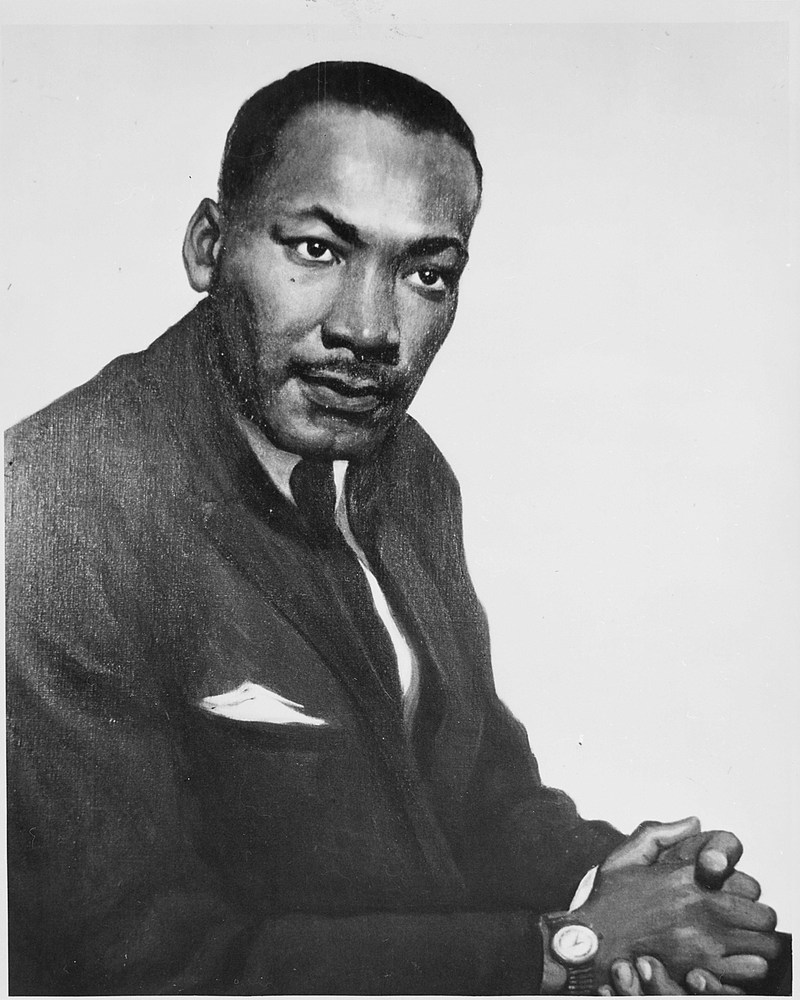
Dr. King showing his signature thin mustache, styled with slightly flared “butterfly” corners. Source: NARA/Wikimedia Commons (Public Domain)
The Cultural Significance of His Grooming
Dr. King’s haircut was not just a personal preference. It was a calculated part of his public image during one of the most important social movements in American history.
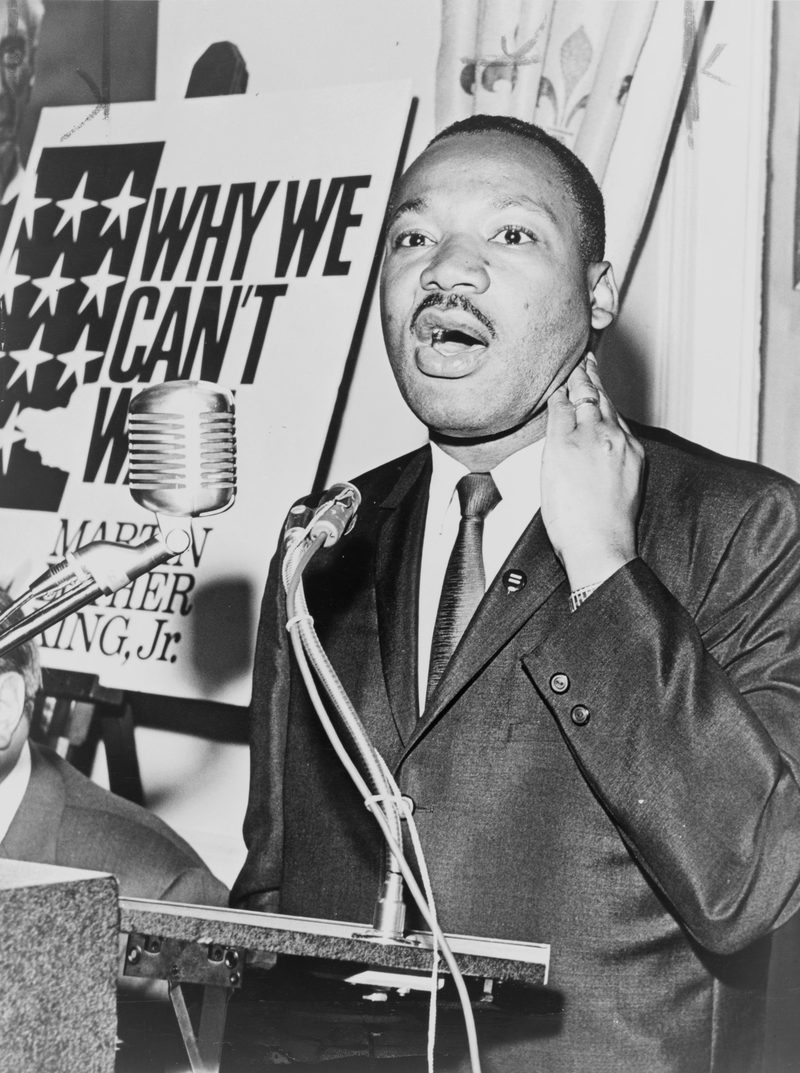
Dr. King in formal attire at a press conference, his conservative grooming projecting professionalism. Source: Wikimedia Commons (Public Domain)
Respectability Politics and the Civil Rights Stage
In the 1950s and 1960s, African American leaders faced intense scrutiny from white media, political opponents, and the global public. Every detail of their appearance was judged.
Conservative grooming was a strategic choice within what scholars call “respectability politics.” By presenting himself with a clean, conventional haircut and a trimmed mustache, Dr. King projected dignity, competence, and professionalism.
This was not about conforming for its own sake. It was about removing any visual excuse for dismissal. The Civil Rights Movement needed to be taken seriously on the world stage.
Dr. King’s appearance reinforced the seriousness of his message. A disheveled or unconventional look would have given critics ammunition to distract from the cause. His grooming became a form of silent advocacy.
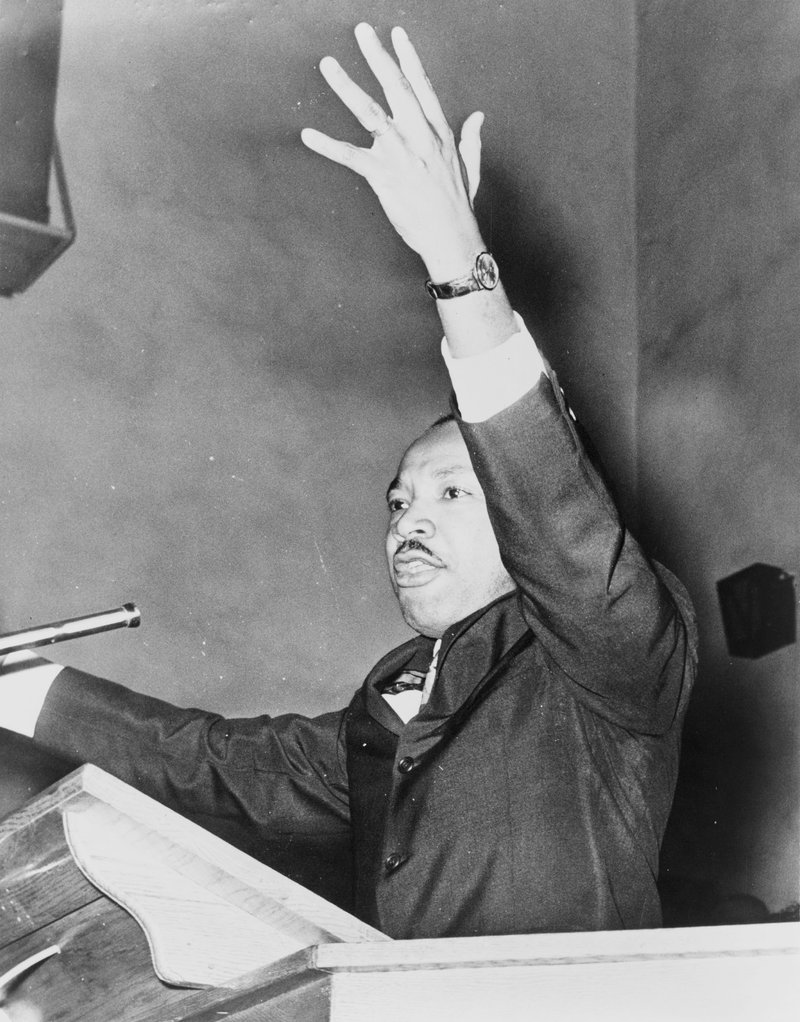
Dr. King speaking at a podium, his polished appearance reinforcing the movement’s dignity. Source: Wikimedia Commons (Public Domain)
How MLK’s Style Stood Apart From the Conk and the Afro
The 1960s were a turning point for Black men’s grooming in America. Two other dominant styles defined the era, and Dr. King’s cut stood in deliberate contrast to both.
The conk, also called the “process,” involved chemically straightening hair with a lye-based cream. It was popular among musicians like Little Richard, James Brown, and Chuck Berry. The conk made a bold visual statement but carried associations with entertainment rather than the professional world.
The Afro emerged in the late 1960s as a symbol of Black pride and the Black Power movement. It celebrated natural hair in its full, untrimmed form. Leaders like Angela Davis and Stokely Carmichael wore the Afro as a political declaration.
Dr. King’s cut occupied a deliberate middle ground. He wore his hair natural, aligning with authenticity, but kept it short and conservative. This positioned him as a bridge figure: polished enough for mainstream audiences, natural enough to be genuine.
His grooming was neither a rejection nor an embrace of the era’s polarized style choices. It was its own statement of measured, purposeful dignity that matched his philosophy of nonviolent resistance.
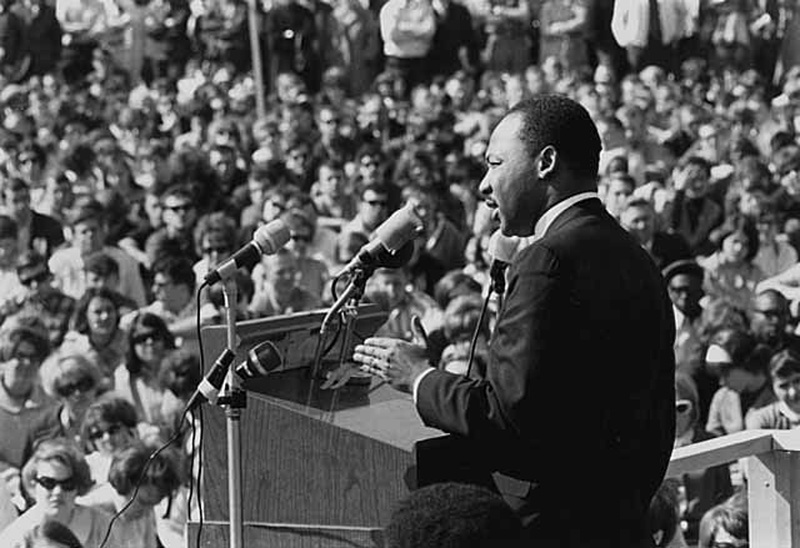
Dr. King addressing a crowd, his natural short hairstyle contrasting with era trends. Source: Wikimedia Commons (CC BY-SA 2.0)
The Man Behind the Chair: Nelson Malden, Dr. King’s Barber
The story of Dr. King’s haircut is incomplete without Nelson Malden. Malden was Dr. King’s barber from 1954 to 1960. He operated the Malden Brothers Barber Shop on the first floor of the Ben Moore Hotel in Montgomery, Alabama.
The shop became more than a place for haircuts. It served as a safe haven for Civil Rights leaders during the Montgomery Bus Boycott and beyond. Malden watched the boycott unfold from his shop window.
His oral history, recorded by the Smithsonian’s National Museum of African American History and Culture, provides firsthand accounts of those years. Malden recalled cutting Dr. King’s hair every two weeks.
He described the future Nobel laureate as a regular, unpretentious client who simply wanted a clean, neat cut. The relationship between barber and client spanned the most consequential years of Dr. King’s public life in Montgomery.
After 1960, Dr. King relocated to Atlanta, but the legacy of Malden’s craftsmanship remained visible in every photograph from the Montgomery years. The Malden Brothers Barber Shop continued operating as a historic Montgomery landmark.
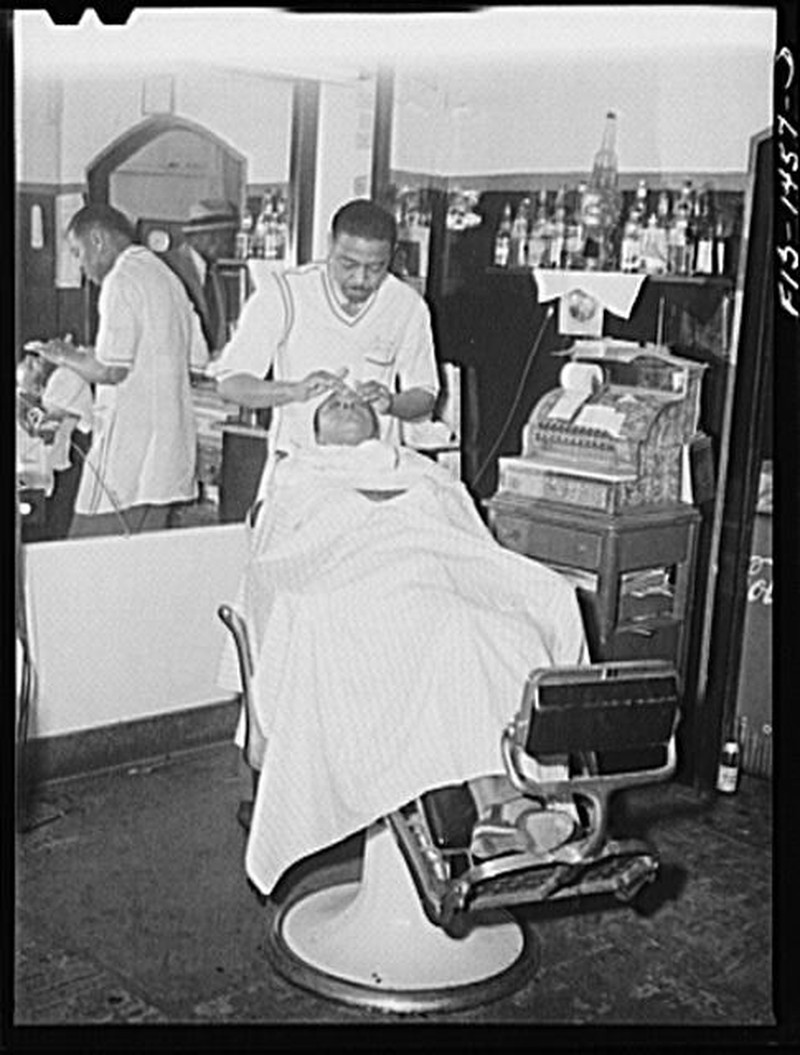
A vintage African American barbershop scene, illustrating the community setting where grooming and activism intersected. Source: Library of Congress/Wikimedia Commons (Public Domain)
How to Ask Your Barber for the MLK Cut Today
Want to recreate Dr. King’s iconic look? Here is exactly what to tell your barber:
- Ask for a low taper on the sides. Specify that you do not want a skin fade. The taper should be gradual, with the shortest point at a number two guard.
- Keep the top natural at about one-half to one inch in length. No texturizing, no thinning shears. Uniform length across the crown.
- Request a natural hairline. No hard edge-up or sharp corners. The perimeter should follow your natural growth pattern.
- For the mustache, ask for a thin, narrow style with slightly flared edges. Tell your barber about the “butterfly” shape for the corners.
- Skip all chemical treatments. This style works best with natural hair texture.
- Comb with a subtle left-side part for the most authentic result.
This cut works well for men with coily or kinky hair types. It is low maintenance and looks professional in any setting. A visit every two to three weeks keeps the taper clean and the top even.
The style also pairs well with business attire and formal occasions. It is a reminder that classic grooming never goes out of fashion, and that sometimes the most powerful statement is understated elegance.
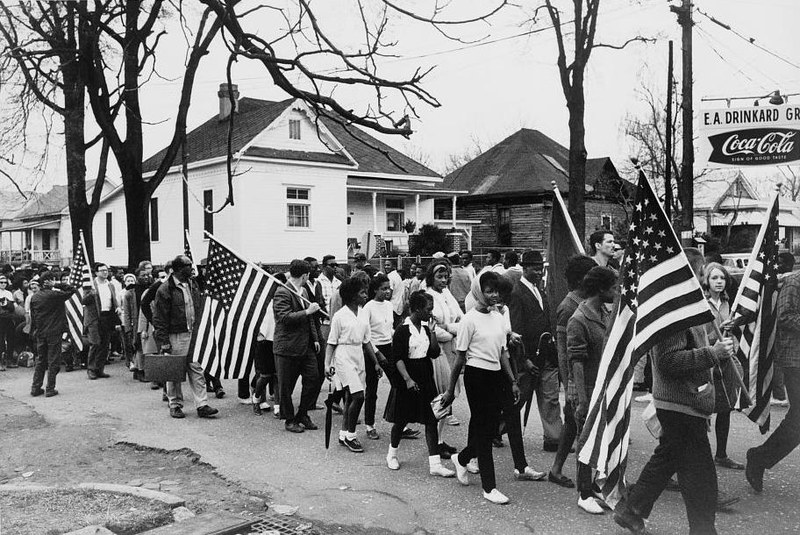
Selma to Montgomery marchers in 1965, demonstrating the dignified appearance of Civil Rights activists. Source: Wikimedia Commons (Public Domain)
Frequently Asked Questions
What type of haircut did Martin Luther King Jr. have?
Dr. King wore a low taper with a short, natural top. It was a conservative, professional style common among African American men in the 1950s and 1960s. The sides gradually shortened toward the ears and neckline without reaching skin level.
Did Martin Luther King have a fade?
Not in the modern sense. Dr. King’s haircut featured a gradual taper, which is different from today’s skin fades. His sides were shortened in steps but always maintained some hair length. The result was clean and rounded, not shaved tight to the scalp.
Who was Martin Luther King’s barber?
Nelson Malden was Dr. King’s barber from 1954 to 1960. He operated Malden Brothers Barber Shop in Montgomery, Alabama. The shop was located in the Ben Moore Hotel and served as a gathering place for Civil Rights leaders during the Montgomery Bus Boycott.
Did MLK chemically straighten his hair?
No. Dr. King wore his hair in its natural texture. This distinguished him from many prominent Black men of the era who used conk treatments or chemical relaxers. His natural style was both a personal choice and a reflection of his professional image.
What did MLK tell his barber about his mustache?
Dr. King instructed his barber, Nelson Malden, to trim his mustache “like a butterfly.” This meant the corners were slightly flared outward, giving the mustache a subtle wing-like shape at the edges. The style became one of his most recognizable features.
Why did Martin Luther King keep a conservative hairstyle?
Dr. King’s conservative grooming was tied to respectability politics. Civil Rights leaders needed to project dignity and professionalism to a global audience. A polished appearance removed visual excuses for dismissing the movement and reinforced the seriousness of the cause.