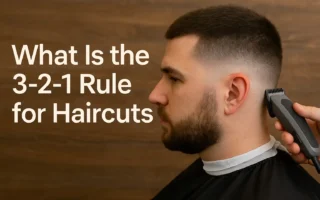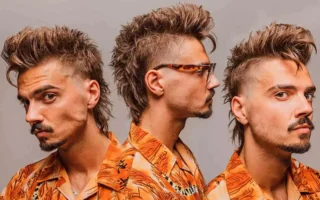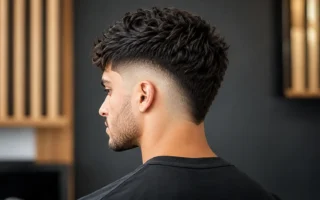
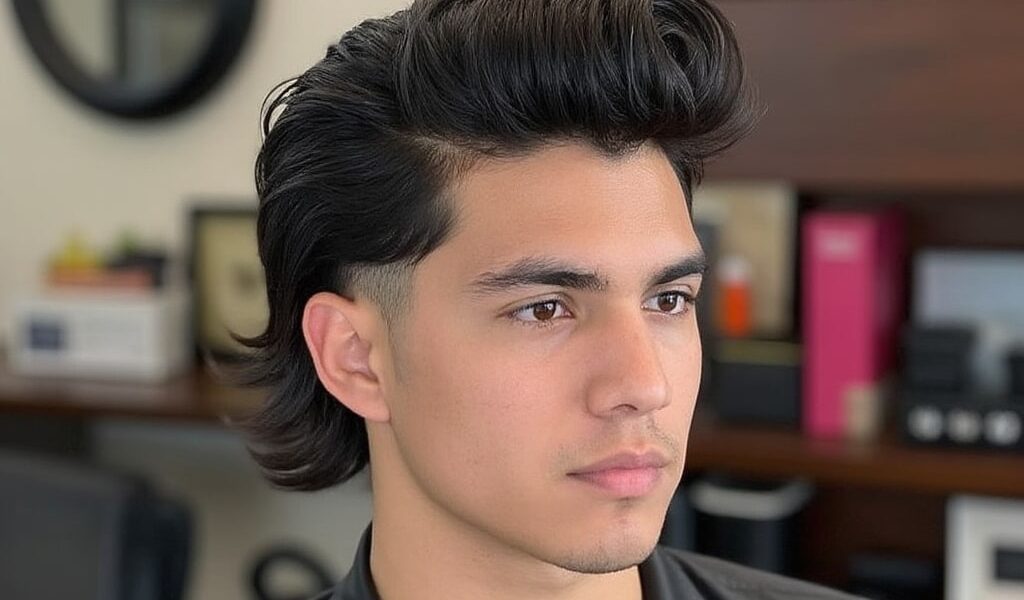
Looking for a hairstyle that’s sharp on the sides but still full of personality? The low taper mullet gives you exactly that. With its neat edges and longer back, it’s a style that works across hair types, lengths, and face shapes. Whether you’re just exploring ideas or ready to sit in the chair, this guide breaks down 20 variations so you’ll know what to ask for and how to style it once you leave the barber.
Low Taper Mullets by Hair Type
1. Straight Hair Low Taper Mullet
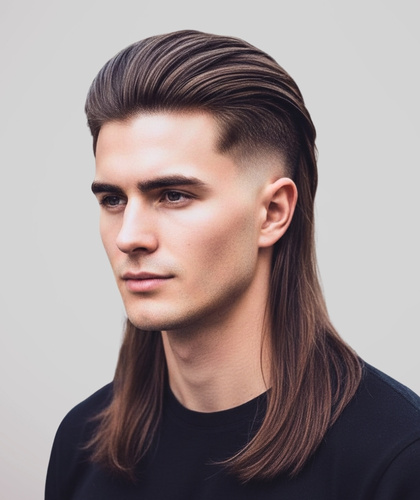
This version is clean and classic. The sides and neckline taper low for a sharp outline, while the straight hair on top and back gives a smooth, flowing finish.
Best for: Straight or fine-to-medium hair and face shapes that benefit from a balanced, elongated look (oval or square).
How to ask your barber: “I’d like a low taper around the ears and neckline, keeping length at the back. Add light layering on top so it flows naturally.”
Styling tip: Blow-dry with a brush for shape, then finish with a matte clay or lightweight wax for hold. A trim every 4–6 weeks will keep the taper sharp without losing length in the back.
2. Wavy Hair Low Taper Mullet

The wavy version of the low taper mullet shows off natural bends and texture while keeping the outline tidy. The taper sits low on the sides and neckline, giving just enough polish so the waves take center stage.
Best for: Men with naturally wavy or medium-density hair. Works especially well for oval or round face shapes that need extra movement and shape on top.
How to ask your barber: “Keep a low taper at the sideburns and neckline, with longer layers through the crown and back to encourage my natural wave.”
Styling tip: Use sea-salt spray on damp hair and scrunch while drying to enhance natural texture. A diffuser helps if you want more defined waves. Finish with a light cream or mousse to keep things soft but controlled.
3. Curly Hair Low Taper Mullet
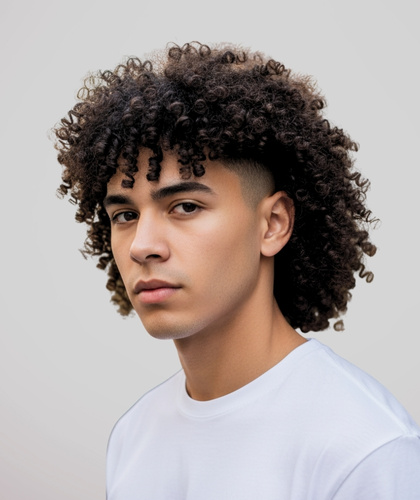
This mullet keeps curls full and bouncy while the taper frames the face neatly. The low taper at the sideburns and nape adds definition without cutting away too much volume.
Best for: Men with type 2C–3C curls. It’s a strong choice for wider cheekbones or oval faces.
How to ask your barber: “I’d like a low taper at the temple and neckline, but please keep the curl length in the back. Add layers that enhance curl shape.”
Styling tip: Use a curl cream with a light gel on damp hair, then air-dry or diffuse. Refresh curls with a spray bottle of water between washes.
4. Coily Hair Low Taper Mullet
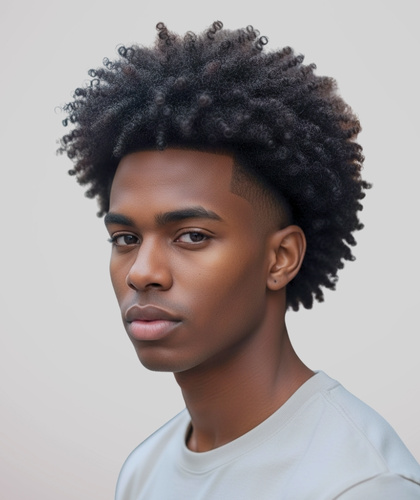
Bold coils paired with a clean taper at the temples and neckline give a sharp contrast while keeping natural volume intact.
Best for: Type 4 coils, angular face shapes, and men who want a standout look that still feels polished.
How to ask your barber: “Give me a low taper at the temple and neckline, shape the overall silhouette, but leave the length and fullness in the back.”
Styling tip: Use a leave-in conditioner with a light oil to keep coils hydrated. Twist-outs or sponge styling add definition without losing fullness.
5. Fine Hair Volume-Boost Low Taper
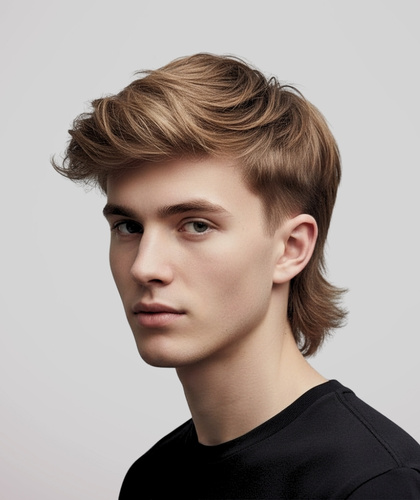
The goal here is to add body so fine hair doesn’t fall flat. Layers on top build lift, while the taper gives a neat edge.
Best for: Straight or fine hair types and narrow faces that benefit from added fullness.
How to ask your barber: “Low taper at the sides and back, with layered texture on top to boost volume. Keep the back longer but not thin.”
Styling tip: Apply volumizing mousse before blow-drying with a round brush. Use a matte paste to hold shape without weighing it down.
6. Thick Hair De-Bulked Low Taper
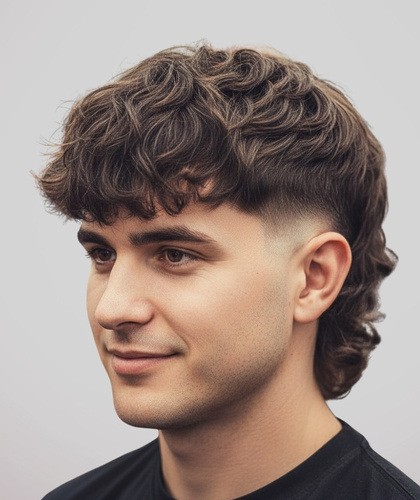
Dense hair can feel heavy, but this cut removes bulk inside while keeping length and shape. The taper keeps the outline tidy.
Best for: Men with very thick or dense hair, especially those with round or triangular face shapes.
How to ask your barber: “I’d like a low taper with internal debulking—please thin the inside layers but keep the mullet length intact.”
Styling tip: Use a medium-hold cream to manage bulk. Apply anti-frizz serum through mid-lengths and ends for a smoother finish.
Low Taper Mullets by Length & Style
7. Short Low Taper Mullet
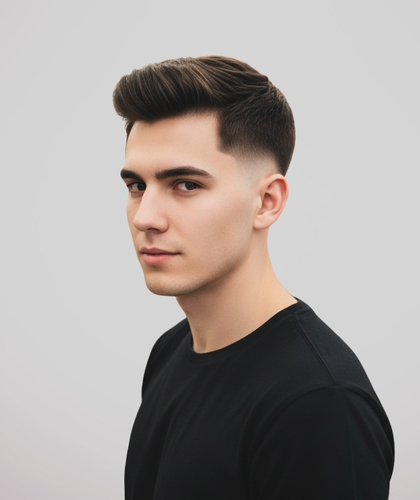
This is the easiest entry point into the mullet world. It keeps the tail short and compact while the taper adds polish.
Best for: First-timers, busy men, and anyone who wants low effort.
How to ask your barber: “Give me a short mullet with a low taper—keep just a hint of length in the back.”
Styling tip: A touch of matte clay is enough. Mist with water in the morning to reshape quickly.
8. Medium Everyday Low Taper Mullet
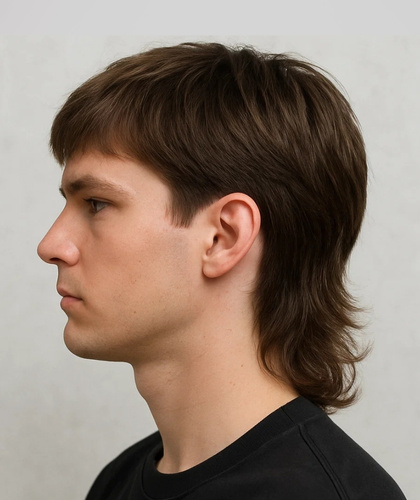
Balanced length and flow make this style versatile. It’s long enough to look edgy but still neat for daily wear.
Best for: Most face shapes and hair types.
How to ask your barber: “Low taper around the edges, keep medium layers on top, and let the back sit just at the collar.”
Styling tip: Use sea-salt spray for natural texture, then add a light cream for control.
9. Long Flow Low Taper Mullet
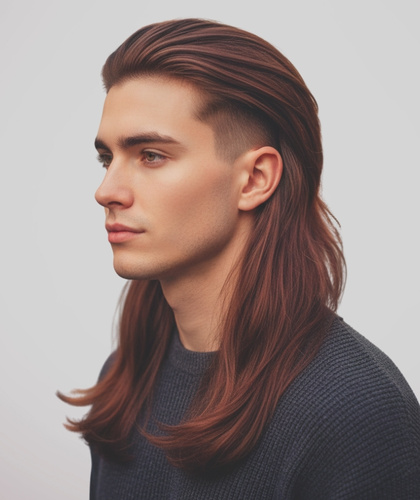
This one’s for drama. It features a long, flowing tail with crisp edges from the taper.
Best for: Men with straight or wavy hair who want a bold look.
How to ask your barber: “I want a long mullet with a low taper. Keep the back flowing, and layer the top so it moves naturally.”
Styling tip: Blow-dry with a vent brush to build movement. Finish with a lightweight oil for shine.
10. Shag-Lite Low Taper Mullet
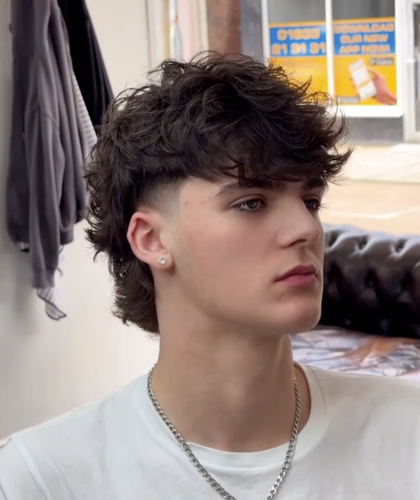
Think 70s shag meets modern mullet. Choppy layers on top add texture while the taper keeps it structured.
Best for: Fine-to-medium hair that needs lift.
How to ask your barber: “Low taper, shag-style layers up top, and a softer, wispy mullet tail.”
Styling tip: Use texture spray or dry shampoo to bring out the layers and create separation.
11. Wolf-Cut Low Taper Mullet
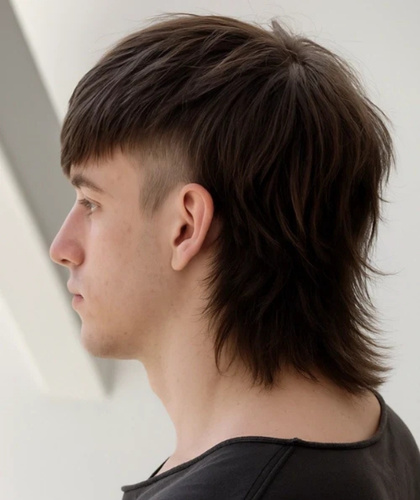
The wolf cut gets tamed with a clean low taper, keeping its full crown but avoiding bulk.
Best for: Thick, wavy hair that benefits from layering.
How to ask your barber: “Give me a wolf cut with heavy crown layering and a low taper at the edges.”
Styling tip: Diffuse with mousse for volume, then finish with wax on the tips.
12. Grown-Out Low Taper Mullet
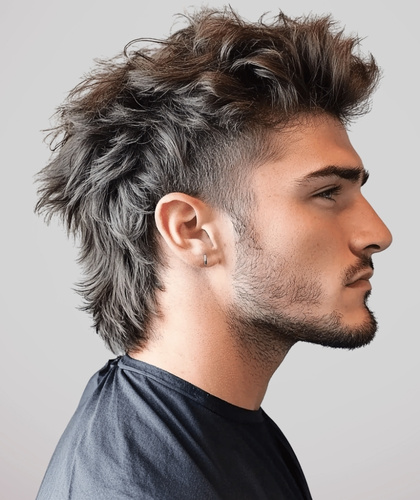
A laid-back option with softer lines and longer length at the back. The taper keeps it from looking messy.
Best for: Men growing their hair out or anyone who wants a more natural mullet.
How to ask your barber: “Soft, low taper at the neckline and temples. Shape the length without cutting too much.”
Styling tip: Apply a lightweight cream to damp hair for control. Tuck behind the ears when needed for a casual vibe.
Style-Based Mullets
13. Middle-Part Low Taper Mullet

The middle part makes this mullet look sleek and balanced, while the low taper keeps the edges sharp and professional. The split at the crown frames the face nicely, and the back flows long for that signature mullet vibe.
Best for: Straight or wavy hair, and oval face shapes that suit symmetry.
How to ask your barber: “I’d like a low taper at the sides and neckline. Keep a center part with long layers on top that open evenly.”
Styling tip: Blow-dry with a round brush from the middle part outward. A lightweight serum adds shine without weighing hair down.
14. Textured Fringe Low Taper Mullet
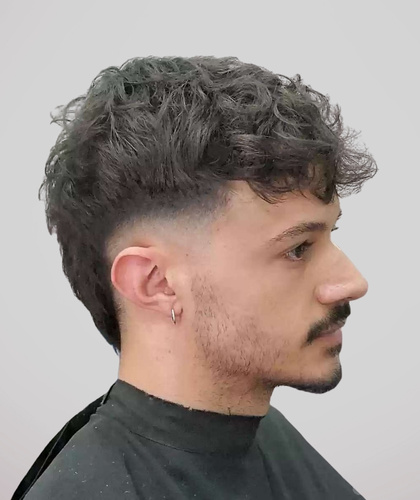
This style brings a playful twist to the mullet. The fringe is cut choppy and layered, sitting just above the brows for an edgy vibe. Paired with the low taper, it balances sharpness with texture, making it youthful and modern.
Best for: Men with fine to medium hair who want extra personality at the front. Works well for longer foreheads or face shapes that need balance.
How to ask your barber: “I’d like a low taper on the sides and back, plus a textured, choppy fringe at the front that blends into the mullet tail.”
Styling tip: Use sea-salt spray to rough up the fringe, then pinch sections with matte paste for separation. Let the back flow naturally for contrast.
15. Side-Part Low Taper Mullet
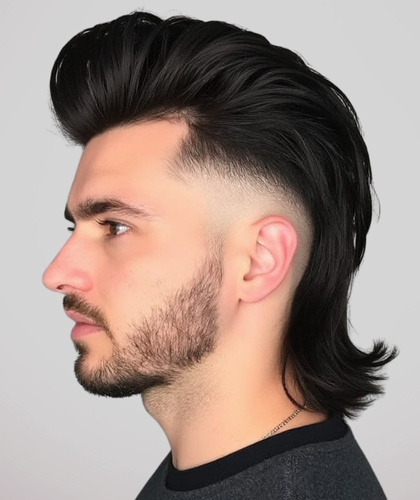
The side part gives the mullet a cleaner, more polished look without losing its edge. With the low taper keeping the sides neat, the style sits well in both casual and professional settings. It’s a smart choice if you want something versatile but still modern.
Best for: Men with straight or slightly wavy hair. Works best for square face shapes where the side part can soften strong angles.
How to ask your barber: “I’d like a low taper around the ears and neckline. Keep the side part defined, with length at the back flowing into the mullet shape.”
Styling tip: Apply a light pomade or cream, then comb along the natural side part. For a laid-back look, leave the mullet tail loose; for a sharper vibe, tuck it behind the collar.
16. Slick-Back Low Taper Mullet
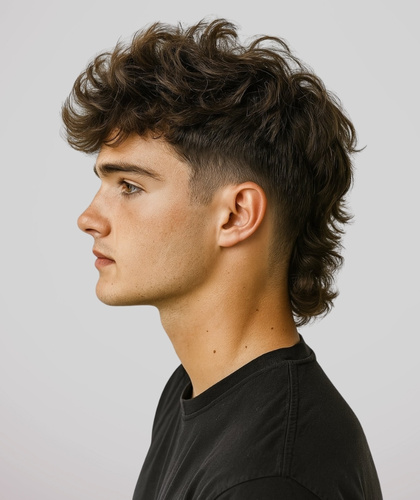
This version combines a classic slick-back with the rebellious mullet. The top is styled smooth and glossy, while the back flows long. The low taper at the sides and neckline keeps the look refined rather than messy.
Best for: Straight or thick hair that can hold shape when slicked. Great for men who want a bold cut that still works for formal occasions.
How to ask your barber: “I’d like a low taper around the ears and neckline, with the top left long enough to slick back. Keep the mullet tail flowing but tidy.”
Styling tip: Apply a medium-shine gel or cream to damp hair and comb straight back. Blow-dry on low heat to lock it in place. Use a small amount of hair oil to keep the mullet tail smooth.
17. Low Skin-Taper Mullet
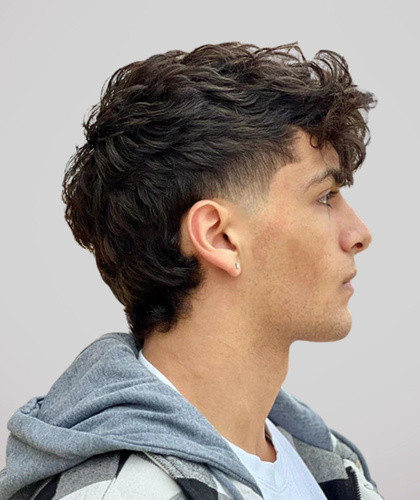
This style pushes the taper to its sharpest version, blending down to bare skin at the very bottom. It adds contrast and edge while still keeping length at the back, so you get the bold mullet shape with a crisp, clean finish around the neckline.
Best for: Medium to thick hair. Looks especially striking on men with defined cheekbones or strong jawlines.
How to ask your barber: “I’d like a low taper that drops down to skin at the very base—just at the sideburns and neckline. Keep the rest full to maintain the mullet flow.”
Styling tip: Use matte clay or paste to define the top and crown. Keep the neckline touched up every 3–4 weeks so the skin taper stays sharp.
18. Edge-Up Low Taper Mullet (Line-Up)
This cut blends sharp precision with mullet flow. The hairline and temples are edged into clean, straight lines, while the low taper keeps the neckline fresh. The mullet tail adds contrast, giving a mix of structure and freedom.
Best for: Coily or curly hair textures. Works especially well on men with angular features or square face shapes that suit sharp lines.
How to ask your barber: “I’d like a line-up at the temples and forehead, combined with a low taper at the neckline. Keep the length in the back so it still looks like a mullet.”
Styling tip: Use a soft brush and a little edge oil to keep the line-up sharp. Wrap hair at night with a silk or satin scarf to preserve both the taper and the clean edges.
19. Beard-Blend Low Taper Mullet
This version creates a seamless transition between your haircut and facial hair. The low taper is shaped to flow naturally into the beard, while the mullet tail keeps the style bold and edgy. It’s a cut that feels intentional and balanced rather than disconnected.
Best for: Men with full or medium beards. Works across straight, wavy, and curly hair textures.
How to ask your barber: “I’d like a low taper that blends smoothly into my beard, without harsh lines. Keep the mullet length at the back and connect it into the sideburns.”
Styling tip: Use beard balm or oil to keep the beard neat, and apply a medium-hold cream on the hair for a clean finish. Touch up the beard neckline between barber visits to keep the whole look sharp.
20. Disconnected Top Low Taper Mullet
This style is all about contrast. The top is left longer and fuller, sitting slightly disconnected from the sides, while the low taper at the temples and neckline keeps everything neat. The mullet tail completes the look, giving it attitude with a modern twist.
Best for: Thick or straight hair that can hold volume on top. Works especially well for round faces, since the height balances the shape.
How to ask your barber: “I’d like a low taper at the sides and neckline, with a subtle disconnect on top for extra height. Keep the back long so it flows into the mullet shape.”
Styling tip: Blow-dry the top upward for lift, then use matte paste at the roots to lock in volume. Let the mullet tail fall naturally for contrast.
How to Choose the Right Low Taper Mullet
Picking the right mullet isn’t just about liking the pictures—it’s about making sure the cut works with your natural features, hair texture, and daily routine. Here’s how to narrow it down:
1. Match Your Face Shape
Your face shape decides whether you need balance, softness, or added structure.
- Round faces: Height on top is your friend. A Slick-Back (Idea 16) or Disconnected Top (Idea 20) adds vertical length, slimming the overall shape.
- Square faces: Strong jawlines benefit from softer layers. The Side-Part (Idea 15) or Shag-Lite (Idea 10) breaks up harsh angles and gives a relaxed feel.
- Oval faces: Lucky you—almost every mullet variation works. You can experiment freely between polished and messy styles.
- Heart-shaped faces: Wider foreheads balance out with fringe-heavy looks. The Textured Fringe (Idea 14) or Wolf-Cut (Idea 11) draws attention downward.
2. Work With Your Hair Type
The right cut enhances, not fights, your hair’s natural flow.
- Fine hair: Needs volume and layers. The Volume-Boost (Idea 5) or Shag-Lite (Idea 10) adds lift so it won’t fall flat. Matte paste and blow-drying are essential here.
- Thick hair: Often feels heavy, so structured layering helps. The Thick Hair De-Bulked (Idea 6) or Wolf-Cut (Idea 11) keeps shape while removing bulk. Medium-hold cream keeps it under control.
- Curly/Coily hair: Textured cuts like the Curly (Idea 3), Coily (Idea 4), or Edge-Up (Idea 18) highlight natural definition. Curl cream or twist-outs keep it sharp without losing volume.
3. Factor in Lifestyle & Upkeep
Be honest about how much time you want to spend on styling.
- Low-maintenance lifestyles: Stick with the Short (Idea 7) or Medium Everyday (Idea 8). These look tidy with minimal effort and need just a quick clay or cream in the morning.
- High-impact looks: Go bold with Long Flow (Idea 9) or Slick-Back (Idea 16). These demand more styling—blow-drying, oils, and regular trims—but deliver maximum presence.
- Transitional phase: If you’re growing out a style, the Grown-Out Low Taper (Idea 12) gives you a mullet feel without a drastic shift.
4. Think About Professional vs. Personal Style
- In corporate or office settings, subtle versions like the Side-Part (Idea 15) or Medium Everyday (Idea 8) strike a balance between trendy and professional.
- For creative or casual environments, you can lean into more daring choices like the Textured Fringe (Idea 14) or Long Flow (Idea 9).
👉 By considering face shape, hair type, lifestyle, and setting, you’ll land on a low taper mullet that not only looks good but also fits seamlessly into your day-to-day life.
Maintenance & Products You’ll Need
Keeping a low taper mullet sharp isn’t just about the cut—it’s also about the right products and a consistent routine. Here’s a breakdown that covers daily styling, weekly care, and long-term upkeep.
1. Core Product Kit
- Sea-salt spray: Adds grit and enhances natural waves or bends. Great for styles like the Wavy (Idea 2) or Shag-Lite (Idea 10).
- Matte clay or paste: Gives hold without shine, perfect for textured looks such as the Disconnected Top (Idea 20).
- Curl cream or gel: Defines curls and coils, essential for the Curly (Idea 3) and Coily (Idea 4).
- Lightweight oil or serum: Smooths down frizz and adds sheen to longer tails like the Long Flow (Idea 9).
- Beard balm or oil: If you’re rocking the Beard-Blend (Idea 19), it keeps facial hair conditioned and neat.
2. Daily Styling Routine
- Morning: Mist hair lightly with water to reset. Apply sea-salt spray for texture or curl cream if your hair is curly/coily.
- Shaping: Use a blow-dryer on low heat with a brush or diffuser, depending on your hair type.
- Finishing: Matte clay for separation, cream for control, or oil for shine. Adjust based on the vibe you want—natural, polished, or bold.
3. Weekly & Long-Term Care
- Washing: Shampoo 2–3 times a week to avoid stripping natural oils. Always follow with conditioner.
- Deep conditioning: Once a week if you have curls or coils, every two weeks for straight or fine hair. This prevents dryness in the mullet tail.
- Trims:
- Taper & neckline: Every 4–6 weeks to keep edges sharp.
- Mullet tail: Dust ends every second visit (6–8 weeks) to avoid split ends.
- Refresh between cuts: If the taper starts looking fuzzy, use clippers with a guard to neaten edges until your next appointment.
4. Pro Tips for Longevity
- Sleep on a silk or satin pillowcase to reduce frizz and keep shape overnight.
- Use a heat protectant spray before blow-drying or straightening longer sections.
- Rotate between matte and shine products to keep styles fresh and not overly stiff.
- If you’re growing into a longer mullet, commit to regular shaping trims—don’t skip, or the cut will lose definition.
👉 With the right products and routine, a low taper mullet stays sharp, stylish, and easy to manage without needing constant trips to the barber.
FAQs
1. Is the low taper mullet suitable for work?
Yes, but the version matters. If you’re in a more traditional office, keep it subtle with options like the Side-Part (Idea 15) or the Medium Everyday (Idea 8). Both are neat enough to look professional yet still carry the mullet edge. Creative or casual workplaces can embrace bolder versions like the Textured Fringe (Idea 14) or Long Flow (Idea 9).
2. How often do I need a trim?
- Taper & neckline: Every 4–6 weeks. This ensures the sharp outline doesn’t grow out and lose shape.
- Overall mullet length: Every 6–8 weeks. You don’t need to cut much, but dusting split ends keeps the tail healthy.
- Beard blends or edge-ups: Every 3–4 weeks, since these sharper styles show growth quicker.
3. Will it work on thin hair?
Yes. Fine hair just needs the right layering and products. Cuts like the Volume-Boost (Idea 5) or Shag-Lite (Idea 10) add lift and texture. Pair them with a volumizing mousse before blow-drying and a matte paste to keep strands from collapsing.
4. How do I grow it out if I want to switch styles?
Growing out a mullet is easier than you think.
- Ask your barber to keep tapering the sides and neckline so it stays clean.
- Gradually shorten the mullet tail while leaving the top and crown longer.
- Over time, this blends into a layered haircut, making the transition smooth without a harsh “in-between” stage.
5. What hair products are non-negotiable?
At minimum, you’ll want:
- Sea-salt spray (for texture).
- Matte paste or clay (for hold).
- Curl cream or gel (if you have texture).
- Conditioner (to keep the mullet tail soft).
Optional but recommended: a lightweight serum for shine and a beard balm if you’re blending facial hair.
Conclusion
The low taper mullet is one of the most versatile cuts you can get right now. It combines a clean, tapered outline with a longer back, making it adaptable to straight, wavy, curly, or coily hair. Whether you want something low-maintenance like the Short Low Taper (Idea 7) or bold and statement-making like the Long Flow (Idea 9), there’s a version for every lifestyle and face shape.
If you’re wondering “Which low taper mullet should I get?”, the answer comes down to three things:
- Your face shape – round faces need height, square faces need softer edges, oval faces can try anything, and heart shapes look great with fringe.
- Your hair type – fine hair thrives with layers and matte products, thick hair benefits from debulking, and curls or coils shine when shaped properly.
- Your daily routine – if you want easy upkeep, pick shorter or medium options. If you don’t mind styling, go bold with slick-backs or long tails.
👉 Next step: Save two or three of your favorite styles from this list and show them to your barber. Use the exact “How to ask” lines we’ve provided so you get the cut you want without confusion.
Ready to try one? Let us know in the comments which style you’re going for—or share your before-and-after mullet pics to inspire others.