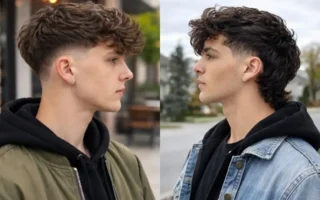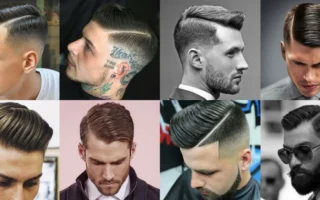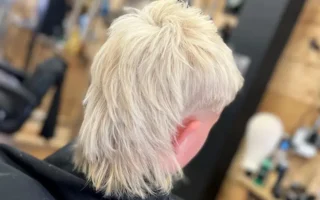
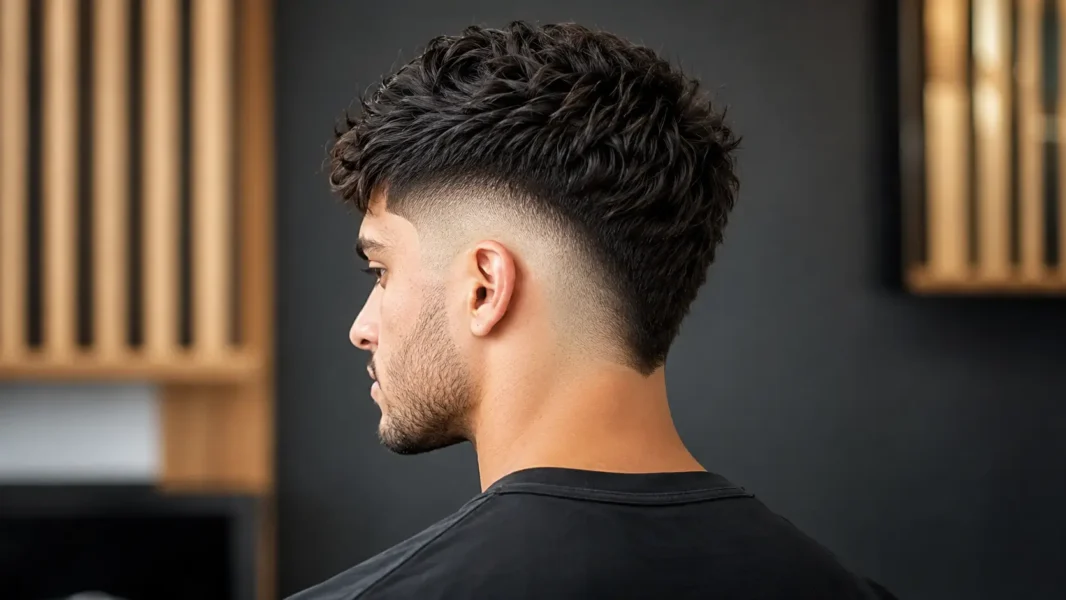
A burst fade creates a rounded transition around the ear while leaving more length through the top and back. This shape makes it different from a regular fade, which usually continues more evenly around the head.
The cut works with short crops, curls, coils, mullets, mohawks and longer textured hairstyles. You can keep it subtle with a low taper or create stronger contrast with a high skin fade.
Professional hairstylist Jessica Banowetz describes it as a “clean, circular fade around the ear while allowing length and personality through the top and back.”
That combination of clean detailing and retained length explains why the burst fade suits so many hair types. The real decision is not whether to get one. It is choosing the correct fade height, top style and back length.
Which Burst Fade Should You Choose?
| What you want | Best burst fade |
|---|---|
| Subtle and professional | Low burst taper |
| Balanced everyday style | Mid burst fade |
| Maximum contrast | High skin burst fade |
| Longer hair at the back | Burst fade mullet |
| Natural volume | Curly burst fade |
| Strong vertical shape | Burst fade mohawk |
| Minimal daily styling | Buzz cut burst fade |
| Fuller-looking fine hair | Textured crop with low burst fade |
| Sharp barbershop finish | Burst fade with line-up |
| Clean beard connection | Burst fade with beard |
Best Burst Fade Haircut Ideas
1. Low Burst Fade
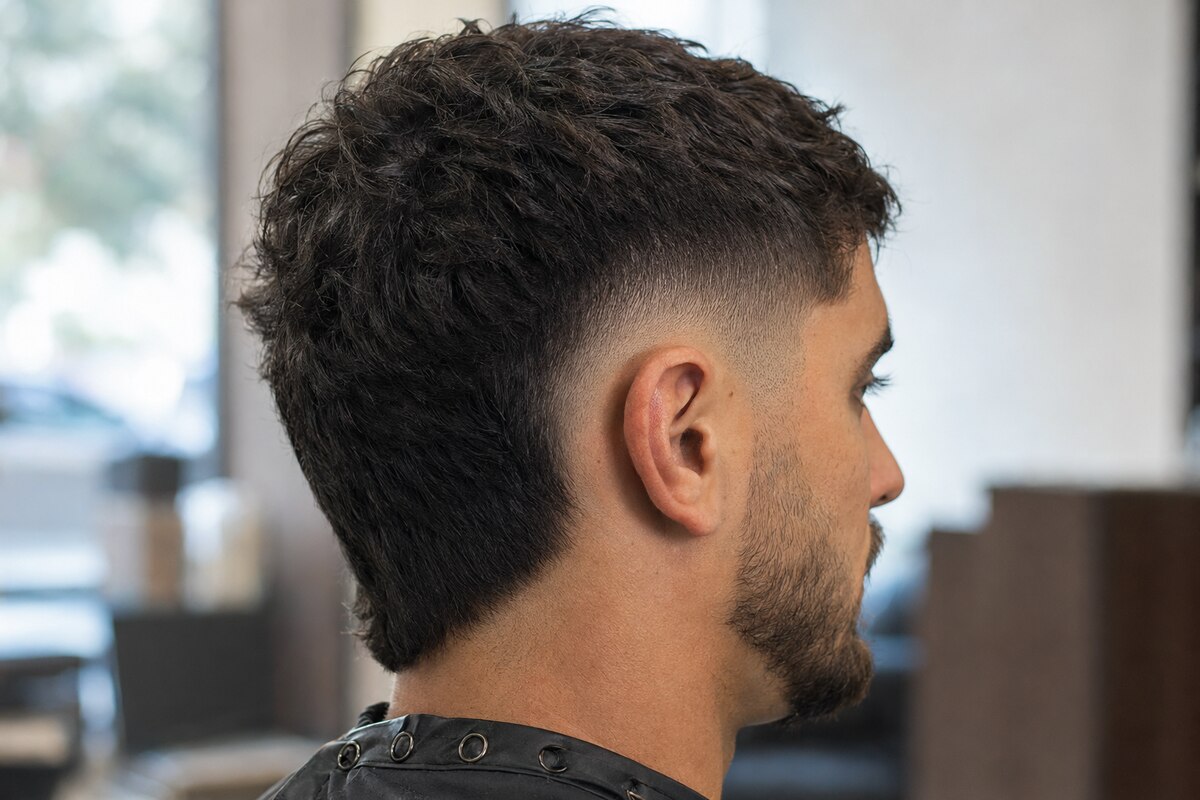
A low burst fade starts close to the top of the ear. It creates a small, rounded faded area while preserving most of the hair on the sides and back.
This is the safest version for someone trying the cut for the first time. The fade remains noticeable, but it does not expose a large area of scalp.
Pair it with a short textured top, curls or a restrained mullet. It also works well in professional environments.
Ask your barber for: A low semicircular fade around each ear with a gradual blend and natural neckline.
Best for: Oval, square and longer face shapes.
2. Mid Burst Fade
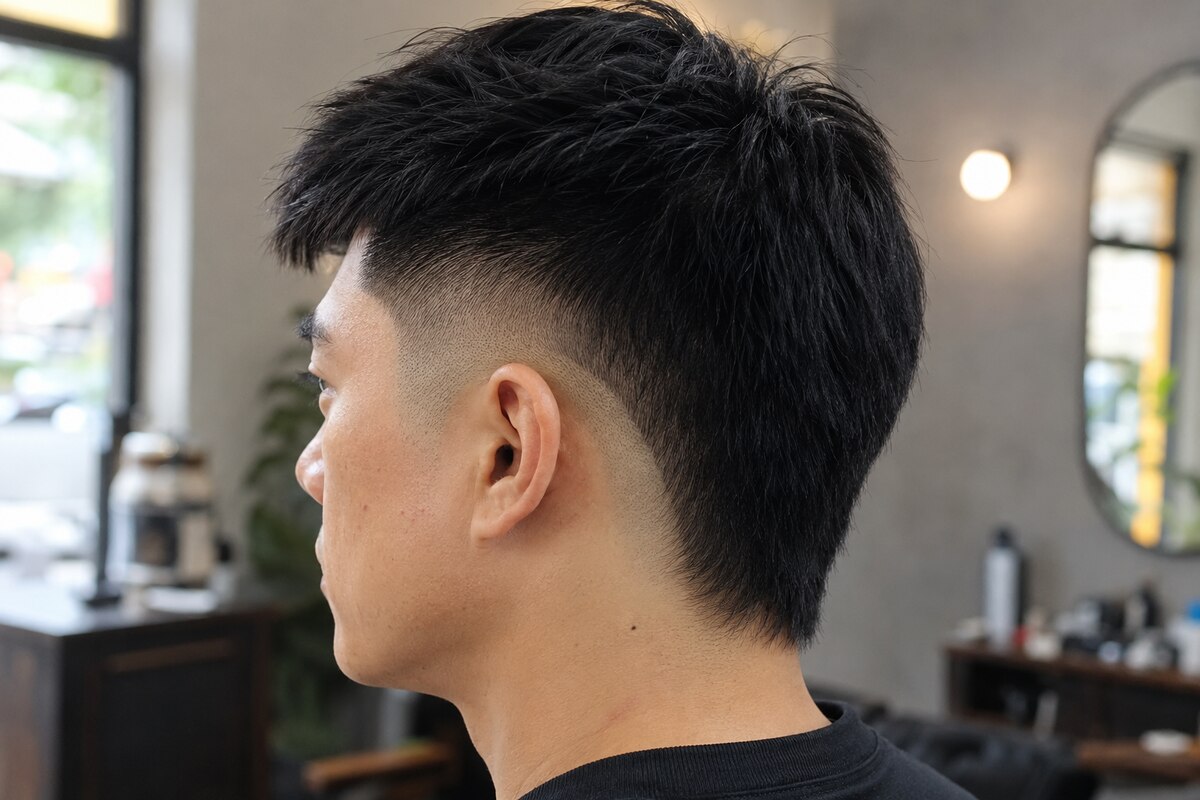
The mid burst fade begins near the middle of the sides. It produces more visible contrast than a low fade without removing as much hair as a high burst fade.
This height works with almost every burst fade hairstyle. It can support a crop, curls, mohawk, faux hawk or modern mullet.
Choose a mid fade when you want the rounded outline to be clearly visible from the side.
Ask your barber for: A medium-height burst that curves behind the ear without extending too high toward the crown.
Best for: Men who want a balanced and noticeable fade.
3. High Burst Fade
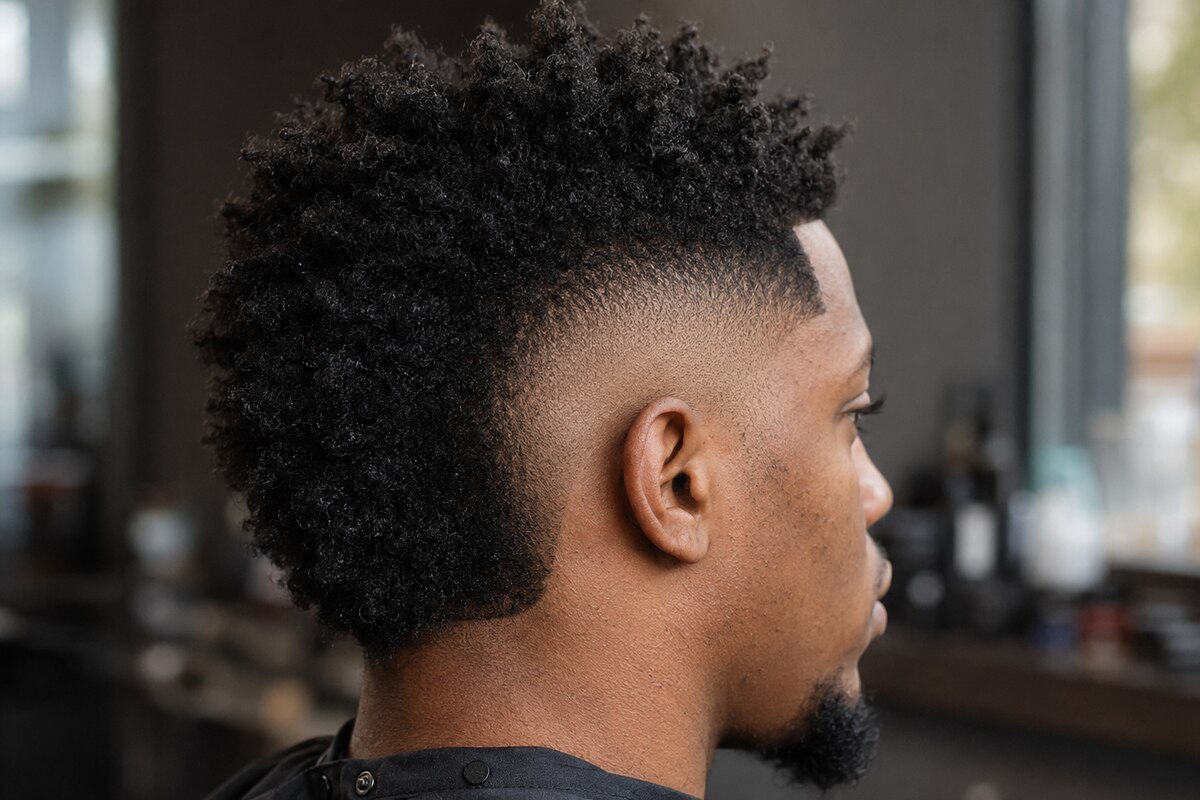
A high burst fade removes more hair above and behind the ear. It rises toward the temple before curving down into the longer section at the back.
The higher placement makes the top look taller and more prominent. It suits bold hairstyles such as mohawks, spiky tops and dramatic mullets.
A high burst fade can make a long face appear even longer, especially when combined with excessive height. Men with longer faces may prefer a lower fade and flatter top.
Best for: Round, oval and square faces.
4. Burst Skin Fade
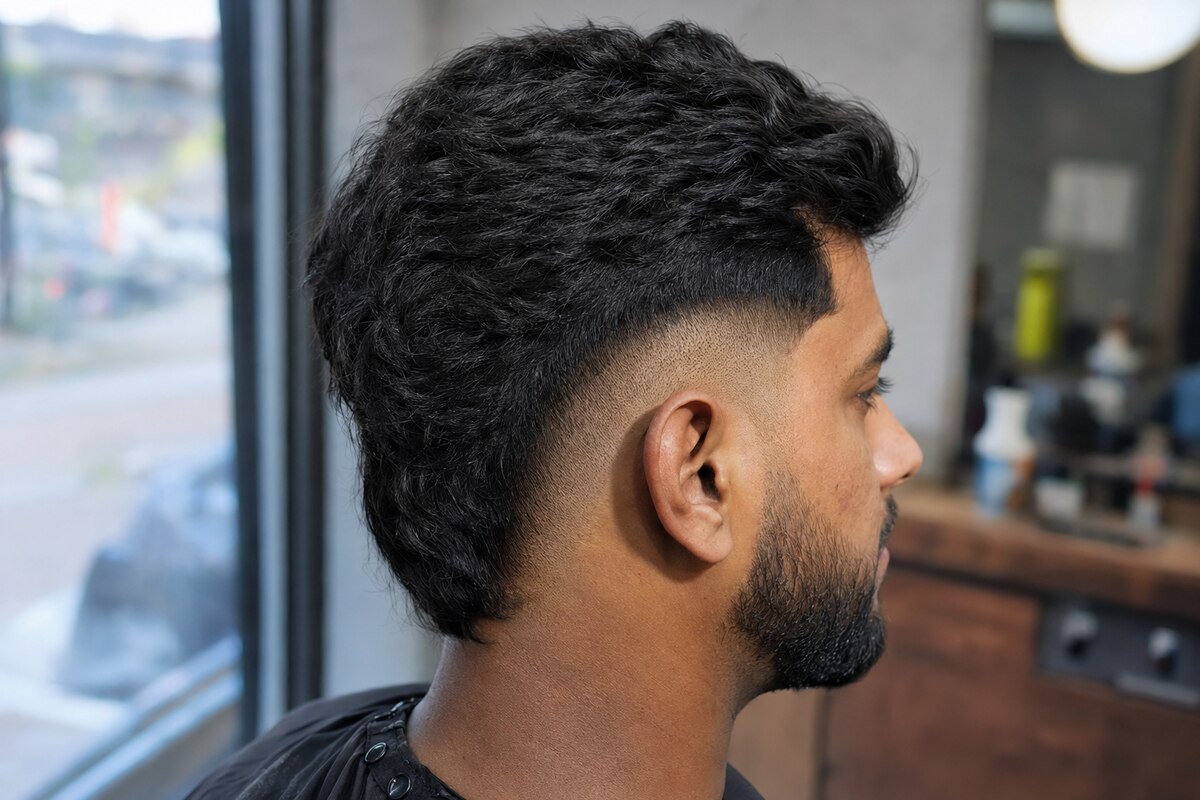
A burst skin fade blends the shortest area completely into bare skin. This creates the strongest possible difference between the clean area around the ear and the longer hair above it.
Dark or dense hair makes the contrast particularly clear. The style can also include a sharp temple line and beard transition.
Skin-level fades reveal regrowth quickly. Choose this variation only when you are comfortable visiting the barber regularly.
Ask your barber for: A burst fade taken down to skin with a smooth transition into the top and back.
5. Burst Taper Fade
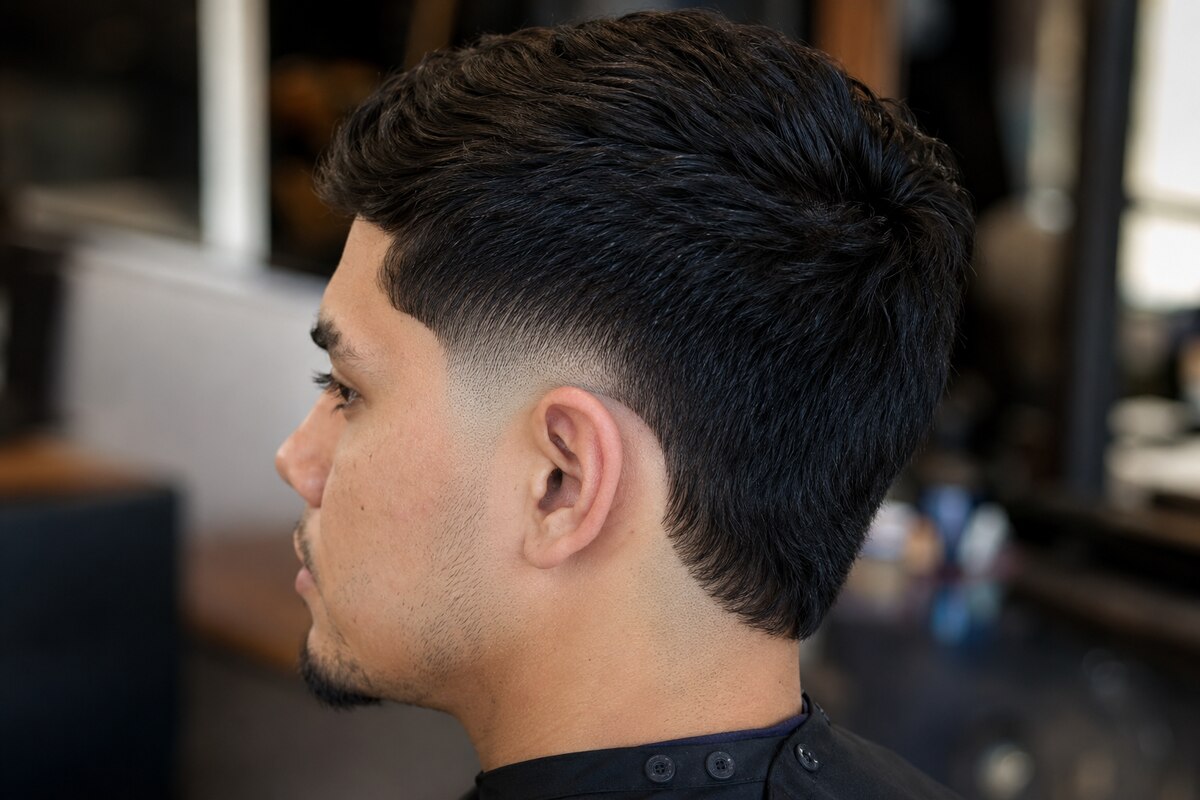
A burst taper fade keeps the faded section smaller and retains more hair around the temple and neckline. It provides a cleaner outline without creating the exposed look of a skin fade.
This version works especially well with side parts, short curls and professional hairstyles. It also grows out more softly because the shortest section is not completely shaved.
Best for: Workplaces, schools and first-time fade clients.
Styling product: Use Layrite Natural Matte Cream when the top needs light control. Its water-based formula provides a flexible medium hold while leaving the hair soft and touchable.
6. Subtle Burst Fade
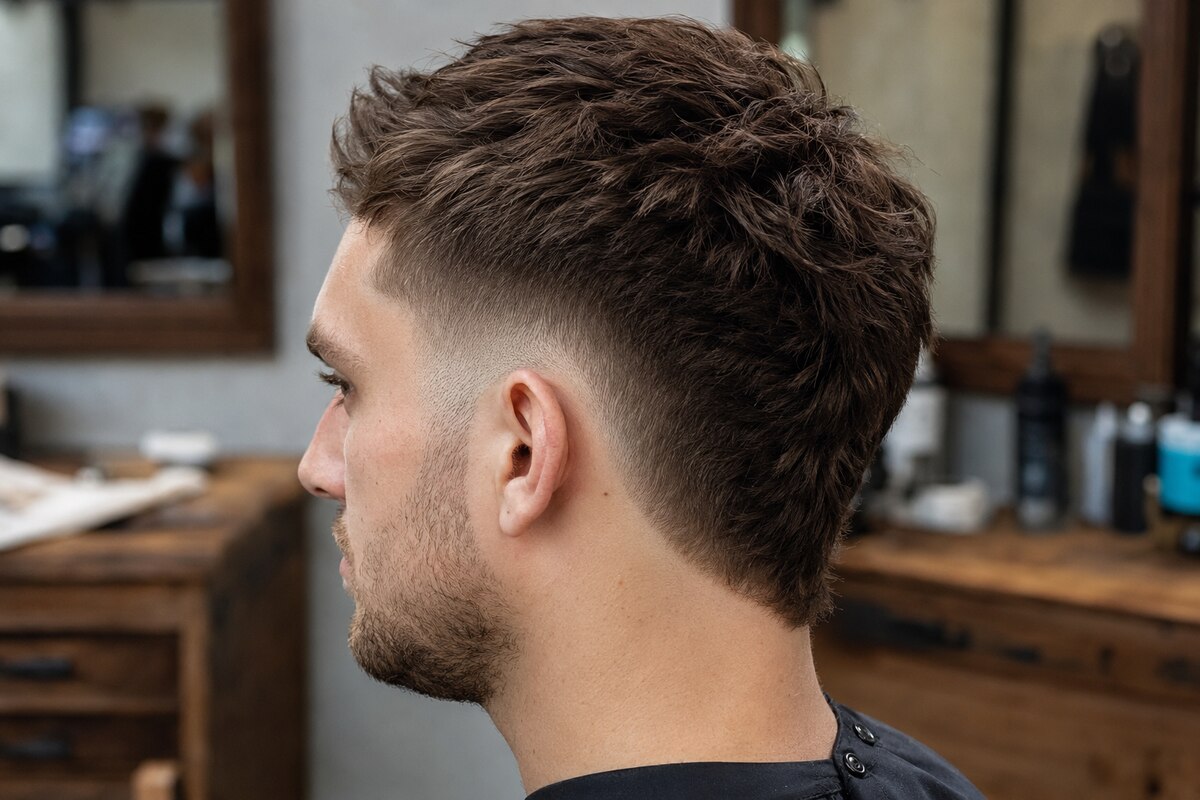
The subtle burst fade uses longer clipper settings and a wide, gradual transition. The barber still creates the rounded shape, but the contrast remains soft.
This is a practical choice for men who want something cleaner than a traditional scissor cut without committing to a dramatic fade.
Keep the neckline natural and avoid an extremely sharp line-up if you want the haircut to grow out smoothly.
Best for: Conservative styles and lower-maintenance routines.
7. Classic Burst Fade Mullet
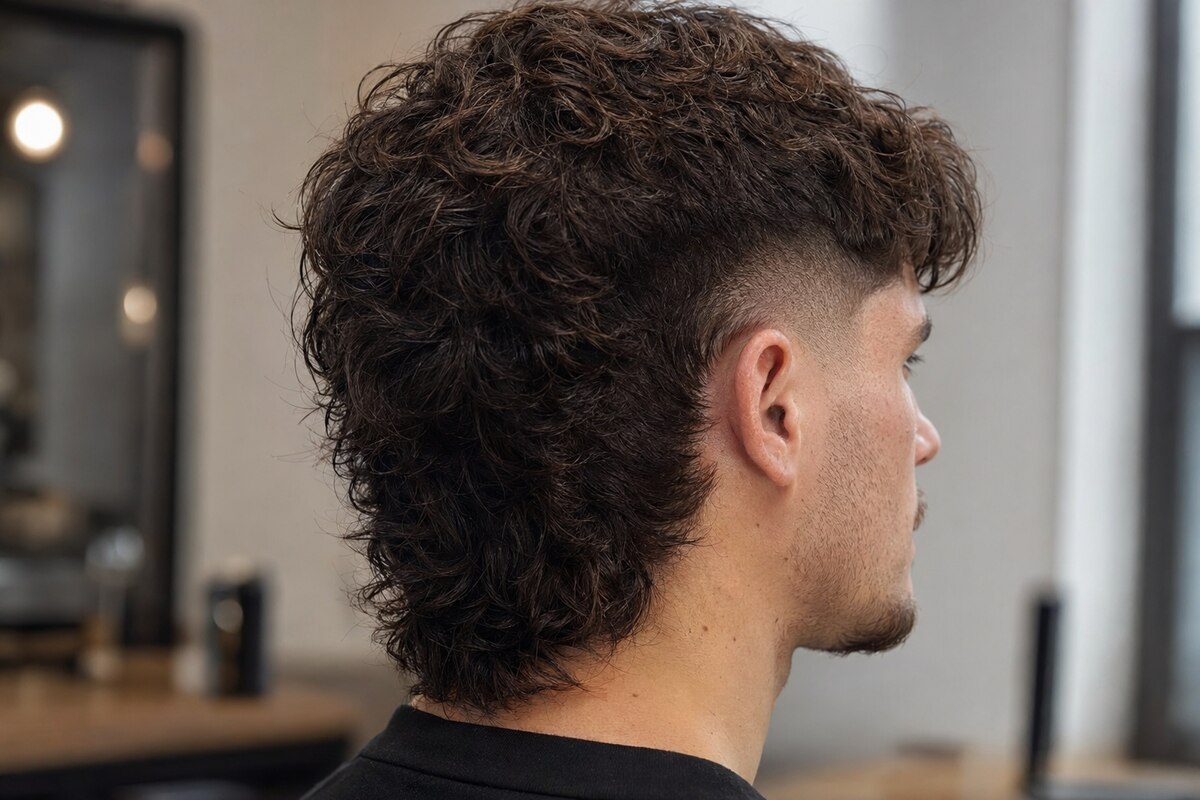
The classic burst fade mullet combines closely faded areas around the ears with longer hair through the crown and neckline.
The fade separates the side area from the longer back without shaving the entire side of the head. This produces a smoother transition than a disconnected undercut.
A traditional version can include a defined tail, while a modern version keeps the back shorter and more layered.
Best for: Thick, wavy and curly hair.
Ask your barber for: A rounded burst around the ears with enough weight left through the crown to connect the top and back.
8. Modern Textured Mullet with Burst Fade
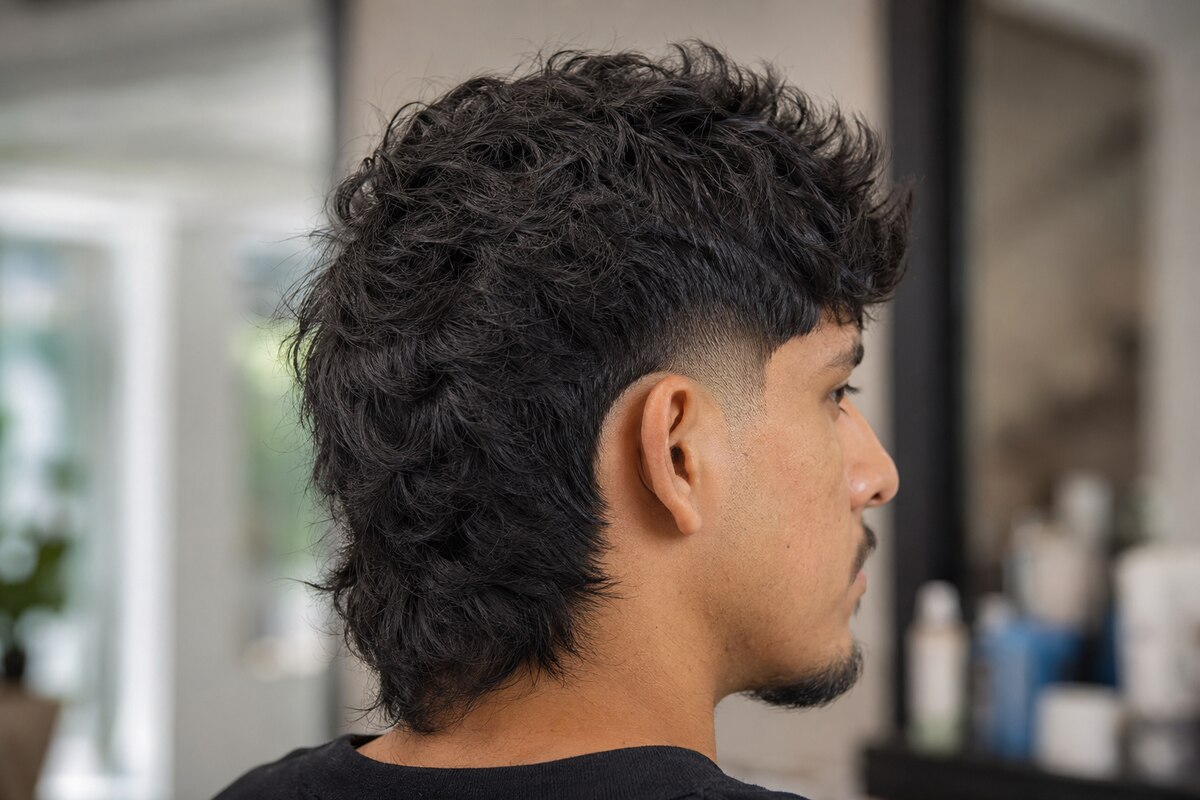
A modern textured mullet uses choppy layers rather than one solid length at the back. The result feels lighter and more wearable than a traditional long mullet.
The top should contain enough texture to connect naturally with the crown. A mid burst fade creates definition without making the sides look excessively bare.
Styling product: Work a small amount of American Crew Fiber through dry hair. The product provides a strong, pliable hold and matte finish suited to short, textured styles.
9. Short Burst Fade Mullet
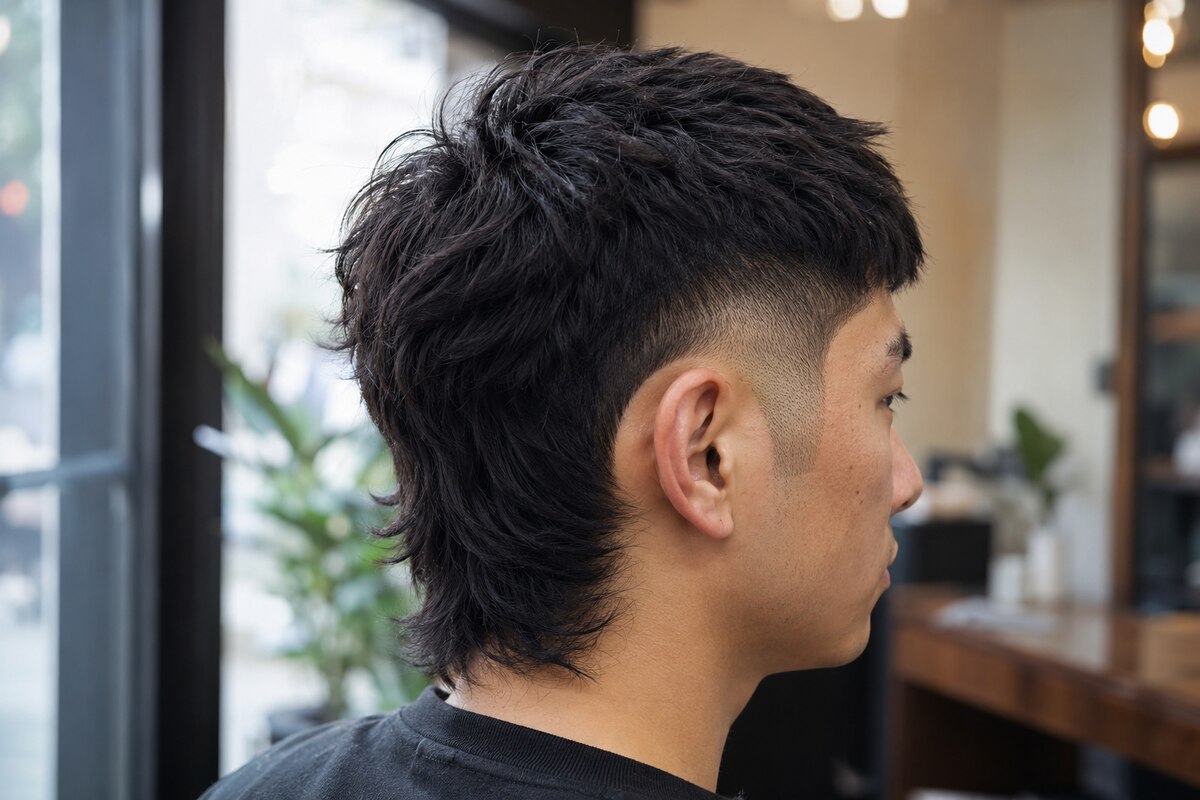
The short burst fade mullet keeps only a modest amount of length behind the crown. It offers the recognizable mullet shape without creating a long tail.
This style works well for straight or thick hair that becomes difficult to control when grown longer. Keep the fringe short and add texture across the top.
Best for: Men who want a low-commitment mullet.
Ask your barber for: A compact mullet with a low or mid burst fade and a lightly tapered neckline.
10. Long Burst Fade Mullet
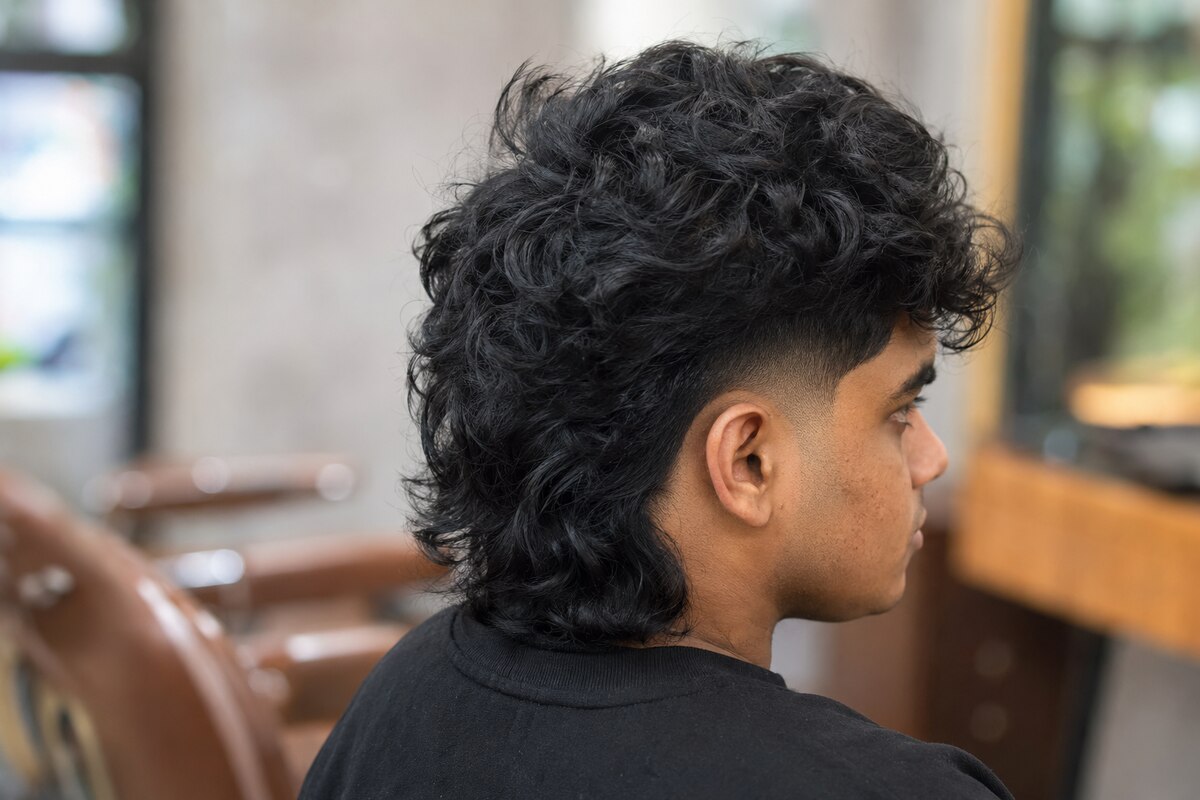
A long burst fade mullet creates a clear difference between the faded sides and extended back.
Layers are essential. Without them, thick hair can form a heavy block behind the head. Ask the barber to connect the top, crown and tail while retaining the overall length.
Wavy hair naturally softens this shape. Straight hair may need additional point cutting or razor texture.
Styling product: Use Bumble and bumble Surf Spray when you want loose separation and a more lived-in finish.
11. Curly Burst Fade Mullet
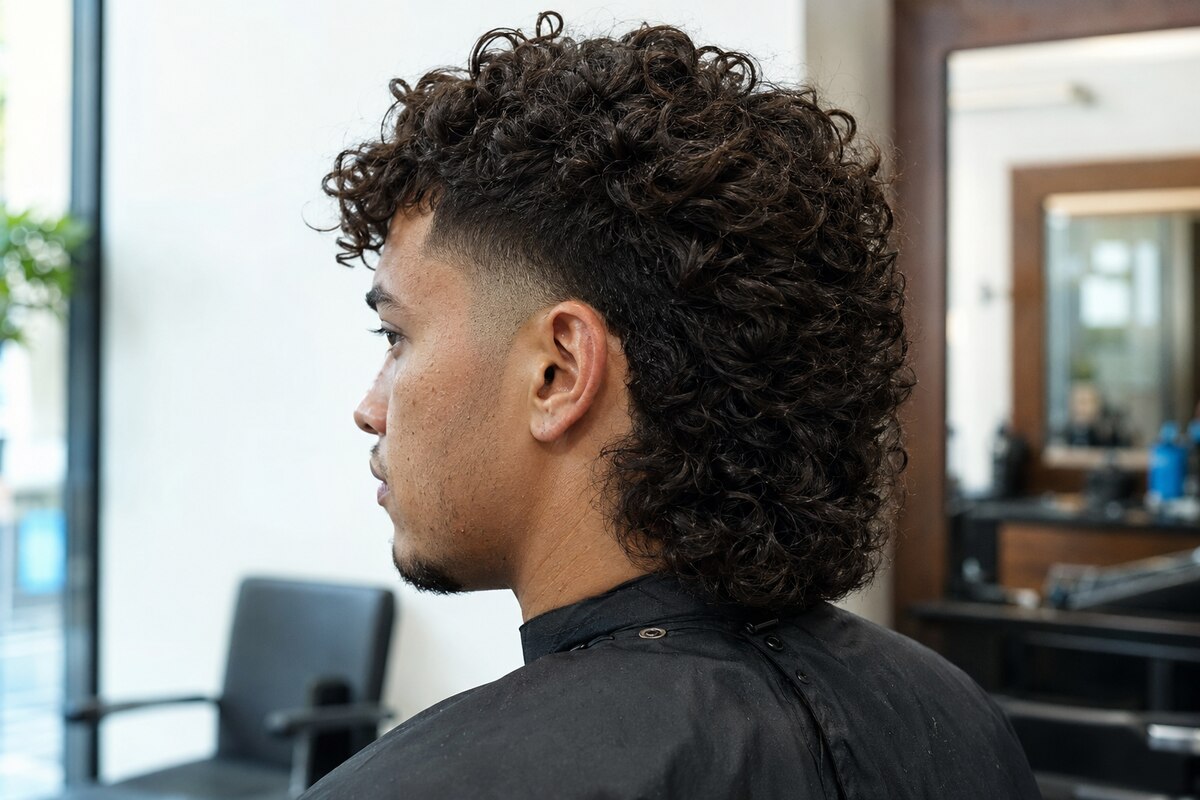
A curly burst fade mullet keeps natural volume across the top and longer curls at the back. The fade removes bulk around the ears and gives the curl pattern a clearer outline.
Your barber should assess the curls in their natural state. Cutting tightly stretched curls can lead to an unexpectedly short result after they contract.
Styling product: Apply one or two pumps of Moroccanoil Curl Defining Cream to towel-dried hair, then diffuse on low heat. The brand recommends it for wavy to curly hair and says it defines curls while fighting frizz.
12. Burst Fade Mohawk
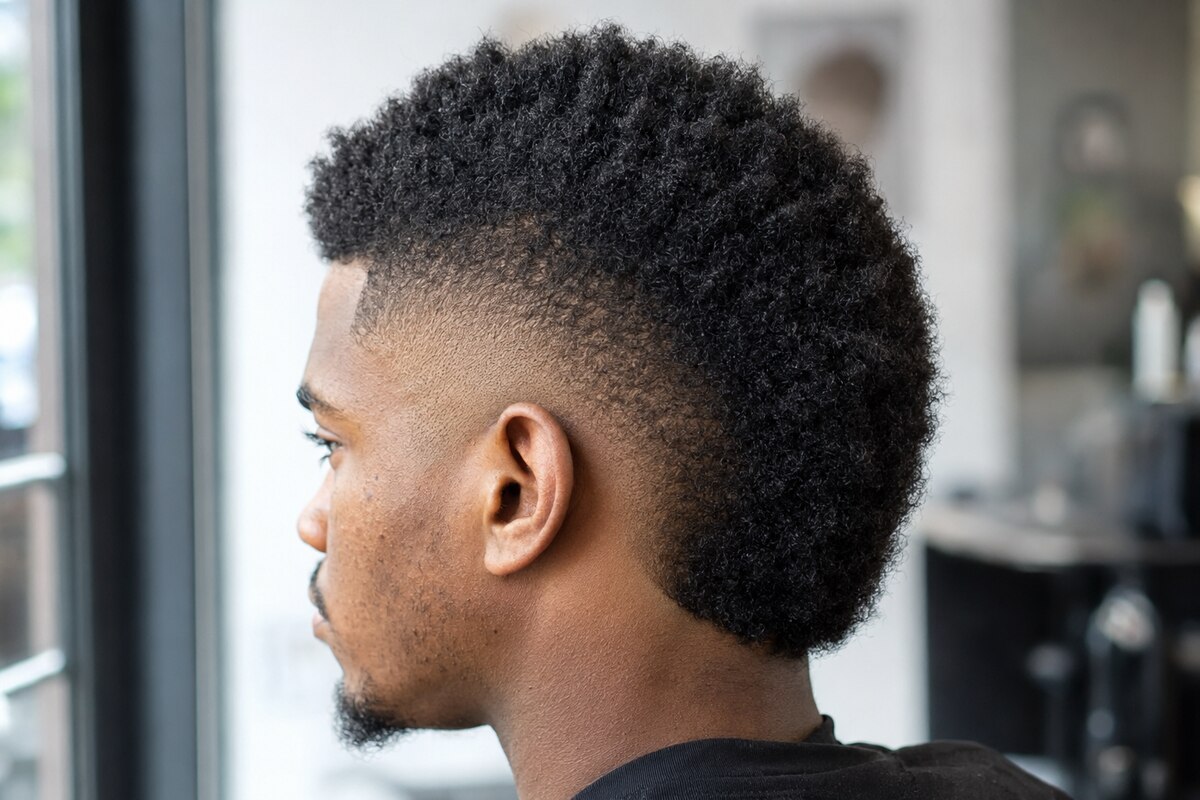
The burst fade mohawk keeps a continuous strip of longer hair from the forehead to the neckline. The rounded fade supports the center section without shaving the sides into a hard, straight line.
The top can stand upright or remain loosely textured. Keeping slightly more length through the crown makes the style easier to connect with the back.
Styling product: Use Reuzel Extreme Hold Matte Pomade for tall or structured versions. Reuzel rates it at 11 out of 10 for hold and 1 out of 10 for shine.
13. Burst Fade Faux Hawk
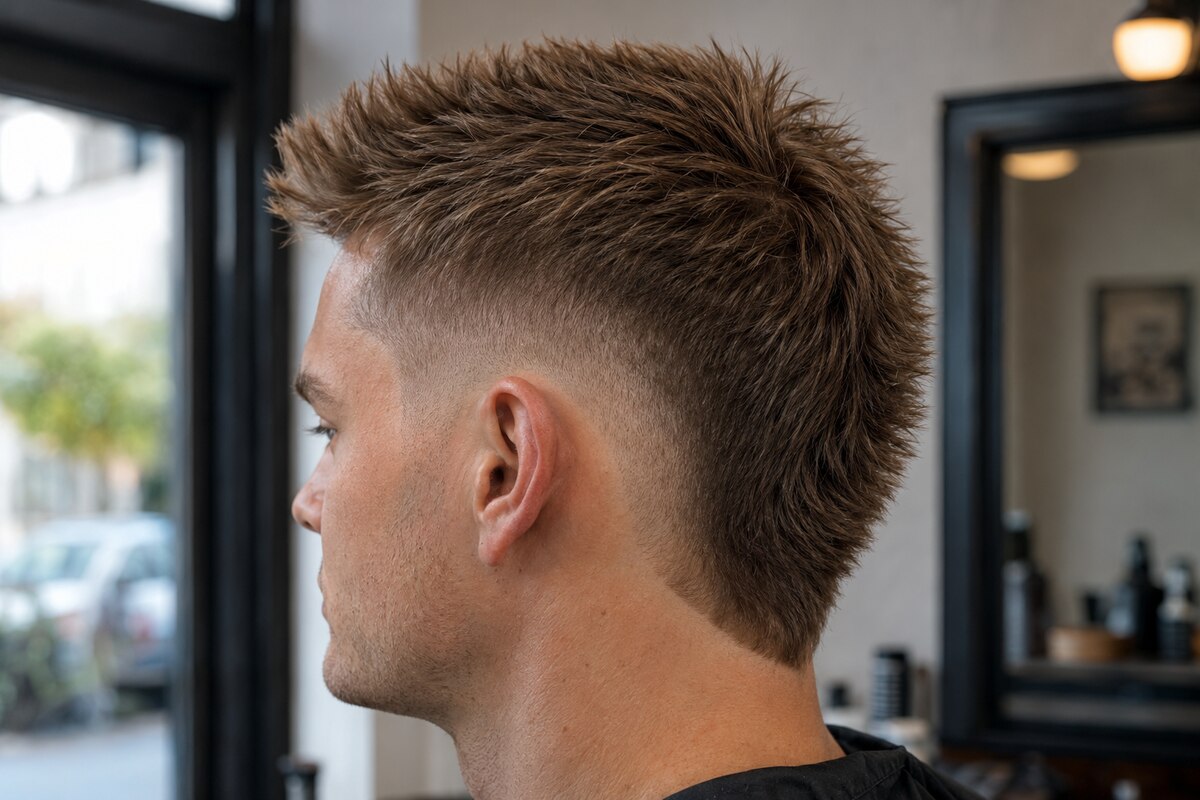
A faux hawk creates the impression of a mohawk without requiring an extreme center strip. The hair becomes gradually longer toward the middle and can be pushed upward with the fingers.
Choose a low or mid burst fade to keep the haircut versatile. You can wear the top upright for nights out and loose or forward during the day.
Styling product: American Crew Fiber provides enough grip for short faux hawks without creating a wet finish.
14. Buzz Cut with Burst Fade
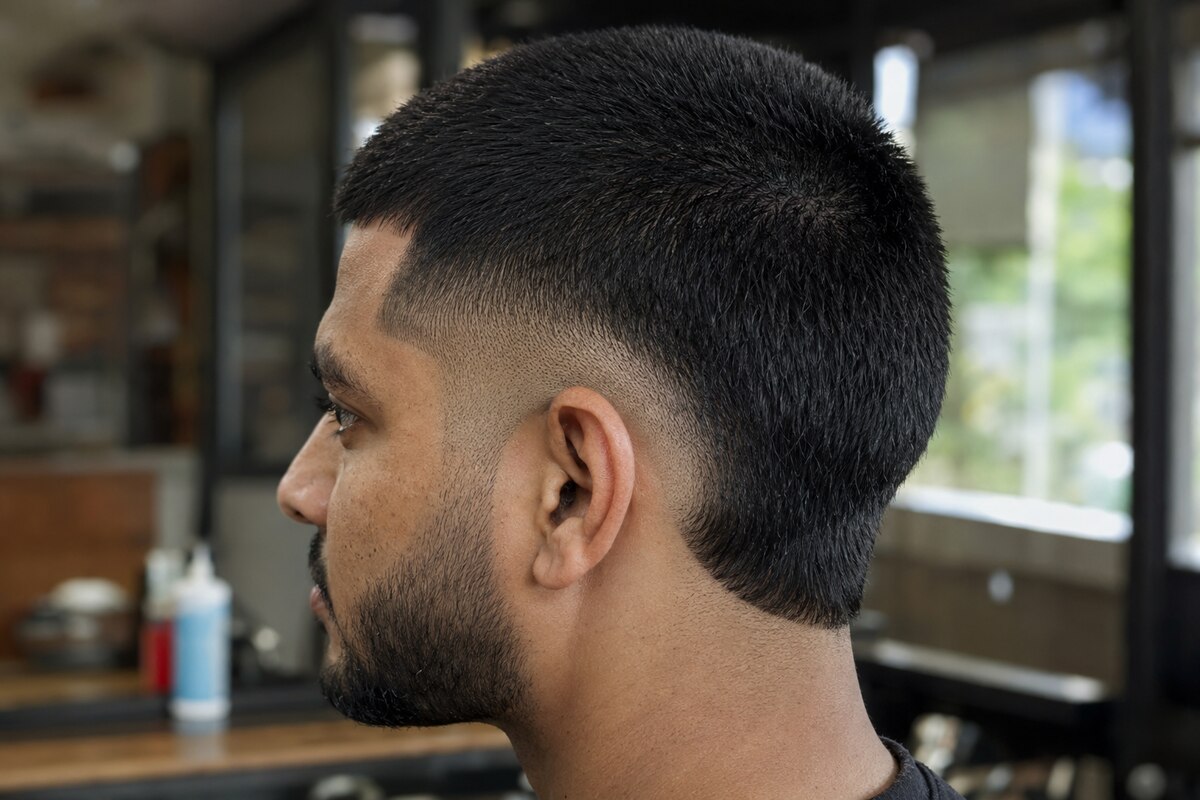
A buzz cut with a burst fade adds shape to a very short haircut. Instead of keeping the same clipper length across the entire head, the barber creates a rounded transition around each ear.
The top can remain uniform or become slightly longer toward the center.
A line-up creates a sharper finish, but it may require more frequent maintenance. Men with an uneven or receding hairline may prefer a natural front edge.
Best for: Hot weather, sports and minimal styling.
15. Crew Cut with Burst Fade
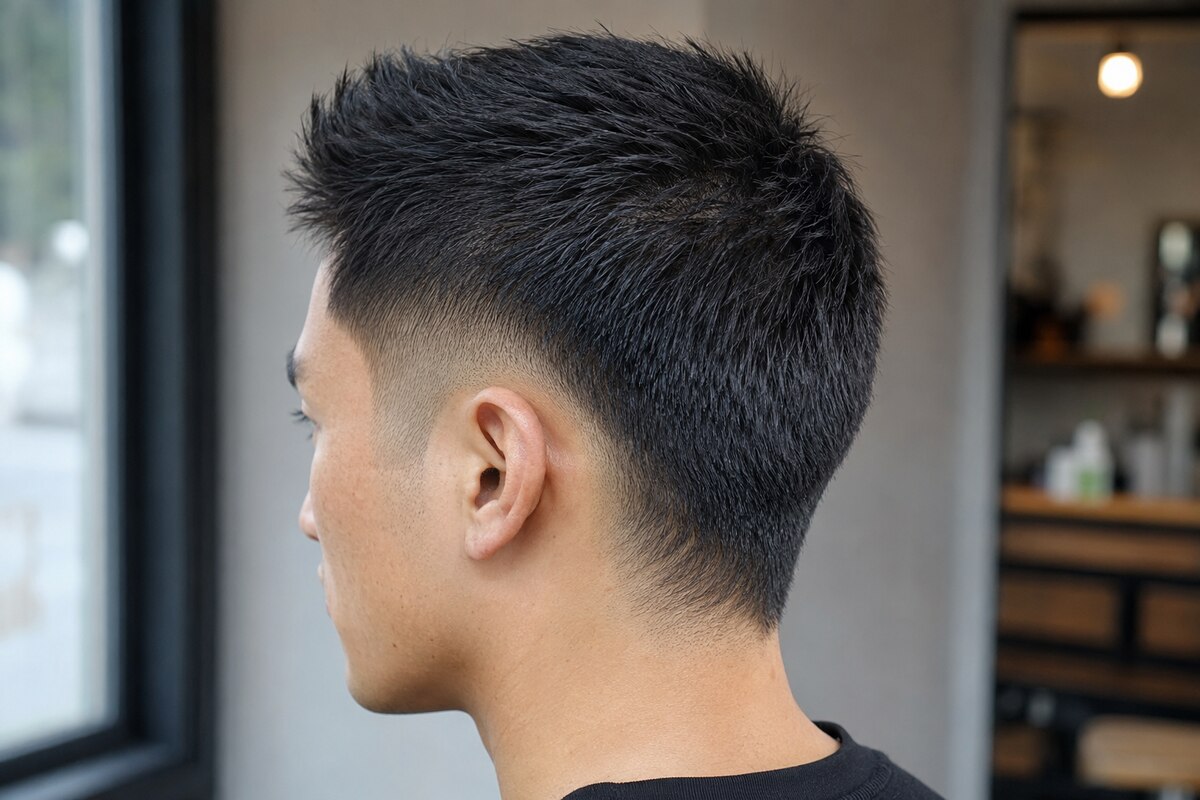
The crew cut leaves the hair slightly longer at the front and gradually shorter toward the crown. Adding a burst fade gives the classic cut a more modern side profile.
Brush the front upward for extra height or wear it forward for a softer appearance. A low burst taper produces the most professional version.
Styling product: Use a pea-sized amount of Layrite Natural Matte Cream for flexible control.
16. Textured Crop with Burst Fade
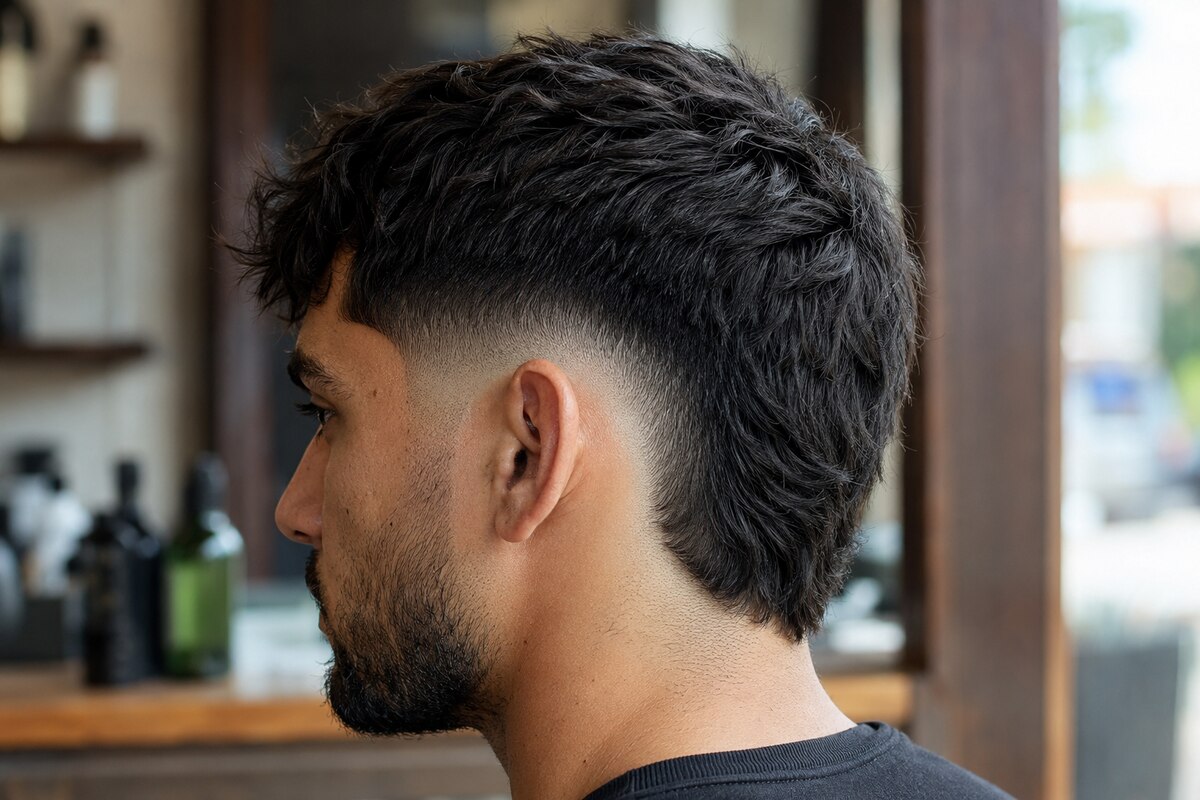
A textured crop uses short, separated layers and a forward-facing fringe. The burst fade controls the sides while leaving more weight at the back than a standard high fade.
This combination suits dense straight hair because texture removes visual heaviness. It can also make fine hair appear fuller when the top remains short.
Styling product: American Crew Fiber works well when the top measures one to three inches. Warm a small amount between your palms before pushing the hair forward.
17. French Crop Burst Fade
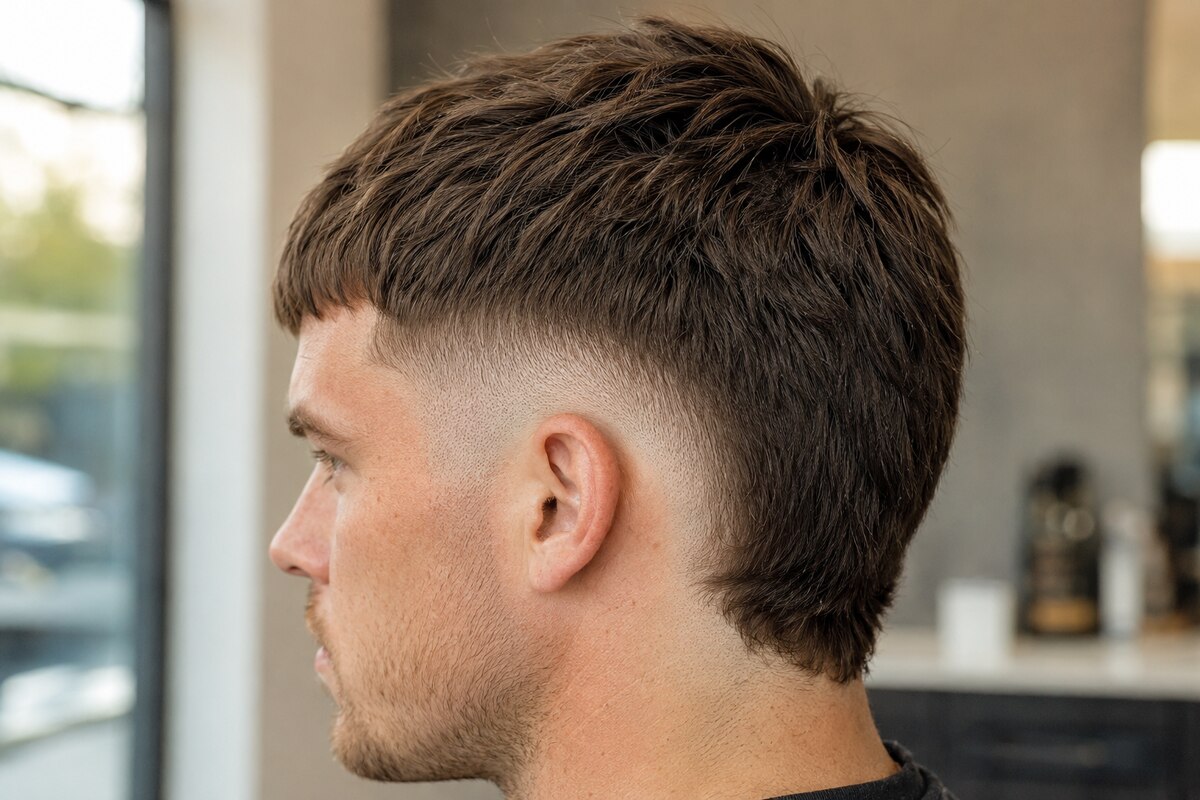
The French crop combines a short layered top with a defined or softly broken fringe. A mid burst fade adds a rounded shape around the ears and distinguishes it from a standard crop fade.
This style requires little morning work because the hair naturally moves forward. It can also visually shorten a high forehead.
Ask your barber for: A short crop, lightly textured fringe and compact burst around each ear.
Best for: Straight, thick and slightly wavy hair.
18. Edgar Haircut with Burst Fade
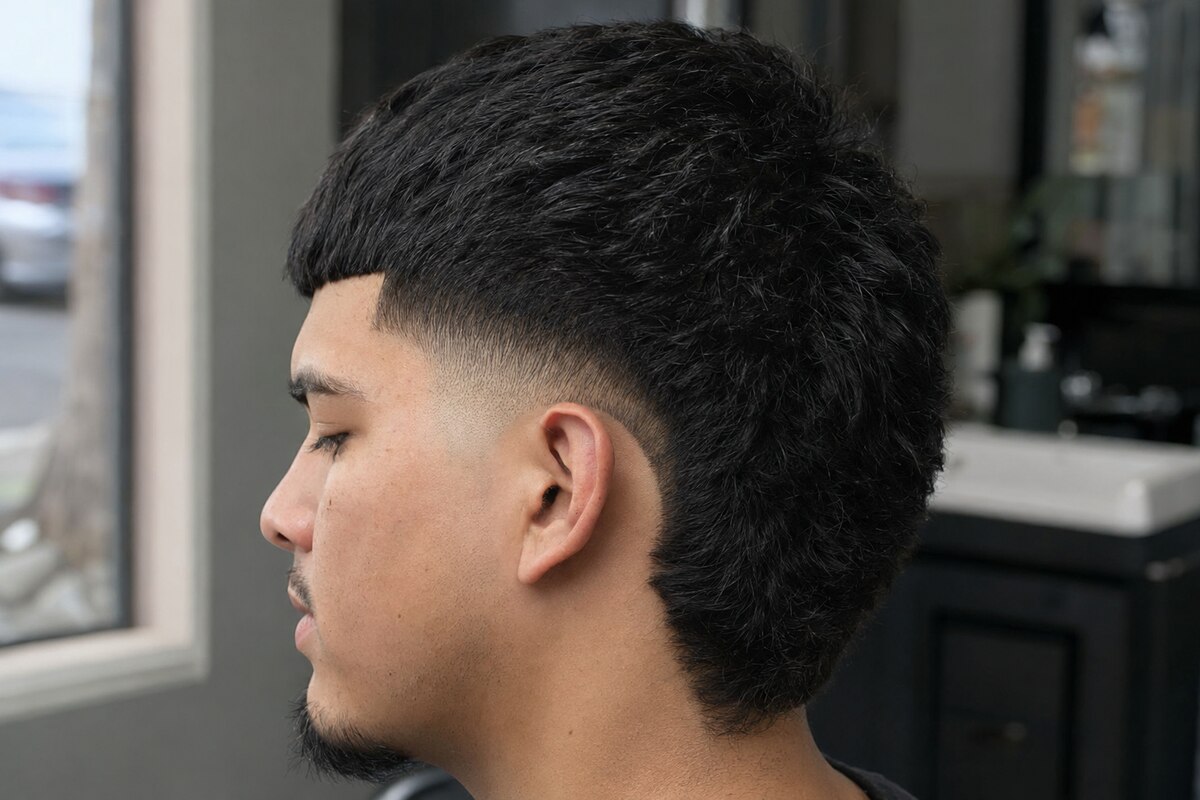
The Edgar haircut features a heavy top and short, blunt fringe. Replacing the usual taper with a burst fade creates a more rounded side profile.
Keep the burst compact so the dense top remains the focus. For a softer look, ask the barber to break up the fringe rather than cutting one completely solid line.
Styling product: Use American Crew Fiber for separation or Reuzel Extreme Hold Matte Pomade when the hair is coarse and difficult to control.
19. Burst Fade with Textured Fringe
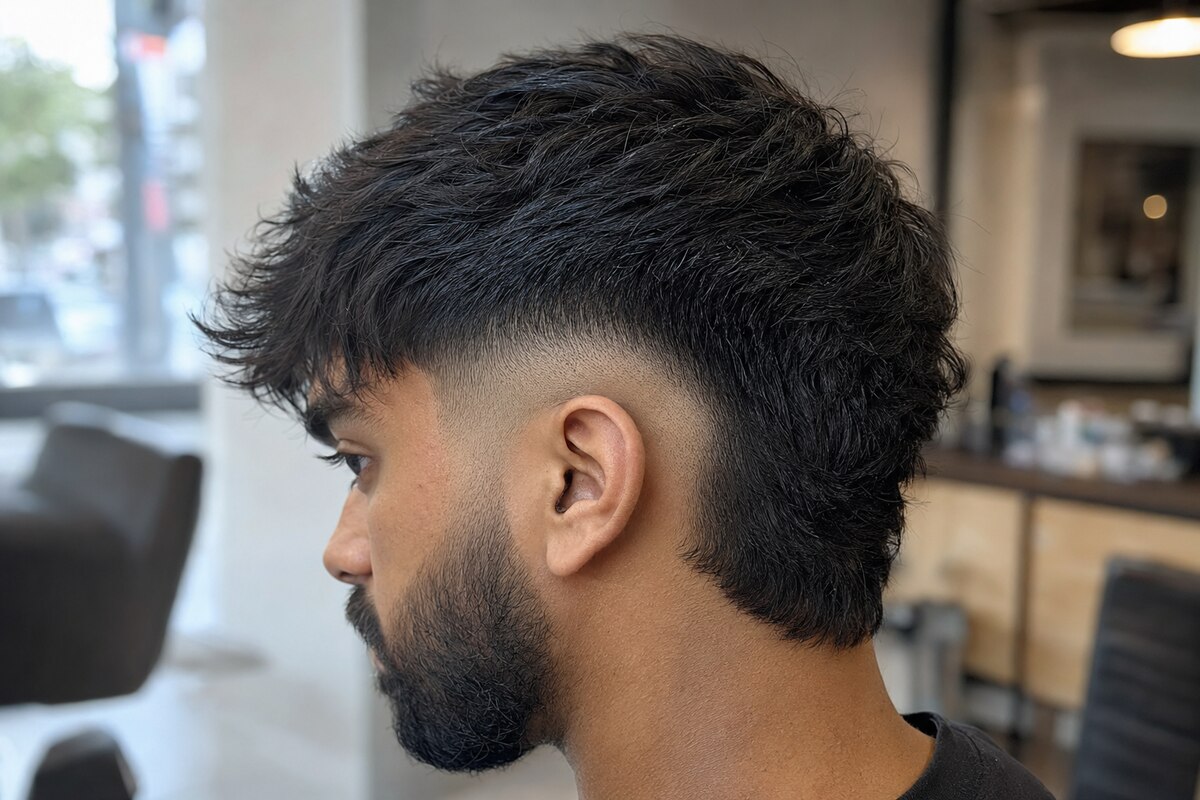
A textured fringe creates movement across the forehead while the burst fade keeps the sides clean.
The fringe can sit above the eyebrows or extend farther forward. Ask for internal layers so individual sections separate naturally instead of forming one heavy block.
Styling product: Apply American Crew Fiber to dry hair and twist a few small sections with your fingertips.
Avoid applying too much. Heavy product can pull the fringe together and expose more of the scalp.
20. Burst Fade with Quiff
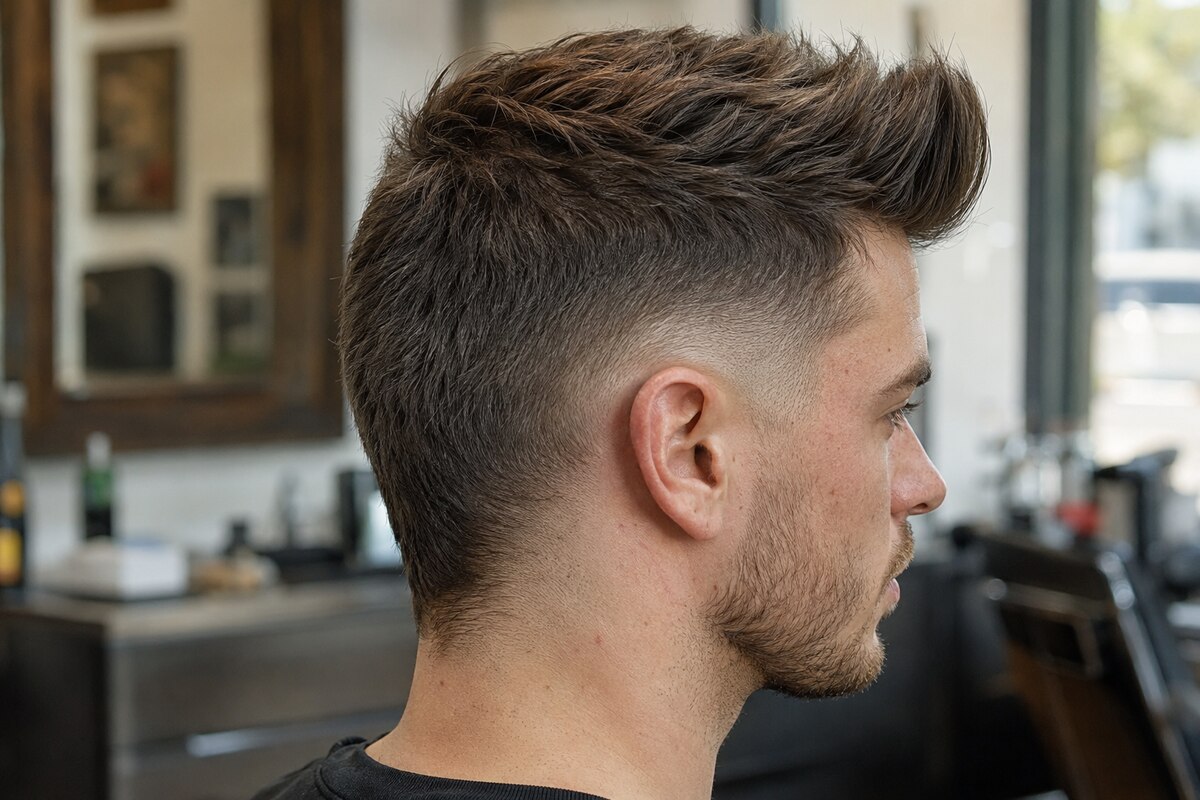
A quiff adds height at the front while keeping the crown relatively controlled. The rounded burst fade directs attention upward and makes the front appear more prominent.
This style works best when the top has enough length and density to hold volume.
Blow-drying creates most of the shape. Product should support that structure rather than replace it.
Product combination: Apply ghd Bodyguard before blow-drying, then finish with Layrite Natural Matte Cream. ghd describes Bodyguard as a lightweight, invisible heat-protection spray for all hair types.
21. Pompadour with Burst Fade
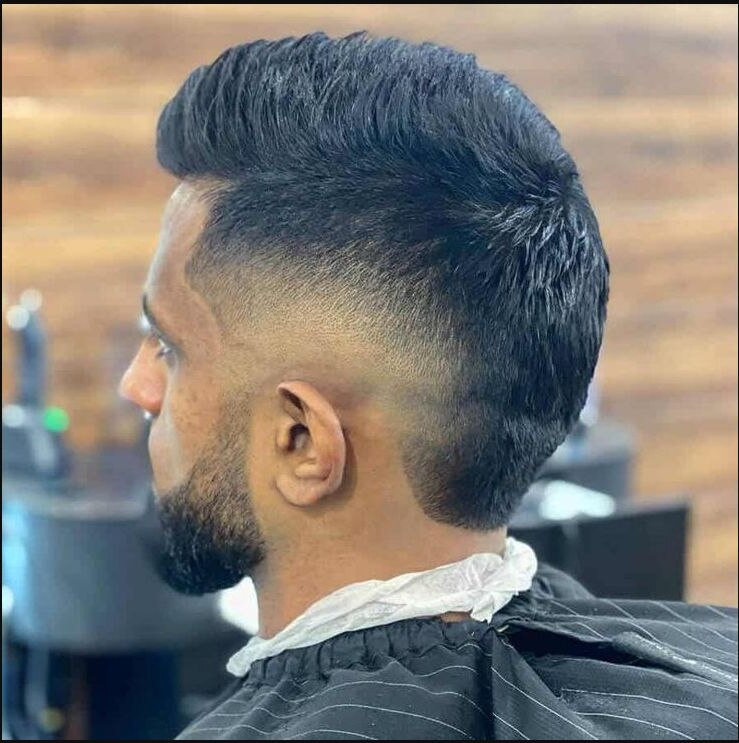
The burst fade pompadour combines a high-volume top with a rounded, closely blended area around the ears.
Keep some weight near the temples. Removing too much hair can make a tall pompadour appear disconnected from the sides.
Blow-dry the hair upward and backward with a vent brush. Finish with a strong product that can support the height.
Styling product: Reuzel Extreme Hold Matte Pomade suits a modern matte pompadour. Use a smaller amount for flexible movement.
22. Burst Fade Comb-Over
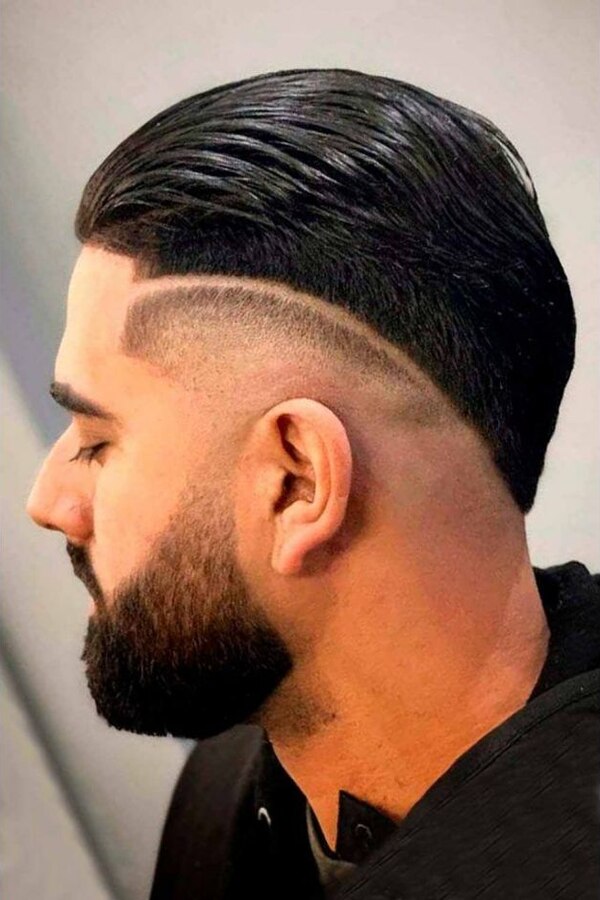
A comb-over adds a clear side direction while the burst fade modernizes the outline around the ears.
A low burst taper usually works better than a high skin fade because it retains enough weight to support the part. You can ask for a natural part or a shaved hard part.
Styling product: Use Layrite Natural Matte Cream for a natural finish. Apply it to lightly damp hair and comb the hair diagonally backward.
Best for: Professional and smart-casual styles.
23. Slick-Back Burst Fade
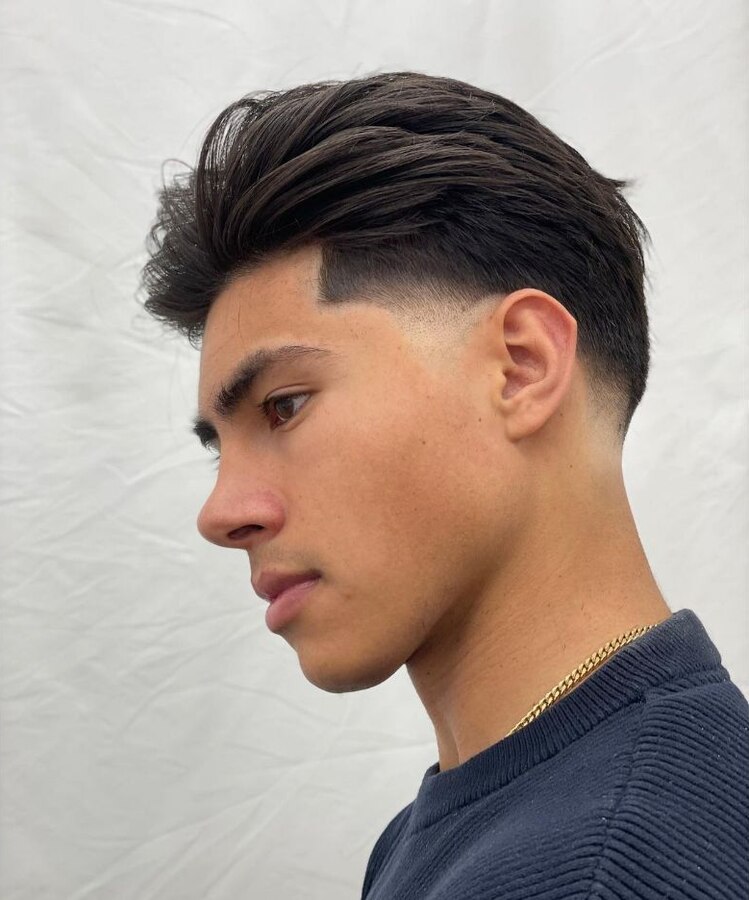
The slick-back burst fade keeps medium length on top and directs it away from the face. The curved fade prevents the hair from looking too heavy around the ears.
A matte product creates a modern, touchable finish. A traditional pomade creates more shine and stronger comb lines.
Styling product: Layrite Natural Matte Cream works for a relaxed slick-back. Reuzel Extreme Hold Matte Pomade offers more control for thick or coarse hair.
24. Messy Top with Burst Fade
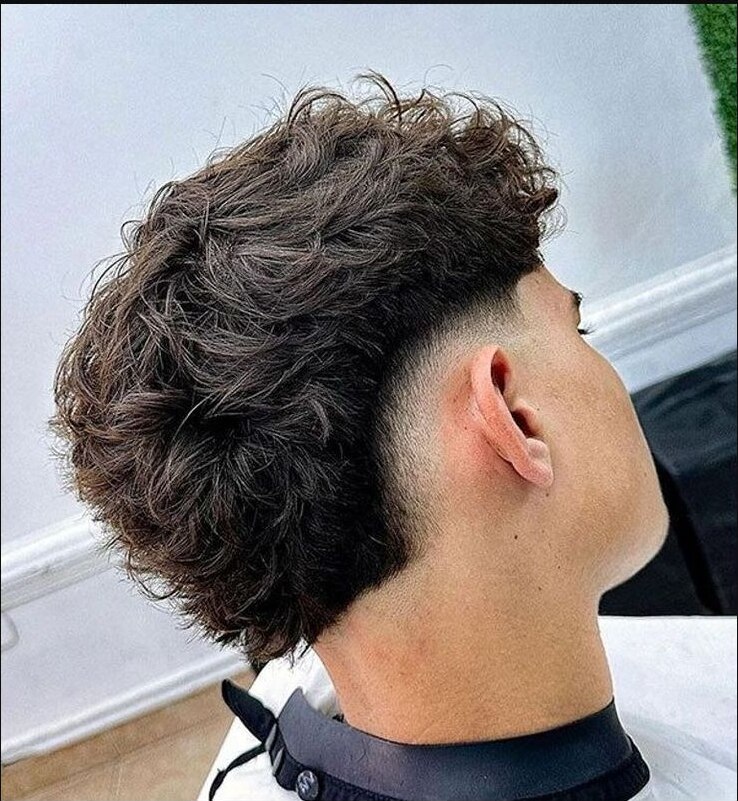
A messy top adds relaxed volume while the burst fade keeps the haircut deliberate and clean.
Ask for uneven layers across the top rather than one uniform length. The variation allows the hair to move naturally and prevents a round, helmet-like shape.
Styling product: Use Bumble and bumble Surf Spray on damp hair. Scrunch the hair and let it air-dry, or use a diffuser for additional lift.
This style works particularly well with natural bends and loose waves.
25. Spiky Burst Fade
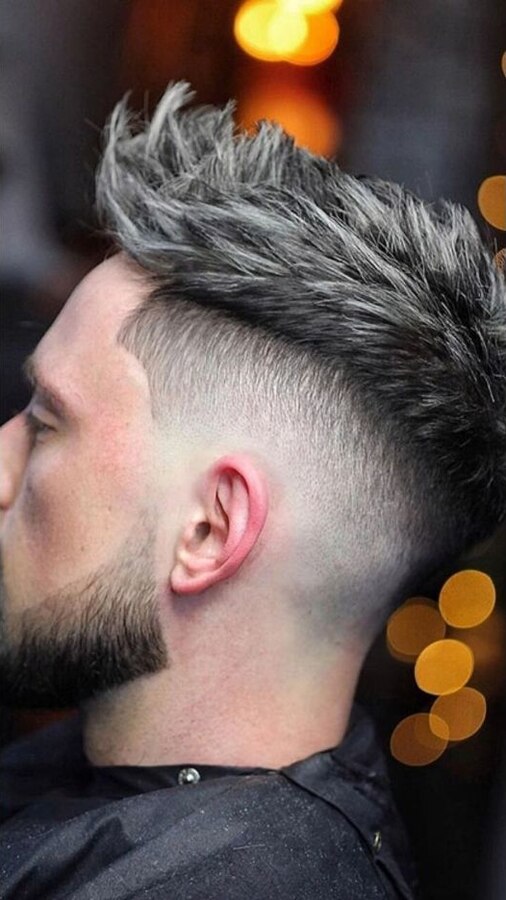
Short spikes create vertical texture and make the top look taller. A mid or high burst fade strengthens that shape by removing weight around the ears.
Avoid creating perfectly separated, rigid spikes. Small, irregular sections produce a more current finish.
Styling product: Reuzel Extreme Hold Matte Pomade provides strong control without the glossy finish associated with traditional gel.
Use only a small amount. Too much can make short hair look heavy.
26. Curly Hair Burst Fade
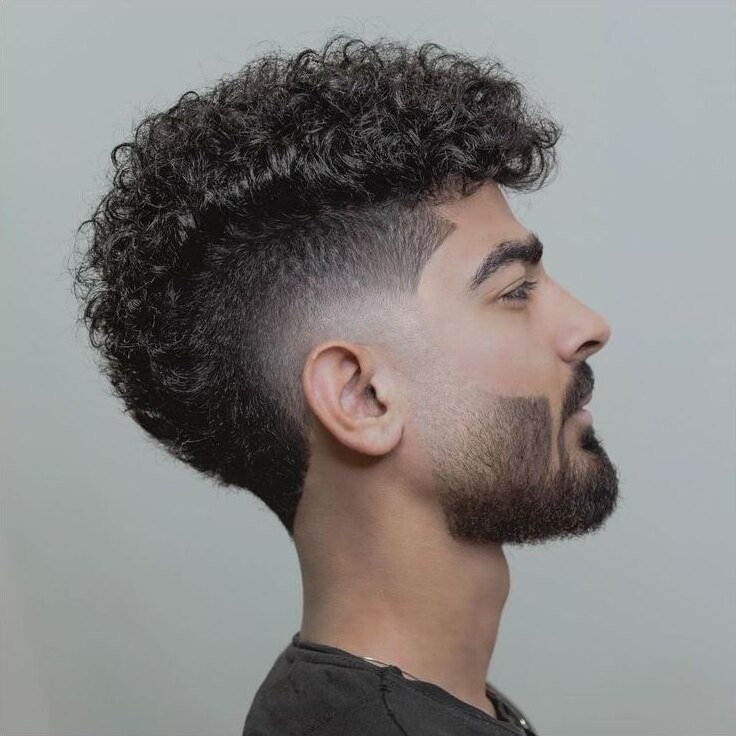
A curly burst fade removes excess weight around the ears while preserving volume on top. It works with loose curls, tight curls and curly fringes.
Choose a low fade for a fuller silhouette or a skin burst fade for maximum curl contrast.
Styling product: Apply Moroccanoil Curl Defining Cream to damp hair. Distribute it from roots to ends, then diffuse or let the hair dry naturally. The formula is designed to define curls, condition the hair and control frizz.
27. Wavy Hair Burst Fade
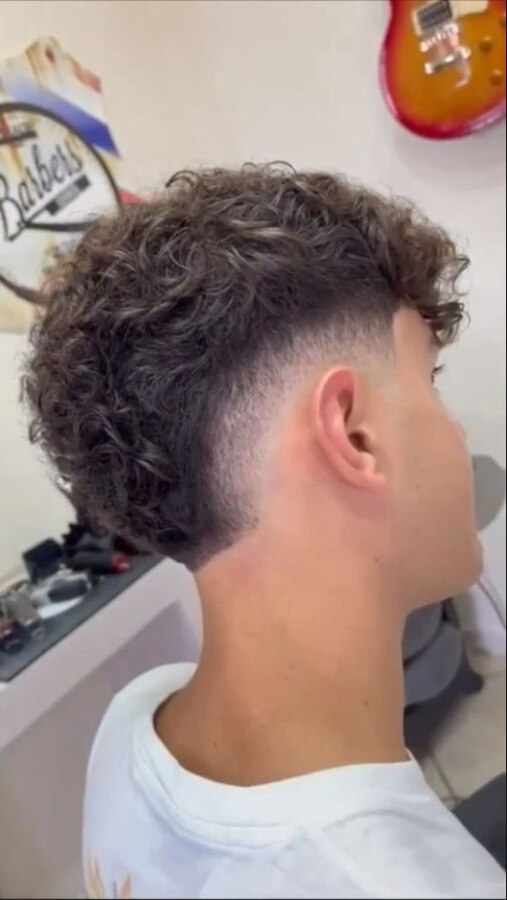
Wavy hair adds movement without needing a highly structured styling routine. The top can move backward, forward or into a short mullet.
Ask for layers through the crown so the waves do not collect into one heavy section.
Styling product: Bumble and bumble Surf Spray can add separation and a beach-inspired texture. Moroccanoil Curl Defining Cream is a better option when the waves become dry or frizzy.
28. Straight Hair Burst Fade
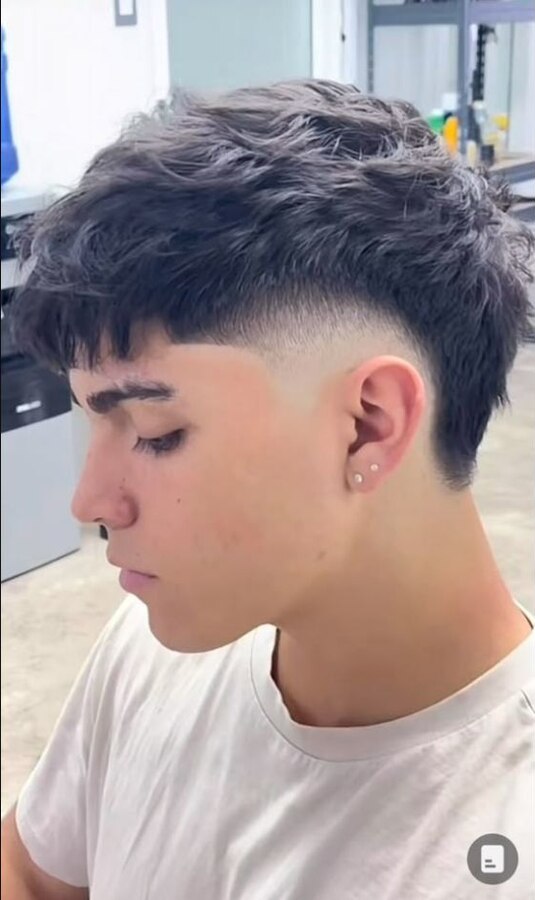
Straight hair clearly displays the curved outline of a burst fade. The top can become a crop, fringe, quiff or short mullet.
Fine straight hair usually benefits from shorter layers and a low fade. Thick straight hair can support more length and stronger texture.
Styling product: Use American Crew Fiber on thick short hair. Choose Schwarzkopf OSiS Dust It when fine hair needs volume rather than heavy hold.
29. Burst Fade for Black Men with Coils
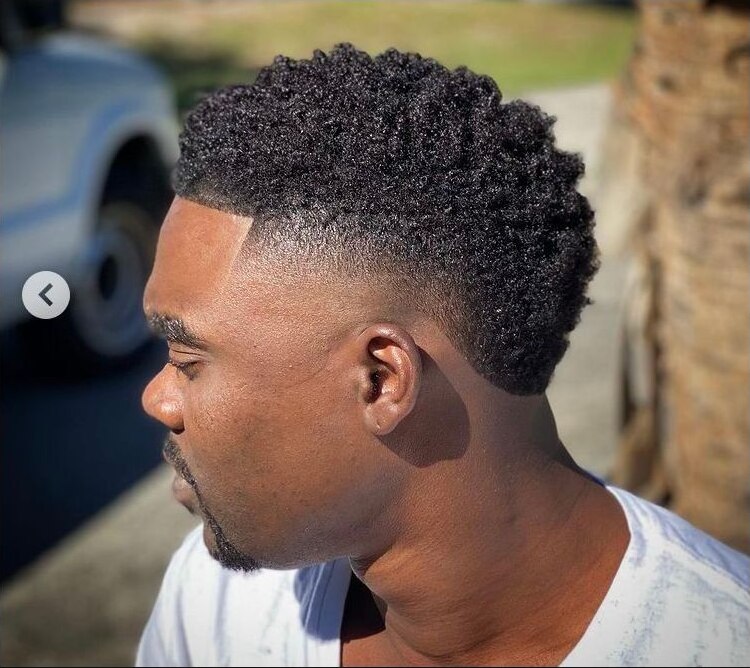
A burst fade can frame short coils, sponge curls, twists or a textured mohawk. The rounded area around the ear creates a clean border while preserving density through the center.
A line-up can complement the style, but the barber should follow the natural hairline rather than pushing it backward.
Styling product: Use a curl sponge with a light curl cream or styling foam. Avoid repeatedly twisting dry, unmoisturized hair.
30. Burst Fade for Thick Hair
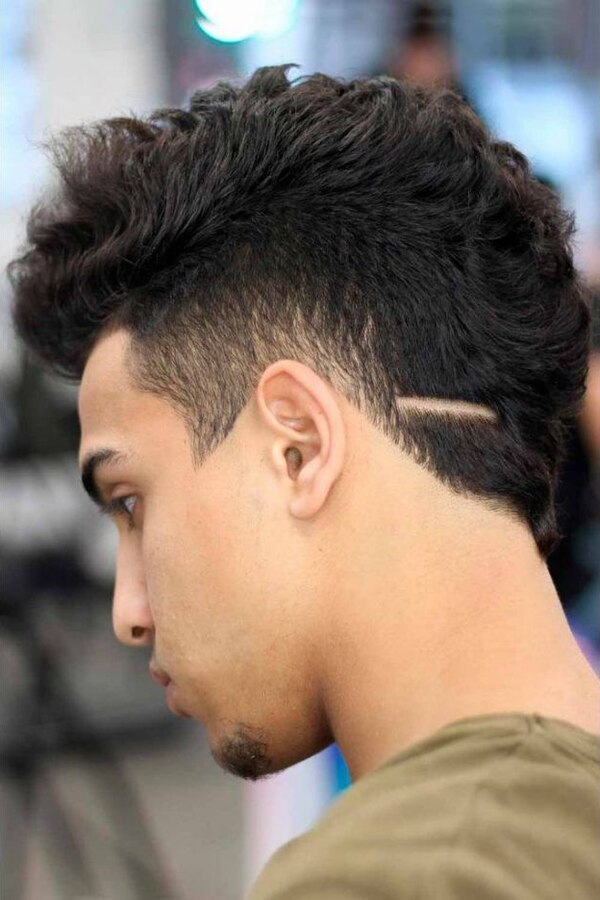
Thick hair provides enough density to create a clear difference between the faded sides and the longer top.
Ask the barber to remove internal bulk rather than simply shortening everything. Point cutting and controlled layering allow the hair to move while retaining its natural fullness.
Styling product: Reuzel Extreme Hold Matte Pomade suits thick mohawks and quiffs. American Crew Fiber works better for short crops and textured fringes.
Best fade height: Mid or high.
31. Burst Fade for Fine Hair
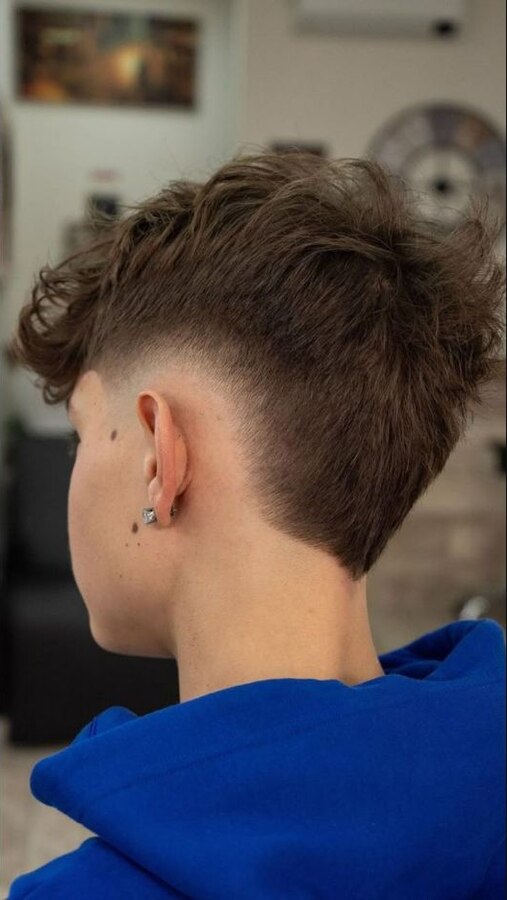
Fine hair can work with a burst fade, but removing too much from the sides may make the overall hairstyle appear thinner.
Choose a low burst taper and keep the top relatively short. A textured crop, short quiff or crew cut can create a denser appearance.
Styling product: Schwarzkopf OSiS Dust It adds strong grip, texture and root lift. The brand specifically recommends it for fine and medium hair densities.
Apply a small amount near the roots rather than coating the ends.
32. Burst Fade with Line-Up
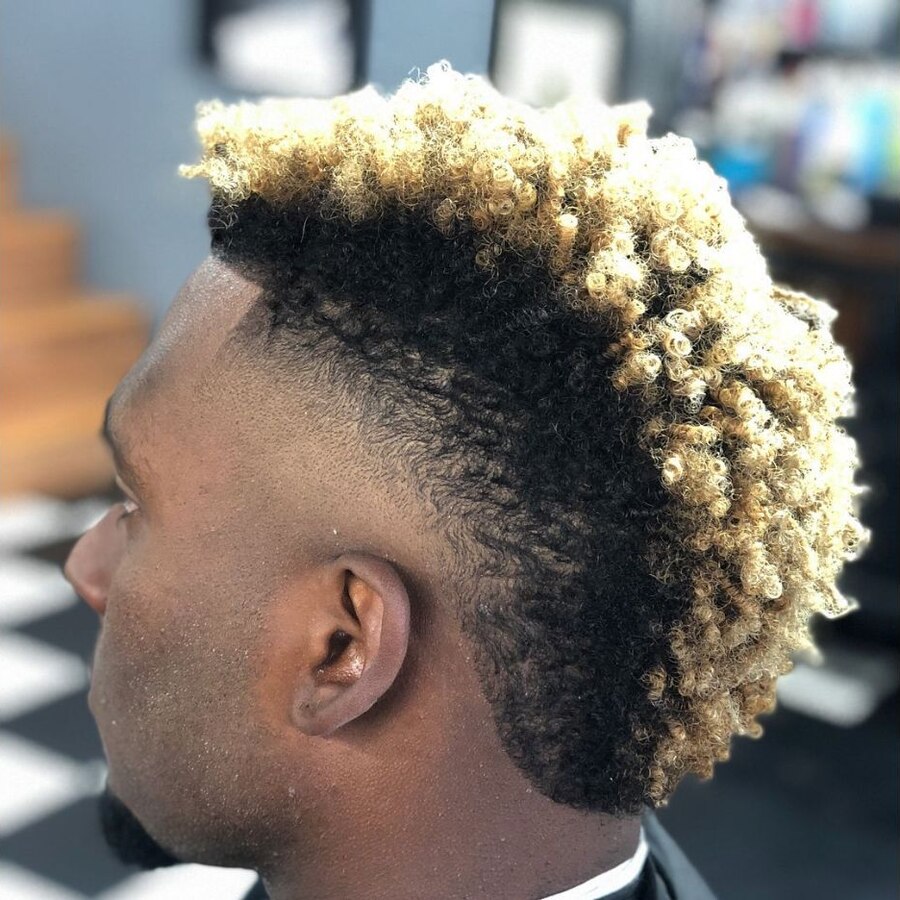
A line-up creates precise edges across the forehead, temples and sideburns. The angular front contrasts with the rounded fade around the ears.
This detail works well with buzz cuts, short crops, coils and curls. However, the barber should not move the natural hairline backward simply to create a straighter edge.
Best for: Men who prefer a sharp, freshly cut finish.
Maintenance: The line-up may lose definition before the fade itself needs a full haircut.
33. Burst Fade with Beard
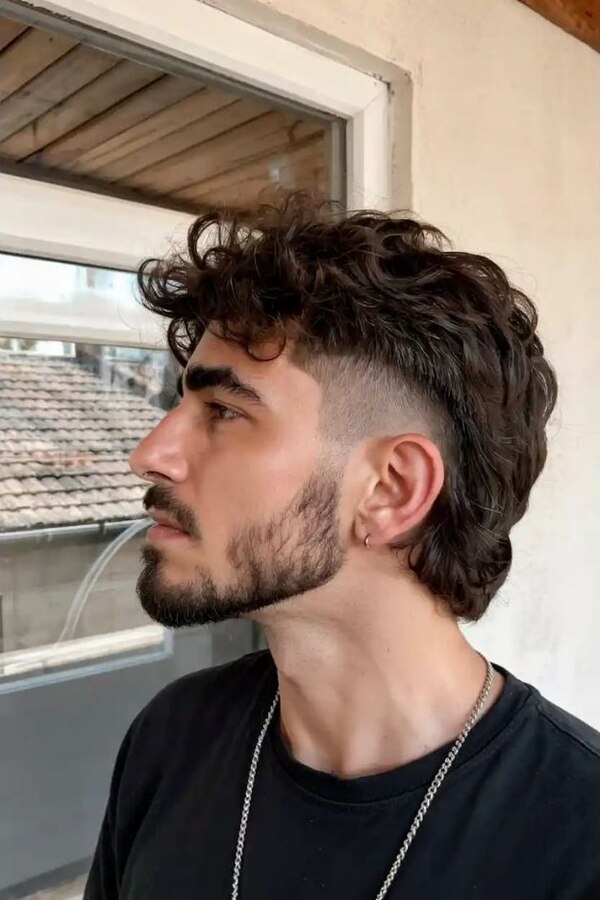
A burst fade can connect smoothly into a beard through the sideburn area. The transition may remain gradual or become more dramatic with a skin-level gap.
A soft connection suits patchier facial hair. A sharper skin blend works better with dense beards.
Ask your barber for: A continuous fade from the temple into the sideburn, with the beard length increasing gradually toward the jaw.
Best for: Full beards, short boxed beards and shaped stubble.
34. Burst Fade with Hair Design
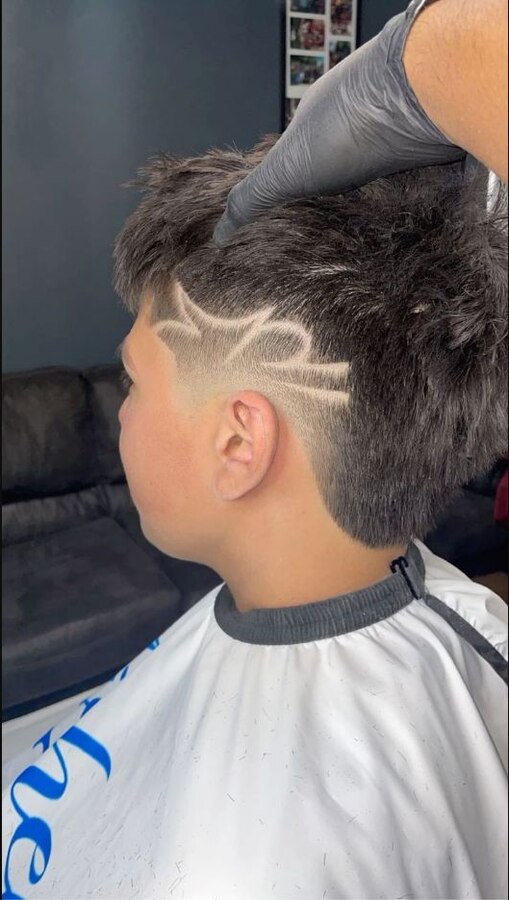
A barber can place a shaved line, curve or geometric detail above or behind the faded area.
Simple designs usually complement the circular fade better than several competing patterns. Designs also disappear quickly as the hair grows, so they need frequent touch-ups.
Ask your barber for: A line that follows the curve of the burst rather than cutting through it at an unrelated angle.
Best for: Statement cuts, events and creative personal styles.
35. Blonde Top with Burst Fade
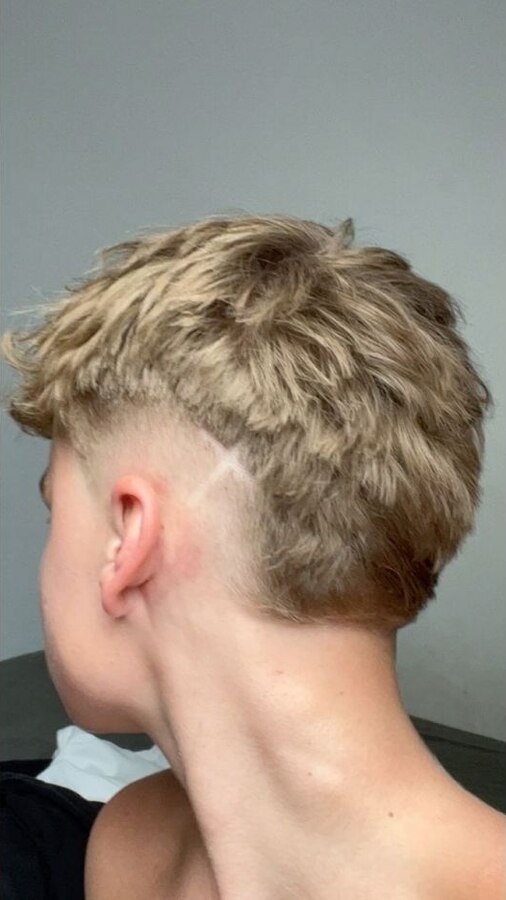
A blonde, bleached or highlighted top creates strong color contrast against darker faded sides.
The color can cover the entire top or remain limited to curls, tips and textured sections. This variation works especially well with crops, mohawks and curly mullets.
Care product: Use Olaplex No.4P Blonde Enhancer Toning Shampoo weekly or when yellow tones become visible. Olaplex says the purple shampoo neutralizes brassiness, and 91% of participants in its cited product testing agreed that their hair looked less brassy.
Follow the product instructions carefully. Excessive use of pigmented shampoo can leave very light hair looking dull or purple.
Low vs. Mid vs. High Burst Fade
The fade height controls how much hair remains around the sides.
Low Burst Fade
A low burst fade stays close to the ear. It retains more width around the head and creates the most subtle finish.
Choose it for professional styles, fine hair, longer face shapes and low-maintenance haircuts.
Mid Burst Fade
A mid burst fade removes more weight and makes the curved shape easier to see. It provides the best balance between versatility and contrast.
Choose it for textured crops, curls, short mullets and faux hawks.
High Burst Fade
A high burst fade reaches closer to the temple and crown. It creates the boldest profile and makes the top look taller.
Choose it for thick hair, mohawks, tall curls and statement mullets.
Burst Fade vs. Drop Fade
A burst fade forms a concentrated semicircle around each ear. It usually preserves more length toward the neckline and center of the back.
A drop fade continues across the sides and back. Its fade line drops lower behind the ears before joining at the nape.
Choose a burst fade when you want to emphasize a mohawk, mullet or longer back section. Choose a drop fade when you want the entire back and sides blended into one continuous faded shape.
Burst Fade vs. Taper Fade
A taper fade gradually shortens the hair around the temples, sideburns and neckline. It does not always create the circular shape associated with a burst fade.
A burst fade focuses more attention around the ear and can remove a larger section of hair.
Choose a taper when you want a traditional, conservative finish. Choose a burst fade when you want a more visible side profile or plan to retain length at the back.
Which Burst Fade Suits Your Face Shape?
Round Face
Use a mid or high burst fade with extra height on top. A quiff, faux hawk or textured mohawk can make the face appear longer.
Avoid leaving excessive width around the temples.
Square Face
Most burst fades suit square faces. A low or mid fade can emphasize the jawline without making the top look too narrow.
Crops, crew cuts and short mullets work particularly well.
Oval Face
An oval face can support almost every version. Choose the fade height according to your hair type and preferred level of contrast.
Avoid adding unnecessary height if the face already appears long.
Long or Rectangular Face
Choose a low burst fade and retain some width around the sides. Keep the top controlled rather than styling it into a very tall pompadour or mohawk.
A textured fringe can visually shorten the face.
Heart-Shaped Face
Keep some volume near the temples and avoid taking the burst fade excessively high. A curly top, loose fringe or side-swept style can balance a narrower jaw.
How to Ask Your Barber for a Burst Fade
Do not ask only for “a burst fade.” That phrase describes the curved fading technique, but it does not explain the complete haircut.
Tell your barber:
- Whether you want a low, mid or high burst fade.
- Whether the shortest point should be skin, zero or a longer guard.
- How much hair you want to retain behind the ears.
- Whether the neckline should remain natural, tapered or pointed.
- Which hairstyle you want on top.
- Whether you want a natural hairline or sharp line-up.
- How often you plan to return for maintenance.
Bring at least two reference images. One should show the side. The other should show the back. A front-facing image rarely reveals the full shape of a burst fade.
How Often Should You Refresh a Burst Fade?
Healthy scalp hair grows at approximately 0.35 millimeters per day, which equals roughly half an inch per month.
That growth may sound slow, but even a few millimeters can soften the clean transition of a skin fade.
Use this general schedule:
| Fade type | Typical refresh schedule |
|---|---|
| Skin burst fade | Every 2 to 3 weeks |
| Zero burst fade | Every 2 to 3 weeks |
| Mid burst fade | Every 3 weeks |
| Low burst taper | Every 3 to 4 weeks |
| Hair design or sharp line-up | Every 1 to 2 weeks |
These are visual-maintenance guidelines, not rules. Your ideal schedule depends on hair growth, budget and how sharp you want the cut to remain.
How to Style a Burst Fade
The fade requires no daily product. Focus on the top.
For a Textured Crop
Rub a pea-sized amount of American Crew Fiber between your palms. Work it through dry hair from the back toward the front. Separate the fringe with your fingertips.
For Fine Hair
Sprinkle a small amount of Schwarzkopf OSiS Dust It near the roots. Massage it gently into the hair and lift the top with your fingers.
Do not keep adding powder throughout the day. Excess product can make the hair feel gritty.
For Curls
Apply Moroccanoil Curl Defining Cream to towel-dried hair. Scrunch the curls upward and diffuse on a low setting.
Avoid repeatedly touching the hair while it dries because this can disturb the curl pattern.
For a Quiff or Pompadour
Apply ghd Bodyguard before blow-drying. Direct the hair upward and backward with a brush. Finish with Layrite Natural Matte Cream for medium control or Reuzel Extreme Hold Matte Pomade for maximum hold.
For a Messy Mullet
Mist Bumble and bumble Surf Spray through damp hair. Scrunch the top and back. Air-dry for a softer finish or use a diffuser for more volume.
Frequently Asked Questions
Is a burst fade suitable for straight hair?
Yes. Straight hair makes the rounded fade easy to see and works well with crops, fringes, quiffs and short mullets. Ask for texture on top if the hair naturally sits flat.
Does a burst fade work with curly hair?
Yes. The fade removes bulk around the ears while preserving natural volume on top and at the back. Low and mid burst fades are particularly adaptable to curls.
Is a burst fade the same as a mullet?
No. A burst fade describes the rounded fading technique around the ears. A mullet describes a haircut that retains more length at the back. Barbers often combine them, but either style can exist separately.
Is a burst fade professional?
A low burst taper can look professional when paired with a crew cut, short crop, side part or controlled curls. Avoid a long tail, skin-level contrast and shaved designs when your workplace requires a conservative appearance.
Is a burst fade high maintenance?
A skin burst fade needs frequent barber visits because new growth quickly softens the contrast. A low burst taper grows out more gradually and requires less maintenance.
What clipper guard should you request?
Ask for skin or zero if you want maximum contrast. Request a number 0.5 or number 1 starting length if you prefer a softer fade.
Guard numbers can vary slightly between clipper systems and barber techniques. A clear photograph communicates the desired result better than a number alone.
Can you combine a burst fade with a beard?
Yes. The barber can blend the fade into the sideburn and gradually increase the length toward the beard. This creates a clean transition between the haircut and facial hair.
Does a burst fade suit fine hair?
Yes, but keep the fade low and avoid removing too much width from the sides. A short textured top and lightweight volume powder can make fine hair appear fuller.
Can boys and teenagers get a burst fade?
Yes. A low burst fade with a short crop, curls or a restrained mullet creates a school-friendly version. Parents should check school grooming rules before choosing skin fades, long tails or shaved designs.
Final Thoughts
The best burst fade depends on your natural hair, face shape and willingness to maintain the cut.
Choose a low burst taper for a subtle everyday style. Pick a mid burst fade for balanced contrast. Select a high skin burst when you want a bold mohawk, curly top or statement mullet.
Products should support the hairstyle rather than dominate it. American Crew Fiber works well for short texture. Moroccanoil Curl Defining Cream suits curls. Schwarzkopf OSiS Dust It helps fine hair. Layrite Natural Matte Cream provides flexible control, while Reuzel Extreme Hold Matte Pomade supports taller, stronger shapes.
Save clear photographs of the side and back before your appointment. Then ask your barber to adapt the fade to your head shape, density and natural growth pattern instead of copying the reference without adjustment.