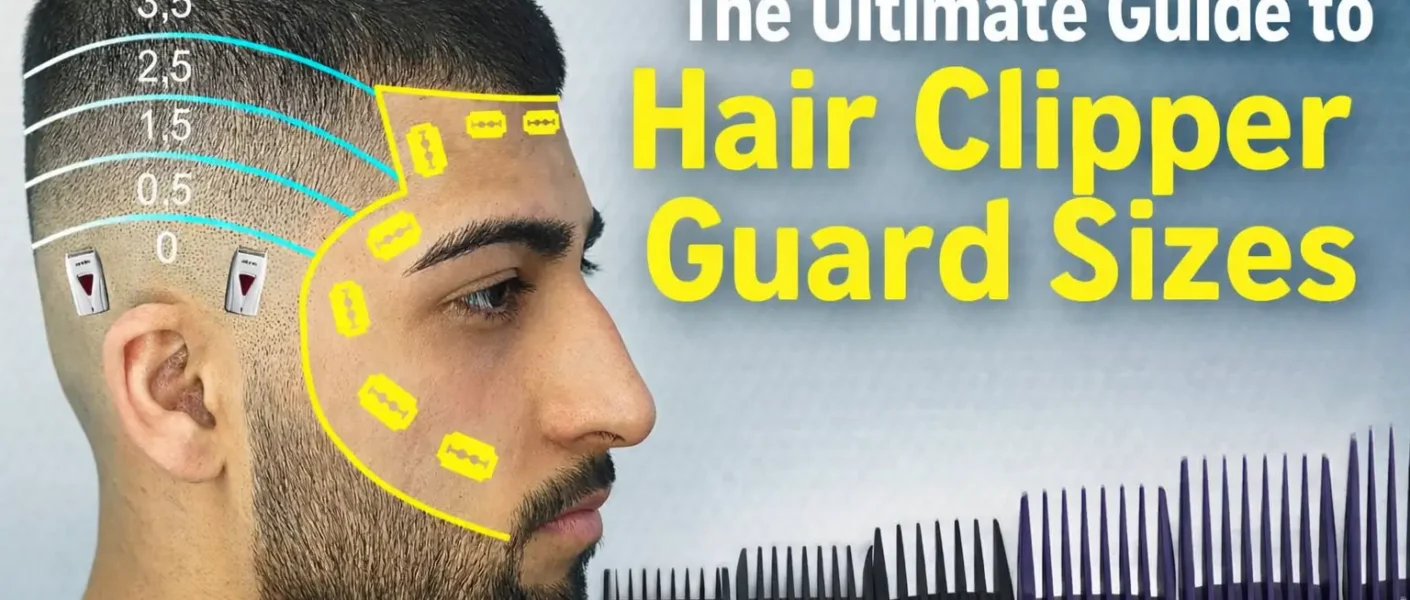
Hair clipper guard sizes are one of those things everyone thinks they understand… until they’re halfway through a haircut wondering why the sides look way shorter than expected. If you’ve ever asked for a “number two” and been surprised or stared at a box of plastic guards trying to decode what they actually do, you’re not alone.
This guide is here to clear the fog. Not in a stiff, textbook way, but in the way a good barber explains it while brushing loose hair off your neck. We’ll cover how hair clipper guard sizes work, what the numbers really mean, how barbers actually use them, and how to choose the right guard for your hair type, face shape, and lifestyle. By the end, you should feel confident enough to talk clipper language without guessing.
Hair clipper guard sizes are simple on the surface, but the details matter. A lot.
Understanding Hair Clipper Guard Sizes
Hair clipper guard sizes follow a numbering system where higher numbers equal longer hair. That part is straightforward. The confusion comes from how small the differences really are and how much those small differences change the final look.
Each guard attaches to the clipper blade and controls how much hair is left behind. The blade cuts everything below the guard’s teeth. That’s it. No magic. But a difference of just a few millimeters can mean the jump from clean and sharp to too short and unforgiving.
Most standard clipper sets include guards from #0 to #8. Some brands add half sizes or extended guards, but the core system stays the same across manufacturers.
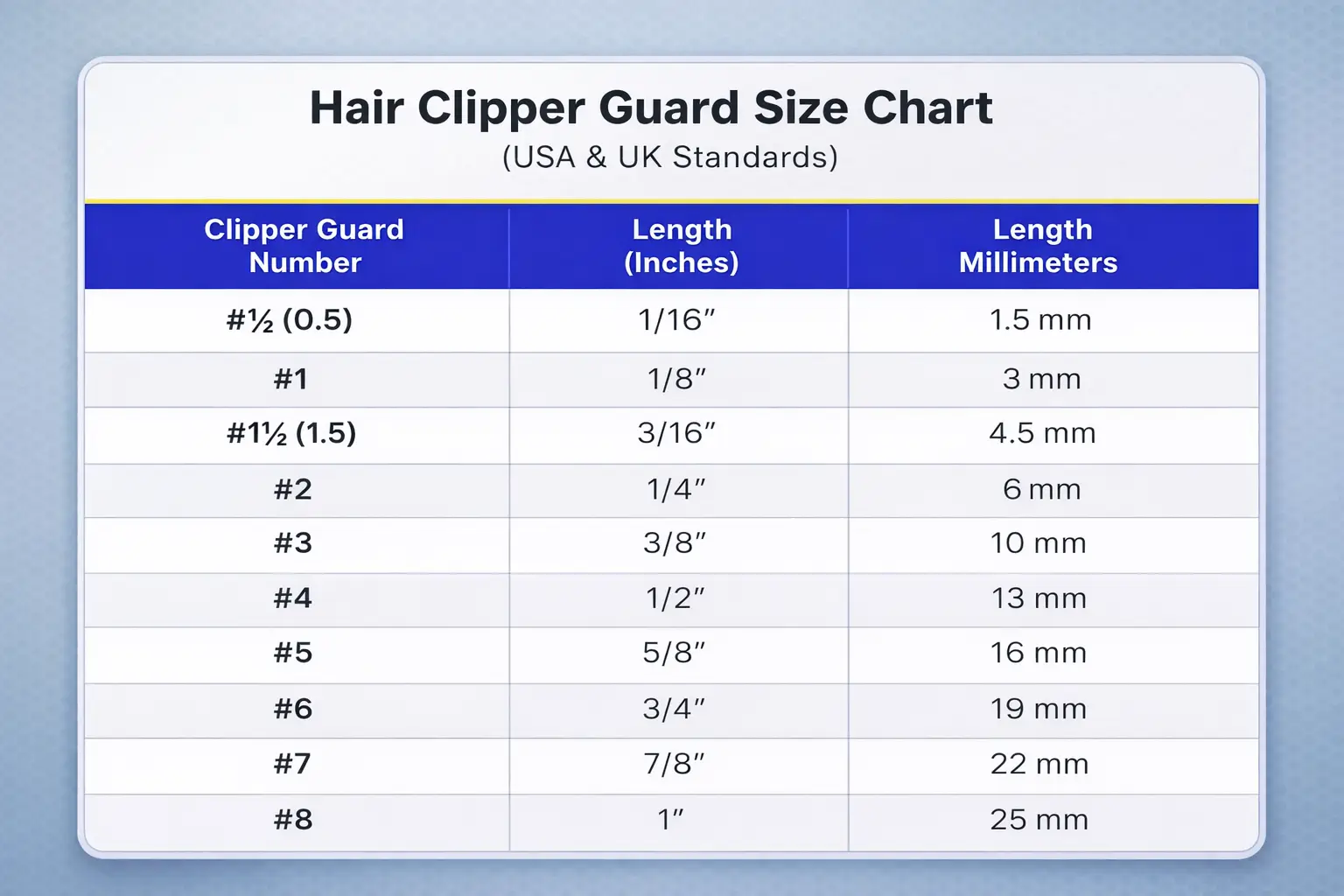
The Standard Hair Clipper Guard Size Chart
Here’s the reference chart barbers use as a baseline. Always remember this is approximate. Technique, hair type, and clipper brand all affect the final result.
| Guard Number | Length (Inches) | Length (Millimeters) | Common Description |
|---|---|---|---|
| 0 (No Guard) | 1/16″ or less | 1.5 mm | Nearly bald, skin-close cut |
| #1 | 1/8″ | 3 mm | Very short buzz, scalp visible |
| #2 | 1/4″ | 6 mm | Short buzz, cleaner coverage |
| #3 | 3/8″ | 10 mm | Neat, balanced short length |
| #4 | 1/2″ | 13 mm | Classic crew cut territory |
| #5 | 5/8″ | 16 mm | Medium length with shape |
| #6 | 3/4″ | 19 mm | Fuller, brushable length |
| #7 | 7/8″ | 22 mm | Long crew, soft blending |
| #8 | 1″ | 25 mm | Longest standard guard |
⚠️ Note on “Half Sizes”: While the #0.5 and #1.5 guards are essential for smooth fades, they are rarely included in standard retail clipper kits. If your kit jumps straight from #0 to #1, you may need to purchase these “half guards” separately to achieve a professional-level blend.
If you take one thing from this table, let it be this: the jump between guards is smaller than most people expect. That’s why starting longer is always the smarter move.
Pro Tip: Maintenance Matters Before you snap on a guard, apply two drops of oil to the blades. Also, watch your pressure: Let the clipper do the work. Pressing too hard against the scalp can cause “trenching” (uneven lines) or painful nicks, especially with shorter guards.
The Secret to an Even Cut: Directional Cutting
The most common mistake beginners make isn’t picking the wrong guard—it’s moving the clipper in the wrong direction.
- Go “Against the Grain”: For a guard to work correctly, the hair needs to stand up so it can pass through the teeth. You must move the clipper in the opposite direction of hair growth.
- The Crown “Swirl”: Hair rarely grows straight down. On the back of the head (the crown), hair usually grows in a circular “cowlick” pattern. If you only move the clipper upward, you’ll miss half the hairs, leaving it looking patchy.
- The Technique: As you reach the crown, move the clipper in multiple directions—up, left, right, and diagonally—to ensure the guard catches every hair at that specific length.
A Note on Brand Compatibility: The “Big Three”
While the numbering system is universal, the physical guards are not. If you are buying replacement guards, you must match them to your specific brand:
- Wahl: Most home and pro clippers use a “slide-on” plastic clip. Their “Premium” or “Elite” guards with metal clips are highly recommended for a more secure fit.
- Andis: Many professional Andis clippers (like the Master series) use magnetic guards. These will not stay on a Wahl or Oster blade.
- Oster: Famous for “detachable blades” (where the whole metal head pops off) rather than plastic guards. While they make guards for their “Fast Feed” line, they are shaped differently than Wahl’s.
Pro Tip: Always check your model number before buying a “universal” guard set; they rarely fit every brand perfectly.
Why Hair Clipper Guard Sizes Matter More Than You Think
Guard sizes aren’t just about length. They control how light hits the hair, how dense it looks, and how forgiving the haircut is as it grows out.
A #1 on thick, dark hair can still look solid. A #1 on fine or thinning hair can look brutally honest. A #3 can look boring on one head and perfectly clean on another.
Barbers don’t just choose a guard. They choose a guard for your hair.
The Most Common Guard Sizes Explained Like a Barber Would
Let’s break these down in real-world terms.
No Guard and #0
This is as close as clippers go without a razor. Think skin fades, military cuts, or people who genuinely want zero maintenance. There is nowhere to hide here. Every bump, scar, and uneven patch will show.
Barbers use no guard mostly for fades, not full haircuts.
#1 Guard
Short, sharp, and aggressive. This is the guard that screams “buzz cut.” It works best on dense hair and confident skull shapes. It also grows out fast, which can be good or annoying depending on your tolerance for maintenance.
#2 Guard
The most popular guard in the world for a reason. Clean, simple, and still flattering for most people. A #2 gives coverage without fluff. It’s the safe choice when you want short but not shocking.
#3 Guard
This is where things start to look styled instead of shaved. A #3 gives enough length to soften the scalp and hide minor thinning. It’s also a favorite for DIY haircuts because mistakes are easier to forgive.
#4 Guard
Classic barbershop length. This is the backbone of the crew cut. Clean sides, respectable top, and easy upkeep. If you want short hair that still looks professional, this is a strong contender.
#5 and #6 Guards
These are underrated. They’re long enough to show texture but short enough to stay tidy. Great for people who want shape without daily styling.
#7 and #8 Guards
Mostly used for blending or maintaining length rather than full haircuts. These guards keep hair long but controlled. Think polished, not buzzed.
How Barbers Actually Use Hair Clipper Guard Sizes
Barbers rarely use just one guard. Real haircuts are built in layers.
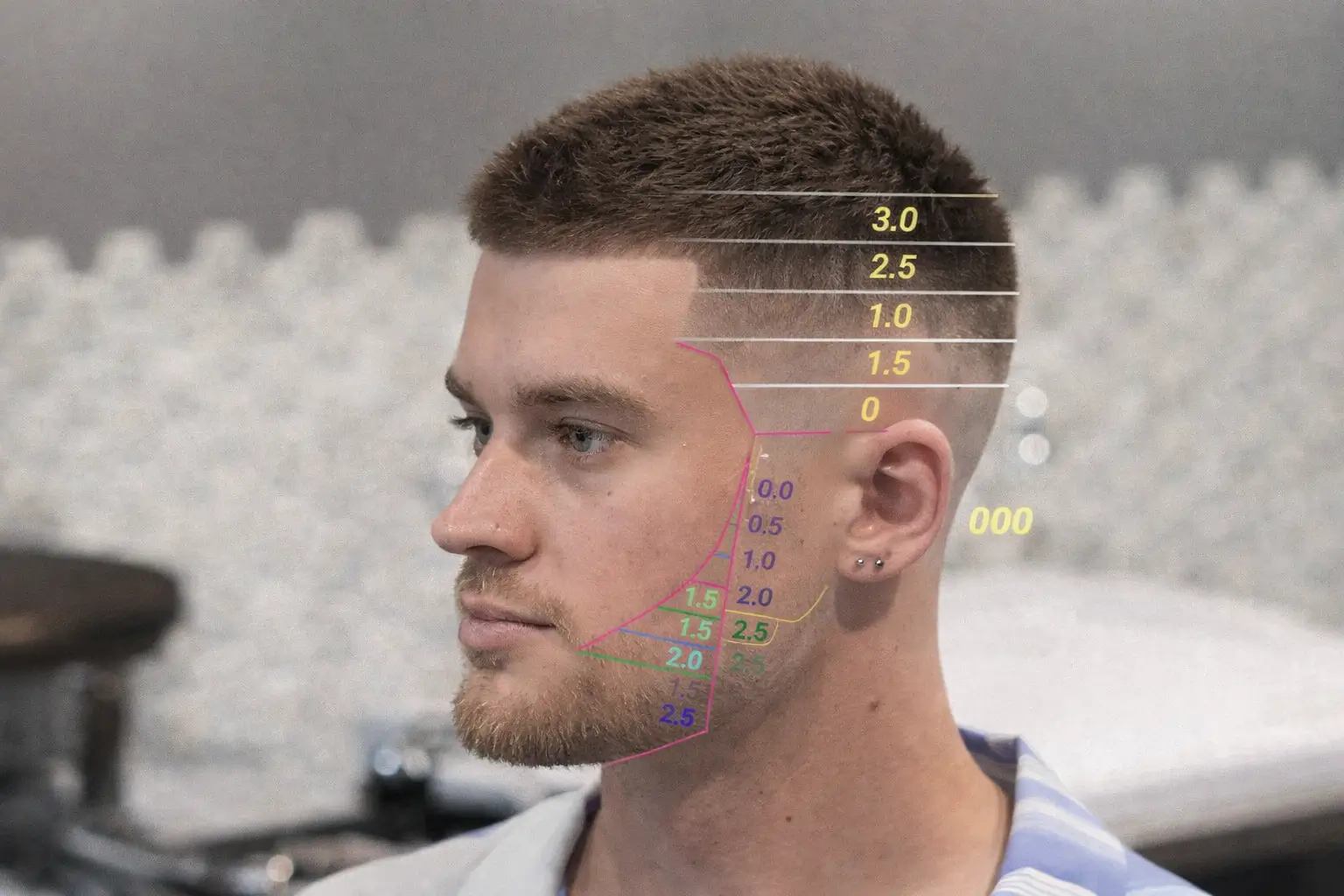
A typical fade might look like this:
- No guard at the neckline
- #0.5 to erase the first line
- #1 moving up
- #2 or #3 for the transition
- Longer guards or scissors on top
This gradual progression is what creates a smooth blend instead of harsh shelves.
The Taper Lever Trick
Every professional clipper has a taper lever. This lever adjusts the blade length slightly, usually by about 1/16 inch. That tiny adjustment is huge for blending.
- Lever closed means shorter
- Lever open means longer
Barbers constantly flick the lever while cutting. It’s how they erase lines without switching guards every five seconds.
Choosing the Right Hair Clipper Guard Size for Your Hair Type
Hair texture changes everything.
Fine or Thinning Hair
Lower guards expose the scalp fast. A #3 or #4 often looks fuller than a #1 or #2. Counterintuitive, but true.
Thick or Coarse Hair
You can go shorter without seeing scalp. #1 and #2 guards still look solid. Blending is key here to avoid bulk.
Curly or Wavy Hair
Curls shrink when cut. Always go longer than you think. A #4 might look like a #2 once the hair dries.
Matching Guard Sizes to Face Shape
This part gets ignored way too often.
- Round faces benefit from shorter sides and more length on top.
- Long faces look better with slightly fuller sides.
- Square faces can handle almost anything.
- Oval faces are the golden child of haircuts.
Guard sizes help balance proportions. A bad choice exaggerates features. A good one quietly fixes them.
Popular Hairstyles and the Guard Sizes Behind Them
Buzz Cut
Usually #1 or #2 all over. Simple, bold, and brutally honest.
Crew Cut
#2 to #4 on the sides, #4 or #5 on top. Clean and timeless.
Fade
Multiple guards stacked in sequence. Precision matters more than the exact numbers.
Longer Clipper Cut
#6, #7, or #8 blended into shorter sides. Great for people who want length without scissors.
Specialty Hair Clipper Guard Sizes
Not all guards are whole numbers.
Half Guards
- #0.5 around 1.5 mm
- #1.5 around 4.5 mm
These are blending lifesavers. They fill the awkward gaps between standard guards.
Extra-Long Guards
Some sets include guards beyond #8. These are mainly for blending into scissor work or maintaining longer styles.
Clipper Guard Materials and Why They Matter
Not all guards are created equal.
Plastic Guards
Lightweight and common. Fine for home use.
Reinforced Plastic Guards
Stiffer, more precise, and less flex. These cut more evenly.
Magnetic Guards
Professional-grade. They snap on securely and don’t pop off mid-cut. Expensive, but worth it if you care about precision.
Common Mistakes People Make With Hair Clipper Guard Sizes
- Starting too short
- Ignoring hair texture
- Forgetting the taper lever
- Cutting with the grain instead of against it
- Assuming all brands cut the same
Every one of these leads to regret.
How Hair Clipper Guard Sizes Affect Grow-Out
Shorter guards look sharp for a week. Longer guards age better. If you hate frequent haircuts, stay above a #3. It buys you time.
Barber-Level Tips for Better Results at Home
- Always start longer than you think
- Cut against the grain
- Use slow, even passes
- Check your work in different lighting
- Blend more than you think you need to
And step back occasionally. Barbers do.
Final Thoughts on Hair Clipper Guard Sizes
Hair clipper guard sizes aren’t complicated, but they’re nuanced. The numbers matter, but how you use them matters more. A #2 isn’t just a length. It’s a decision about maintenance, appearance, and confidence.
Once you understand how guards work, haircuts stop being a gamble. You stop guessing. You start choosing.
And that’s when clippers become a tool instead of a risk.