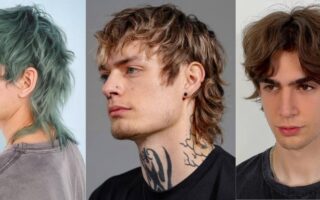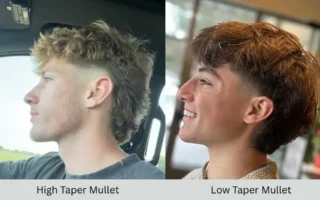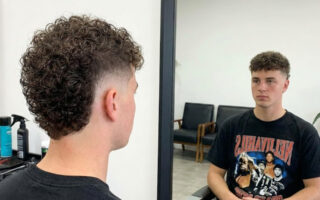
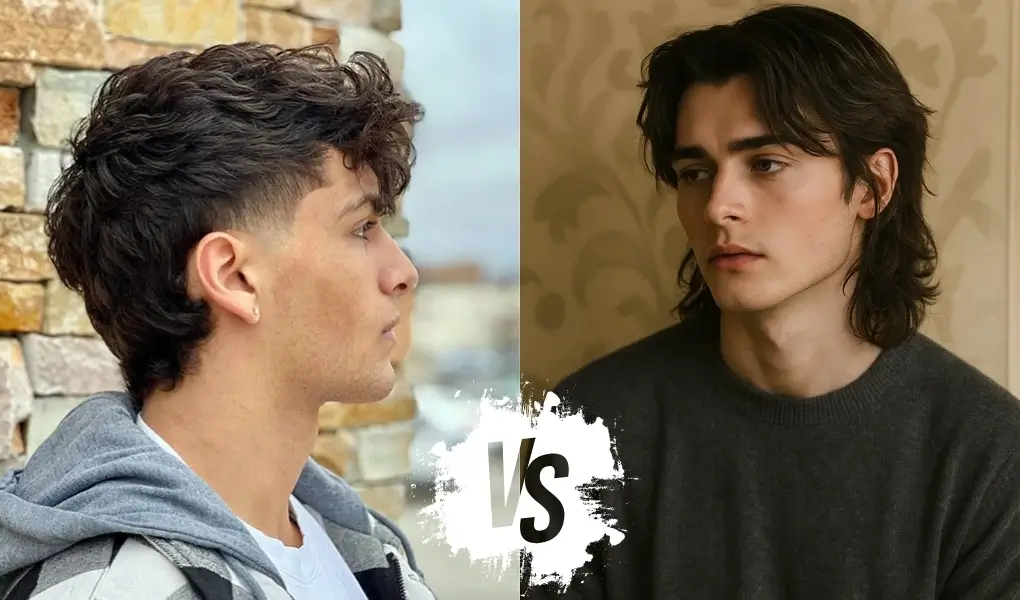
Men’s textured haircuts are no longer about playing it safe. Over the last few years, two styles have dominated barbershops, salons, TikTok, and Google searches alike: the modern mullet and the wolf cut. While they’re often confused—or lazily grouped together—they are built on very different haircut philosophies and suit very different people.
This guide is written to help you choose the right haircut for your hair type, face shape, and lifestyle, not just follow a trend. Instead of vague inspiration photos, you’ll get structure-based explanations, professional insights, and decision-making tools that actually translate to real life.
If you’ve ever wondered:
- “Is a wolf cut just a mullet?”
- “Will this work with my hair density?”
- “Why does it look good on others but not on me?”
You’re in the right place.
What Is a Modern Mullet? (Structure, Not Stereotypes)
The modern mullet is best understood as a contrast haircut. Its defining feature is the intentional difference between the front/sides and the back, but refined with contemporary techniques that make it wearable, versatile, and stylish.
Core Structure of a Modern Mullet
A true modern mullet includes:
- Shorter length at the front and sides (often tapered, faded, or softly disconnected)
- Visible length left in the back (the “tail,” which can be subtle or dramatic)
- Graduated layering, not blunt chopping, to maintain movement and control
This isn’t the harsh, joke-era mullet of the 1980s. Today’s version focuses on shape and balance, not shock value.
How the Modern Mullet Differs From the Classic
The classic mullet was often:
- Boxy on top
- Abruptly short on the sides
- Long in the back with little blending
The modern mullet, by contrast:
- Uses tapering or soft fades to clean up the sides
- Keeps the top more textured and wearable
- Allows the back to flow naturally instead of hanging stiffly
The result is a haircut that reads intentional and stylish rather than ironic.
Who the Modern Mullet Suits Best
The modern mullet works especially well for:
- Men who want a bold silhouette without looking outdated
- Those who like a clean side profile (ears, jawline, neck)
- Anyone comfortable with visual contrast in their haircut
It’s also highly customizable. A modern mullet can lean:
- Subtle and fashion-forward
- Edgy and punk-inspired
- Clean and barber-driven
The key variable is how aggressively the sides are cut and how much length is left in the back.
What Is a Wolf Cut? (Volume, Texture, and Movement)
The wolf cut is a volume-driven haircut, not a contrast-driven one. While it borrows elements from the mullet, its foundation is closer to a shag haircut, designed to create movement, softness, and natural chaos.
Core Structure of a Wolf Cut
A wolf cut is defined by:
- Heavy layering throughout the head
- Strong crown volume
- Face-framing pieces around the eyes, cheekbones, and jaw
- Often a fringe or curtain bang, though not always
Rather than emphasizing short vs long, the wolf cut emphasizes texture vs weight.
Why the Wolf Cut Looks “Messy” (On Purpose)
The wolf cut is engineered to look alive even with minimal styling. The layered crown lifts naturally, while the face-framing pieces break up harsh facial lines.
This is why wolf cuts:
- Photograph well
- Move well when you walk
- Look styled even when air-dried
The “wild” appearance is intentional—it’s controlled disorder.
Who the Wolf Cut Suits Best
The wolf cut is ideal for men who:
- Want volume and texture more than sharp edges
- Prefer a softer, more expressive look
- Have wavy, curly, or naturally textured hair
- Don’t want to style their hair precisely every day
It’s especially popular with men who want their haircut to enhance their features rather than dominate them.
The Silent Deal-Breaker: Hair Density & Strand Type
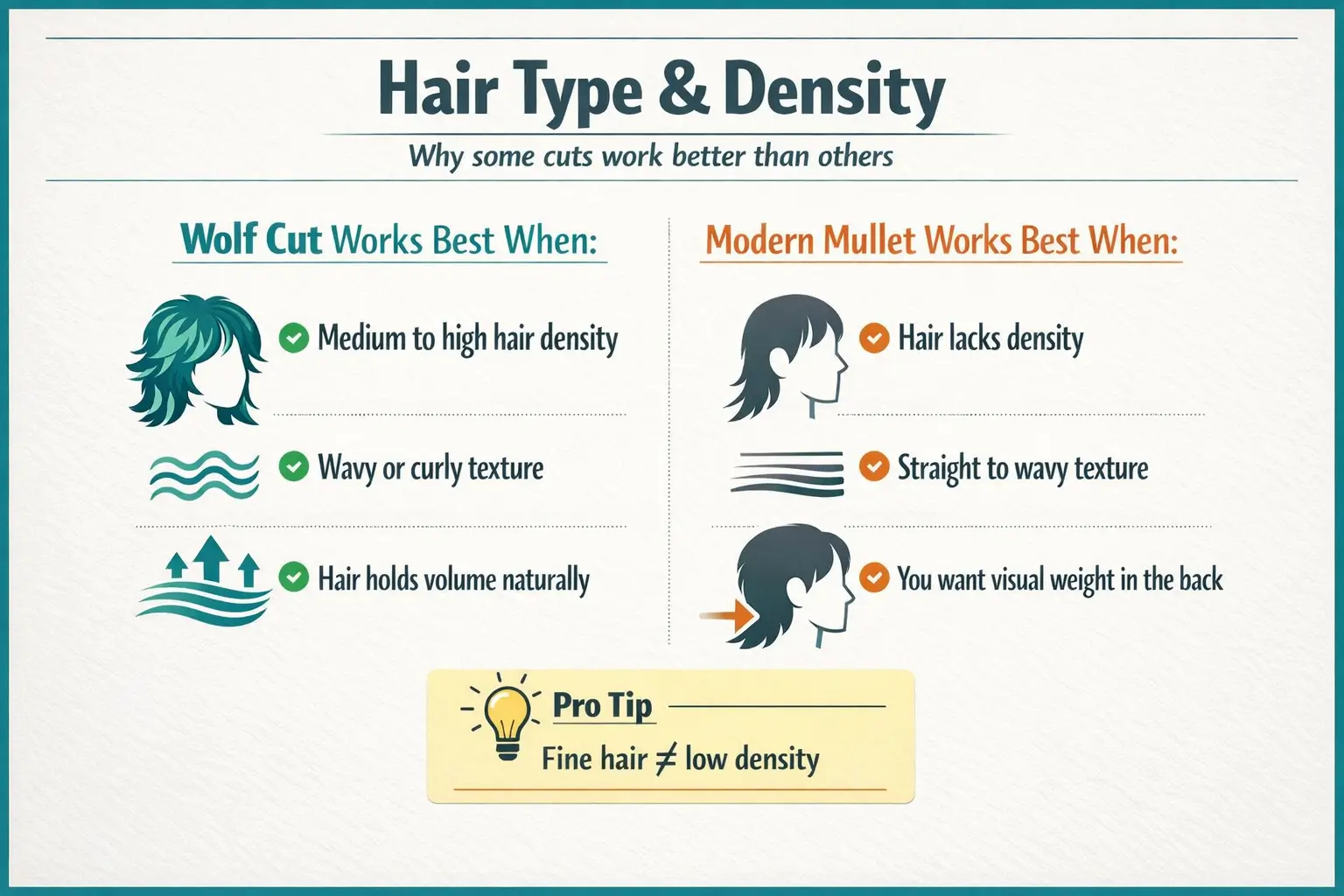
Most haircut guides talk about hair type (straight, wavy, curly), but hair density is the factor that decides whether a wolf cut or modern mullet actually works in real life.
Fine Hair vs. Low Density (Not the Same Thing)
This distinction is rarely explained online—and it’s where many bad haircuts start.
- Fine hair = thin individual strands
- Low density hair = fewer hairs on the head overall
You can have:
- Fine hair with high density (many thin strands)
- Thick strands with low density (fewer, heavier hairs)
This matters because wolf cuts rely on internal layering, which removes weight.
How Density Affects Each Cut
Wolf cut
- Needs enough density to support layers
- Can collapse or look wispy on low-density hair if over-layered
- Works surprisingly well on fine but dense hair when the perimeter is preserved
Modern mullet
- More forgiving on lower density hair
- Keeps visual weight through the back length
- Allows sides to be tight without thinning the entire silhouette
Professional Insight: If your hair looks full when long but sparse when layered, a mullet-based structure with controlled texture is safer than a full wolf cut.
What to Tell Your Stylist
Say this clearly:
“I want texture, but I can’t afford to lose density at the perimeter.”
That one sentence often changes how the haircut is built.
Natural Texture & Styling Habits
The right haircut should work with how you live—not against it.
Air-Dry vs. Styled Hair
If you air-dry most days:
- Wolf cuts usually perform better
- Crown layers activate naturally
- Messiness looks intentional, not unfinished
If you style or blow-dry regularly:
- Modern mullets give more control
- Sides and top can be shaped precisely
- Easier to maintain a consistent look
Curly & Wavy Hair Considerations
- Wolf cuts shine on wavy and curly hair
- Layers enhance natural movement
- Volume becomes an asset instead of a problem
Modern mullets can work on curls too, but:
- Shorter tops may expose shrinkage
- Cowlicks and growth patterns become more visible
Cowlicks & Growth Patterns (Hidden Advantage)
Here’s a subtle but important point:
- Wolf cuts camouflage crown cowlicks because volume is expected
- Modern mullets can expose cowlicks if the top is cut too short
If your hair has unpredictable lift at the crown, a wolf-leaning structure is often safer.
Face Shape & Visual Impact: What the Cut Emphasizes
Every haircut highlights something. The question is what you want noticed first.
Wolf Cut: Face-Forward Design
Wolf cuts are built to:
- Frame the eyes and cheekbones
- Soften angular features
- Balance round or full faces with vertical layers
Because of the fringe and face-framing pieces, attention stays front-center, not on the sides or neck.
This is why wolf cuts are often recommended for:
- Round faces
- Oval faces
- Diamond face shapes
Modern Mullet: Profile & Structure
Modern mullets emphasize:
- Jawline definition
- Neck and nape shape
- Ear exposure and side profile
They create a strong side and back silhouette, which reads bolder and more directional.
If you like how your haircut looks from the side—or you care about how it frames your neck and shoulders—the mullet excels here.
Quick Visual Rule
Ask yourself:
- Do I want my haircut to frame my face? → Wolf cut
- Do I want my haircut to define my profile? → Modern mullet
The “Contrast Score” Method (A Simple Way to Choose Correctly)
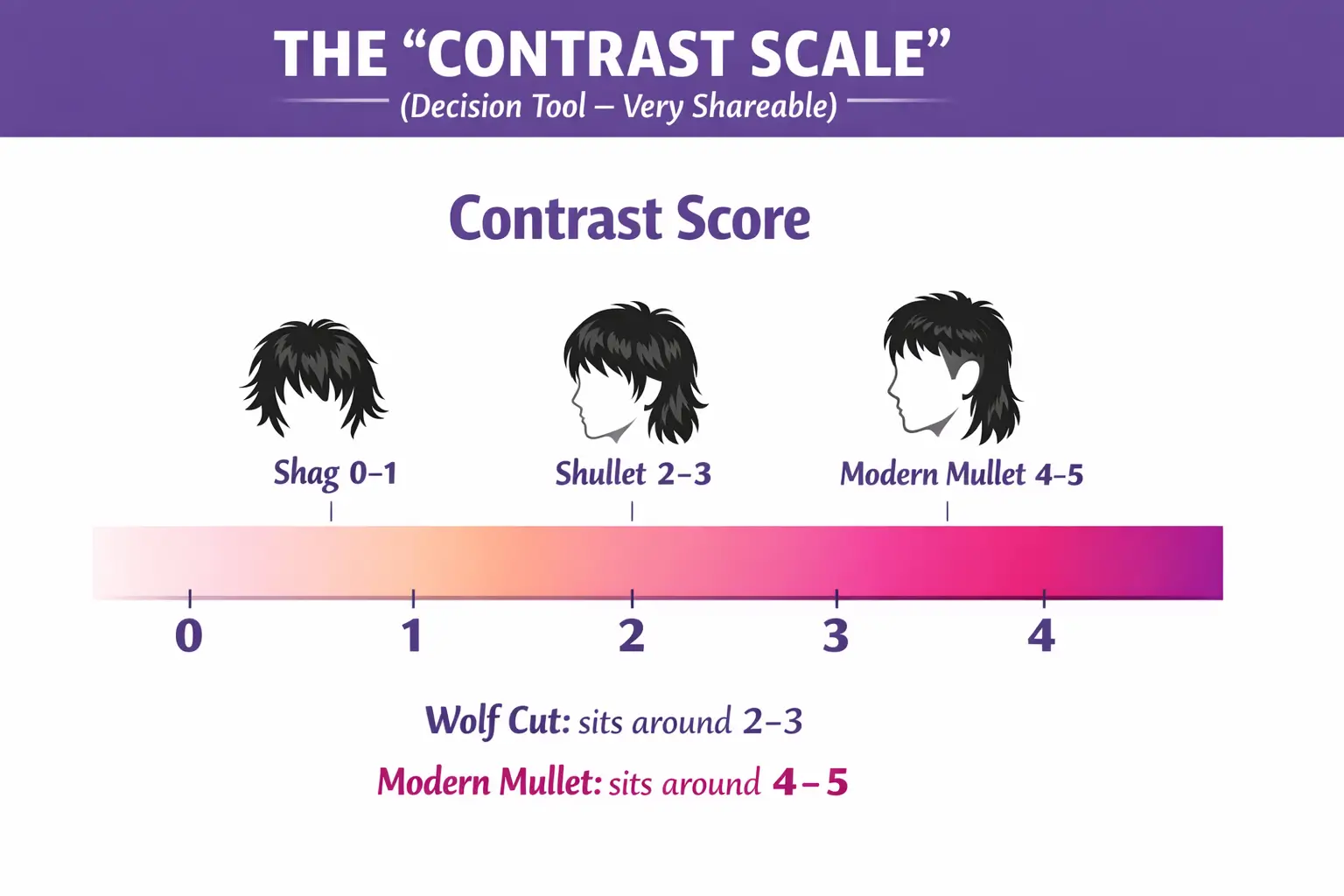
One of the biggest reasons men end up unhappy with textured haircuts is that they don’t clarify how bold they actually want to go. This is where the contrast score helps.
What “Contrast” Means in Haircuts
Contrast is the visual difference between:
- Short vs. long
- Clean vs. messy
- Structured vs. loose
The higher the contrast, the more noticeable and directional the haircut becomes.
The Contrast Scale (0–5)
Use this scale to self-diagnose before booking your cut:
- 0–1: Low contrast
- Shag or long layered cuts
- Soft, blended, low-commitment
- Best if you want texture without standing out
- 2–3: Medium contrast
- Shullet (shag + mullet hybrid)
- The safest “edgy but wearable” option
- Ideal if you like wolf cuts but fear going too wild
- 4–5: High contrast
- Modern mullet
- Clear short-to-long separation
- Strong side and back silhouette
How to Use This
If you:
- Like wolf cut photos but want cleaner sides → aim for 2–3
- Like mullets but fear commitment → start at 3
- Want people to notice your haircut immediately → 4–5
Quick Tip: You can always increase contrast later. It’s much harder to undo an overly aggressive mullet on the first visit.
How to Communicate With Your Stylist (This Prevents Bad Haircuts)
Most haircut disappointments don’t come from bad technique—they come from miscommunication. Photos help, but they’re not enough.
Here are the four non-negotiable details you must clarify.
1. Fringe (Yes or No?)
Fringe changes everything.
- No fringe → cleaner, more mullet-leaning
- Curtain or soft fringe → classic wolf cut behavior
- Full fringe → bold, fashion-forward, high maintenance
If you skip this conversation, your stylist will decide for you.
2. Crown Volume (Subtle or Big?)
Be specific:
- “Natural lift only”
- “Messy volume”
- “I don’t want height at the crown”
Wolf cuts depend heavily on crown volume. Mullets usually do not.
3. Sides: Over the Ear or Tapered?
This is the main lever between wolf cut and modern mullet.
- Over-ear length = softer, shaggier, more wolf
- Tapered or faded sides = sharper, more mullet
Many “bad wolf cuts” are actually wolf cuts with sides that were cut too tight.
4. Back Length Commitment
Say one of these explicitly:
- “Very subtle tail”
- “Medium length, noticeable”
- “Long tail, I want it obvious”
Never assume your stylist knows how far you want to go.
Maintenance Reality Check (Be Honest With Yourself)
Textured haircuts look effortless, but they aren’t maintenance-free.
What Actually Determines Maintenance
It’s not the style—it’s the shortest section of the haircut.
- Short fringe → frequent trims
- Tight sides → frequent clean-ups
- Longer layers → more forgiving grow-out
Wolf Cut Maintenance
- Grows out relatively well
- Texture hides unevenness
- Can often stretch trims longer
- Ideal if you don’t visit the barber often
Modern Mullet Maintenance
- Requires silhouette control
- Sides lose sharpness quickly
- Tail needs intentional shaping
- Best if you’re okay with regular shape-ups
Expectation Setting: If you want a mullet that still looks “modern,” maintenance is part of the deal. If you want freedom, wolf cuts and shullets age more gracefully.
Final Verdict: Which One Should You Choose?
After stripping away trends and social media hype, the decision comes down to what role you want your haircut to play.
Choose a Wolf Cut if you want:
- Texture, movement, and volume to do the work for you
- A haircut that frames your face, not your neck or sides
- Something that looks good air-dried and slightly undone
- A style that grows out naturally without constant clean-ups
Wolf cuts are ideal if you value effortless style, expressive texture, and flexibility. They enhance your features rather than overpower them.
Choose a Modern Mullet if you want:
- A strong, intentional silhouette
- Clear contrast between front/sides and back
- A haircut that defines your profile, jawline, and nape
- A bold look that feels directional and fashion-forward
Modern mullets suit men who are comfortable standing out and don’t mind maintaining shape to keep the look sharp.
Still Unsure? Start in the Middle
If you’re torn, ask for a shullet (shag–mullet hybrid):
- Medium contrast
- Softer sides than a mullet
- Less aggressive layering than a full wolf cut
It’s the safest way to experiment without overcommitting.
Wolf Cut vs. Modern Mullet: Quick Comparison
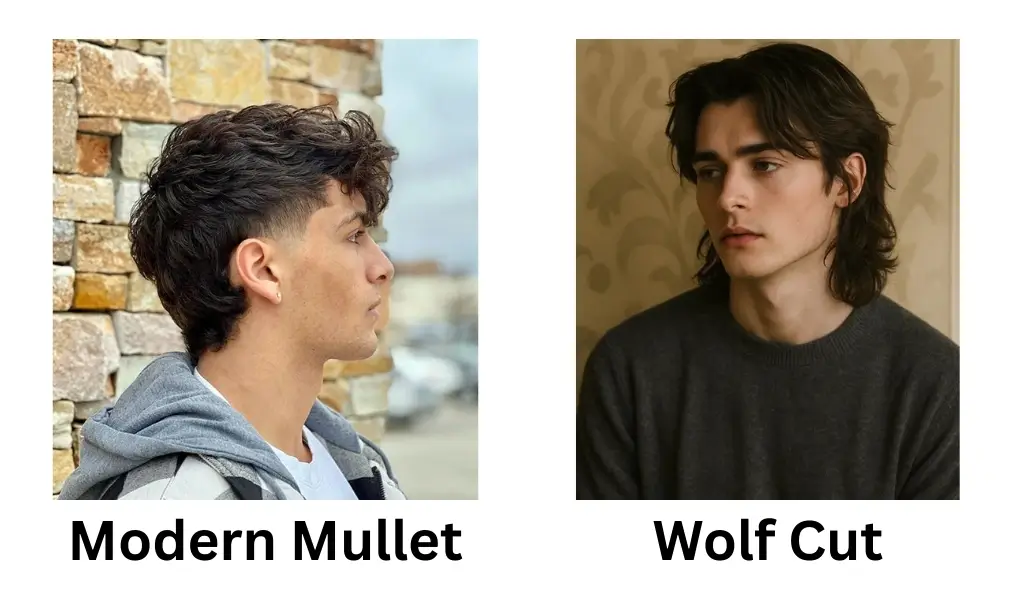
| Feature | Wolf Cut | Modern Mullet |
|---|---|---|
| Core idea | Volume & texture | Contrast & silhouette |
| Best for | Wavy/curly or textured hair | Straight to wavy hair |
| Face emphasis | Eyes, cheekbones, softness | Jawline, neck, profile |
| Styling vibe | Messy, effortless | Sharp, intentional |
| Air-dry friendly | Very | Moderate |
| Maintenance | Lower | Higher |
| Grow-out | Forgiving | Needs shaping |
| Boldness level | Medium | High |
Conclusion: The Right Cut Is the One Built For You
The biggest mistake men make with trending haircuts is copying a look without understanding the structure behind it.
- A wolf cut isn’t just “messy hair”
- A modern mullet isn’t just “short front, long back”
They are designed systems, each favoring different hair densities, growth patterns, face shapes, and lifestyles.
Before You Book, Remember This:
- Hair density matters more than hair type
- Sides and fringe determine 80% of the outcome
- You can always go bolder later—start controlled
If you communicate clearly with your stylist and choose based on structure, not hype, both cuts can look exceptional.
Frequently Asked Questions (FAQ)
1. Is a wolf cut the same as a modern mullet?
No. While they share some visual overlap, they are built differently. A wolf cut is driven by layers, crown volume, and face framing, whereas a modern mullet is defined by contrast—shorter front and sides with intentional length left in the back. The wolf cut prioritizes texture; the mullet prioritizes silhouette.
2. Which haircut is better for fine hair?
It depends on density, not just strand thickness. Fine hair with high density can work well with a wolf cut if the perimeter is preserved. However, if hair density is low, a modern mullet or shullet is usually safer because it maintains visual weight and avoids over-thinning.
3. Are wolf cuts high maintenance?
Styling-wise, no. Wolf cuts are designed to look good with minimal effort and often work well air-dried. Maintenance depends on fringe length and crown shaping—short bangs or aggressive layers will require more frequent trims, while longer wolf cuts grow out easily.
4. Do modern mullets require frequent barber visits?
Yes, more than wolf cuts. Because modern mullets rely on clean sides and a controlled silhouette, the shorter areas lose shape faster. To keep a mullet looking intentional (not messy), regular shape-ups are recommended.
5. Which haircut looks more professional?
A subtle wolf cut or low-contrast shullet is generally easier to adapt to professional or conservative environments. High-contrast modern mullets tend to read bolder and more fashion-forward, which may not suit all workplaces.
6. Can I switch from a wolf cut to a mullet (or vice versa)?
Yes, but direction matters. It’s easier to evolve a wolf cut into a mullet by tightening the sides and preserving back length. Going from a mullet to a wolf cut usually requires growing out the sides and redistributing layers, which takes more time.