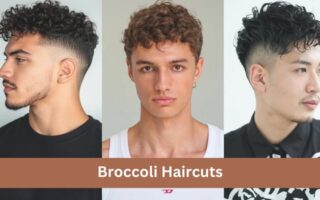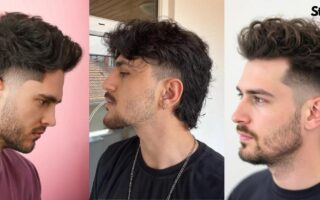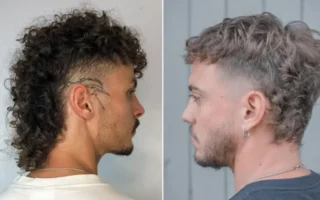
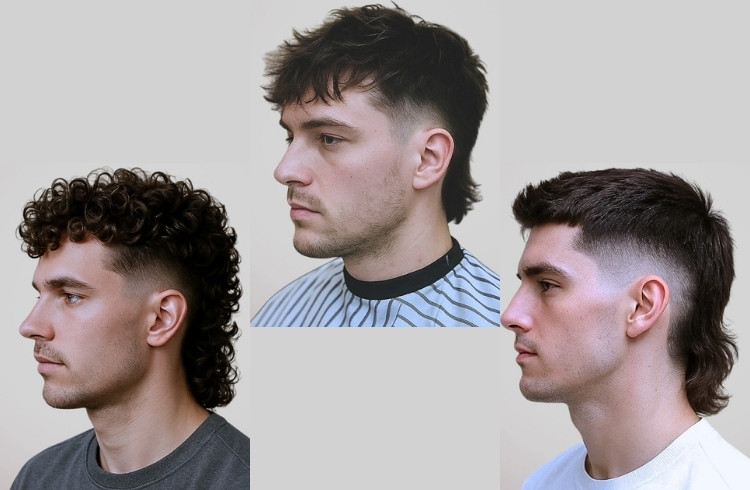
The mullet is back, and it is sharper than ever. The modern high taper mullet takes that classic “business in the front, party in the back” shape and gives it a clean, sculpted edge. The sides fade high near the temples, creating bold contrast against longer length through the top and back. It is one of the most requested cuts in barbershops right now. It works across hair types, flatters multiple face shapes, and adapts to both professional and casual settings.
This guide covers what a high taper mullet is, how it differs from other taper heights, 15 distinct style variations, face shape matching, what to tell your barber, and how to style it at home.
TL;DR
A high taper mullet is a modern haircut that pairs a high fade on the sides and neckline with longer hair on top and through the back. The taper starts near the temples rather than the ears, which creates a strong visual contrast and a clean, structured look. It suits most hair types including curly, straight, wavy, and textured hair. You can customize it with a burst fade, skin taper, Edgar fringe, or any number of texture combinations. To get one, ask your barber for a high skin taper on the sides and neck, leave heavy weight behind the ears, and add texture to the top and back. Styling at home takes under three minutes with sea salt spray and a matte clay or paste.
Quick Facts
- A high taper begins fading near the temples, not the ears or neckline.
- The modern mullet has seen a 230% increase in Google searches since 2020.
- It works on straight, wavy, curly, and coily hair types.
- Maintenance visits are recommended every 3 to 4 weeks.
- Key styling products include sea salt spray, matte clay, and texture paste.
- The cut flatters oval, square, round, and diamond face shapes when adapted correctly.
What Is a High Taper Mullet?
A high taper mullet combines two barbering concepts into one cut. The mullet keeps hair shorter through the front and top while leaving noticeable length through the back. The high taper pushes the transition point higher, starting the fade near the temples and upper sides.
When the taper starts higher, the contrast between the cropped sides and the longer top becomes more dramatic. The result is a haircut that looks intentional and modern. Barbers use clippers with guard attachments or a straight razor for the taper section. They leave heavy weight behind the ears to maintain the mullet silhouette.
The cut blends well with textured fringes, burst fades, and skin tapers, which is why it has become a go-to for men who want something distinctive but refined.
High Taper vs. Low & Mid Taper Mullets
The main difference between taper heights is where the fade begins. Understanding this helps you pick the right version for your style and maintenance preferences.
High taper: The fade starts near the temples or crown. It exposes the most skin and creates the strongest contrast. This version looks sharper and more aggressive. It stands out immediately and suits bold personal styles.
Mid taper: The fade begins around the middle of the sides, roughly level with the ears. It strikes a balance between contrast and subtlety. Many barbers consider this the most versatile option because it works with almost every hair type and face shape.
Low taper: The fade stays close to the ears and neckline. It reads as clean and understated. This version grows out the most gracefully between cuts and pairs well with hats.
If you want a haircut that feels modern and confident, the high taper mullet is your move. If you prefer something that feels effortless and low-key, the low taper delivers every time.
15 Best High Taper Mullet Styles
Below are 15 variations of the high taper mullet. Each one suits a different hair type, face shape, or personal aesthetic. Use these as reference photos when you visit your barber.
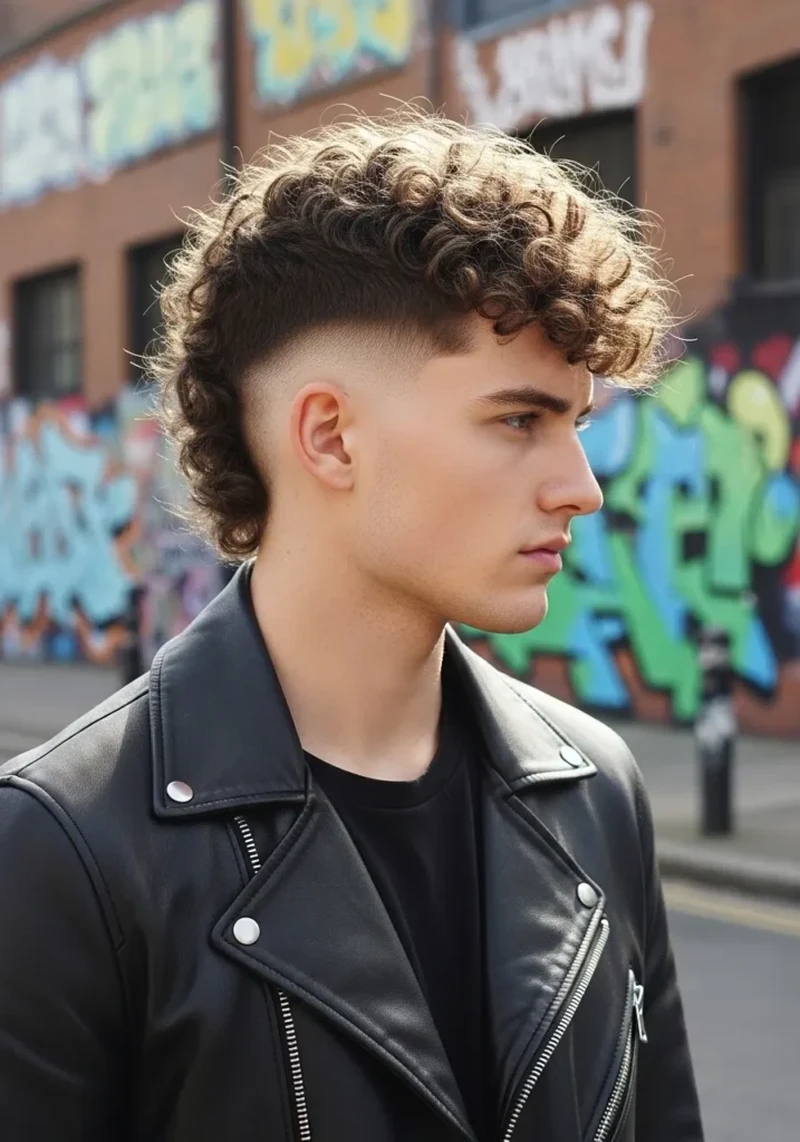
1. High Taper Mullet for Curly Hair
Curl pattern transforms the high taper mullet into something with real movement. The tight sides frame the face while the curly back adds natural volume and texture. This version works best for men with type 2 or type 3 curls who want a cut that feels organic rather than over-styled. A light curl cream keeps the back defined without weighing it down.
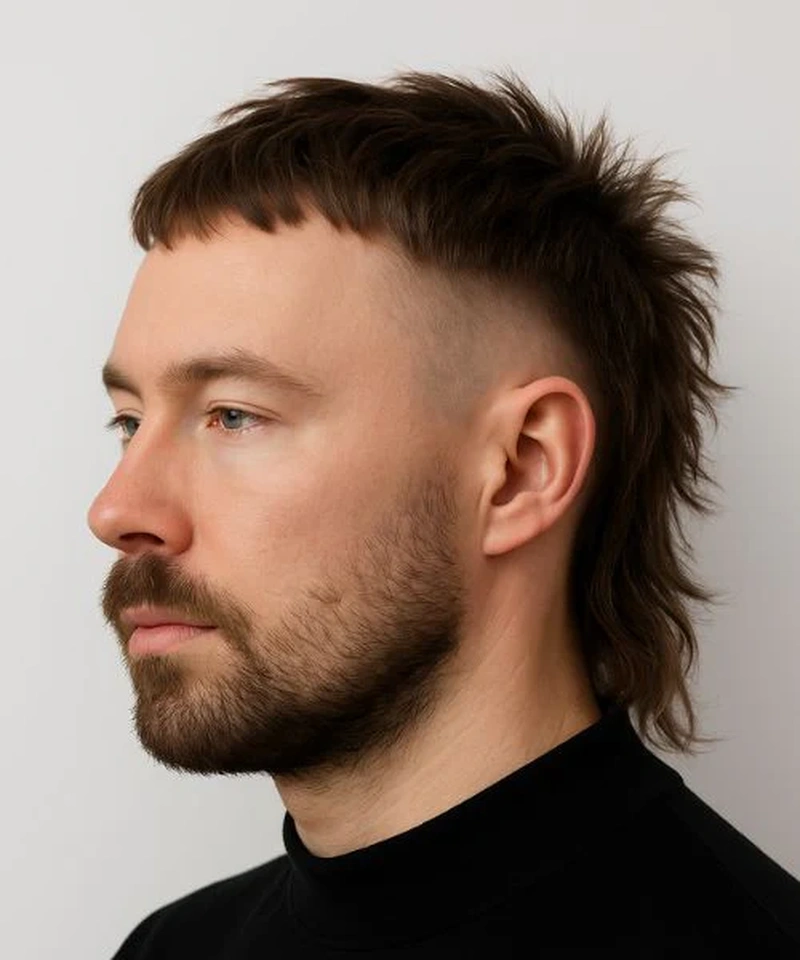
2. High Taper Mullet with Edgar Fringe
The Edgar cut features a blunt, straight-across fringe that sits just above the eyebrows. When paired with a high taper mullet, the result is bold and distinctive. The sharp fringe contrasts with the flowing back, creating a streetwear-inspired aesthetic. This style suits men with straight or wavy hair and a strong jawline.
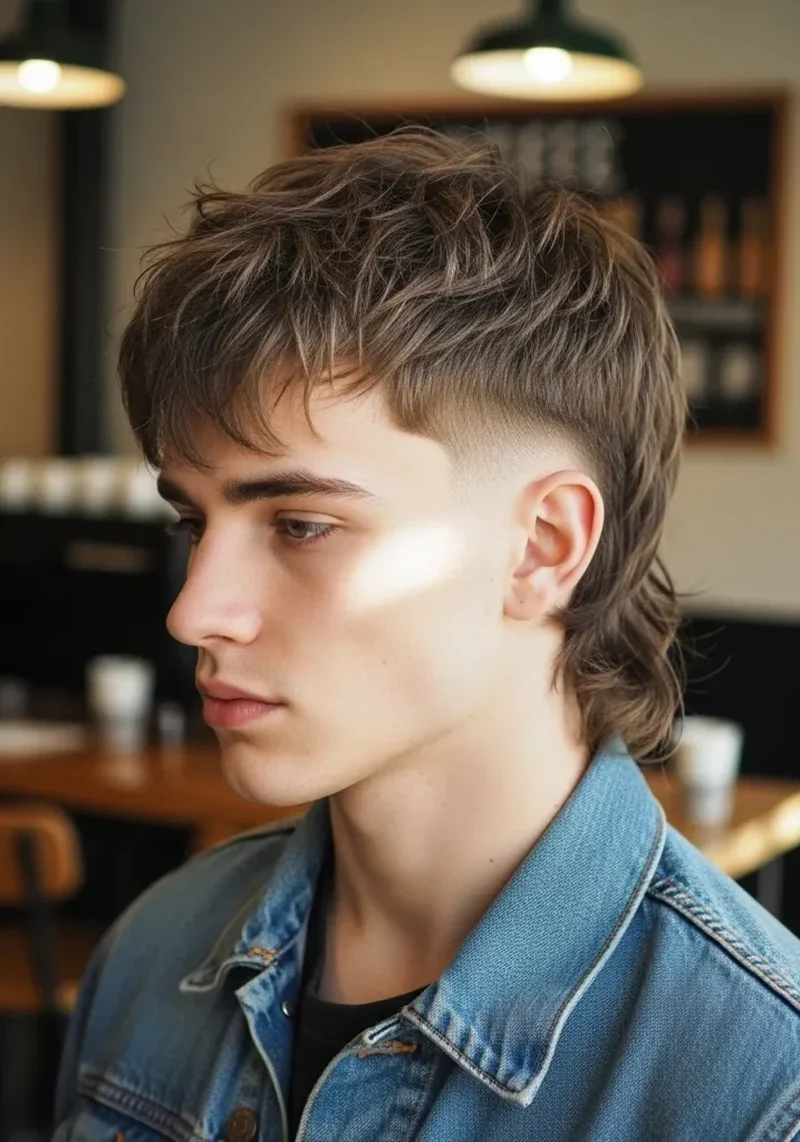
3. Straight Hair High Taper Mullet
Straight hair shows the clean lines of a high taper mullet better than any other texture. The cropped sides create a sharp edge, and the straight back falls naturally without frizz. This is the most polished version of the cut. A small amount of matte clay adds subtle texture to the top without making it look piece-y.
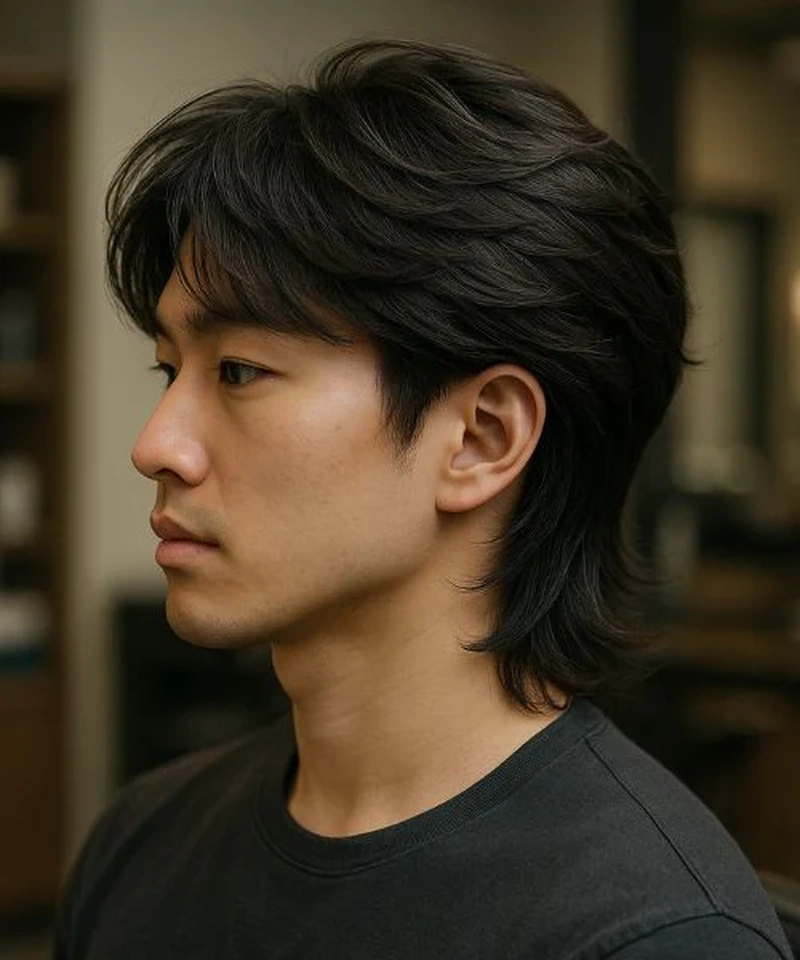
4. Fluffy High Taper Mullet
The fluffy variation relies on volume and lift through the top and back. Barbers achieve this by using texturizing shears to remove weight and create movement. The result is soft, airy, and relaxed. This version suits men with medium to thick hair density who want a laid-back look with minimal daily effort.
5. High Taper Burst Fade Mullet
A burst fade follows the natural curve of the ear, creating a semicircular fade that “bursts” behind the ear. This differs from a standard taper, which fades in a straight or gently curved line. The burst fade mullet adds a rounded shape to the sides while keeping mullet length in the back. It works especially well with curly or wavy hair.
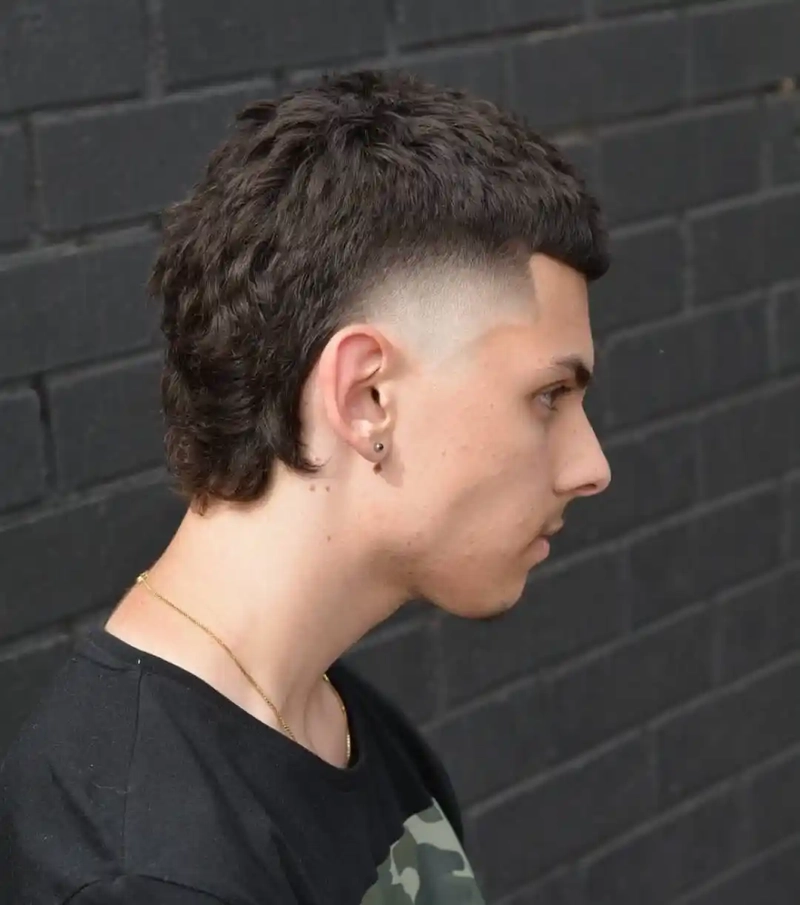
6. Skin Fade High Taper Mullet
The skin fade takes the taper down to bare skin. There is no gradient left at the bottom, just a clean shave. This maximizes the contrast between the sides and the longer top. It is a sharp, high-impact version that requires regular maintenance every 2 to 3 weeks. Best suited for men who visit their barber frequently and want the most defined look possible.
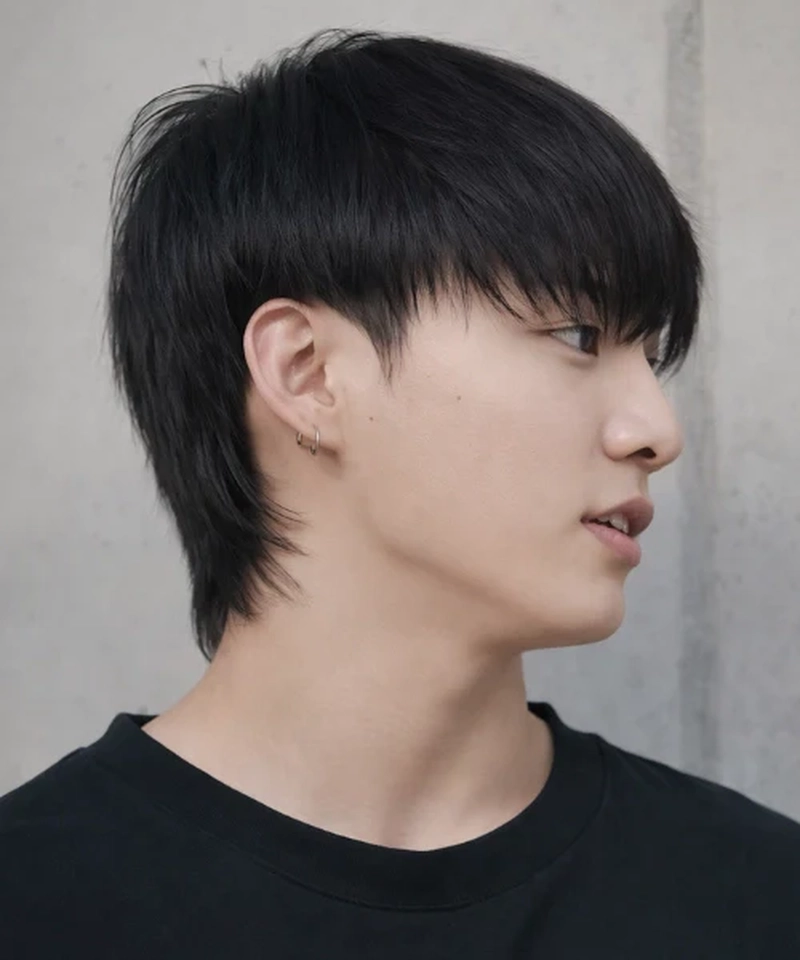
7. Wavy Beach Texture High Taper Mullet
This variation leans into natural wave patterns for a relaxed, sun-dried aesthetic. The key is using sea salt spray on damp hair and letting it air dry or diffusing it on low heat. The waves add dimension to the back while the high taper keeps the overall shape structured. It suits men with natural wave patterns who want a low-maintenance daily routine.
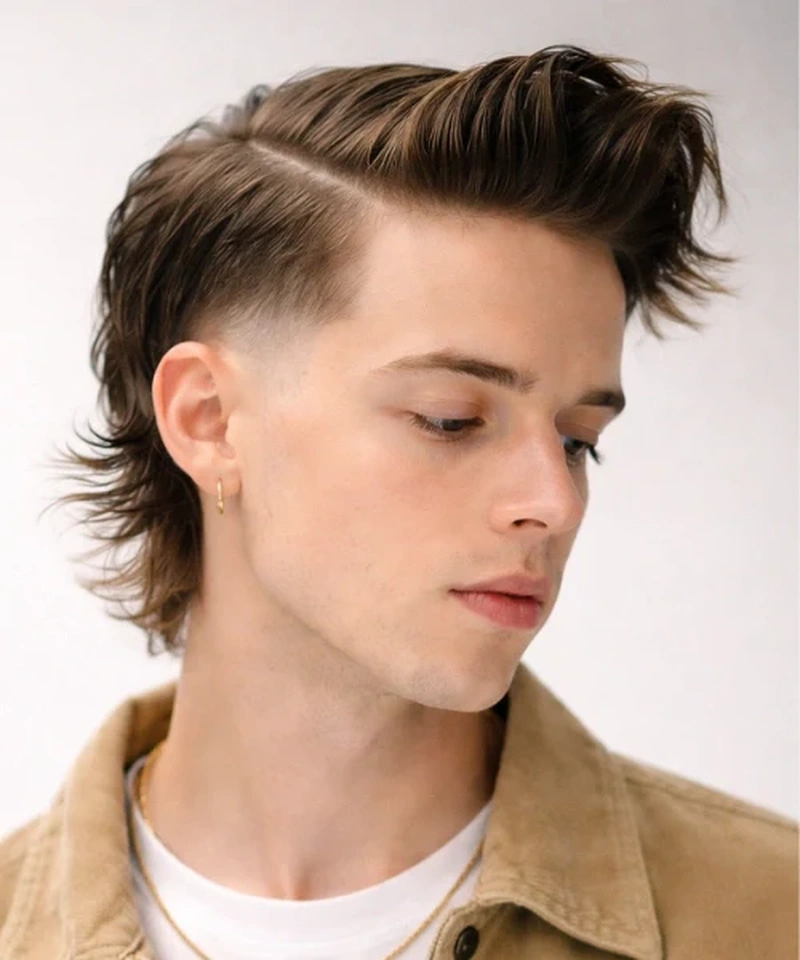
8. Textured Crop High Taper Mullet
The textured crop combines a short, choppy fringe on top with the mullet length in the back. Barbers use point-cutting to create jagged, piece-y texture throughout the top. The high taper frames the crop while the back provides length and flow. This version suits oval and diamond face shapes particularly well.
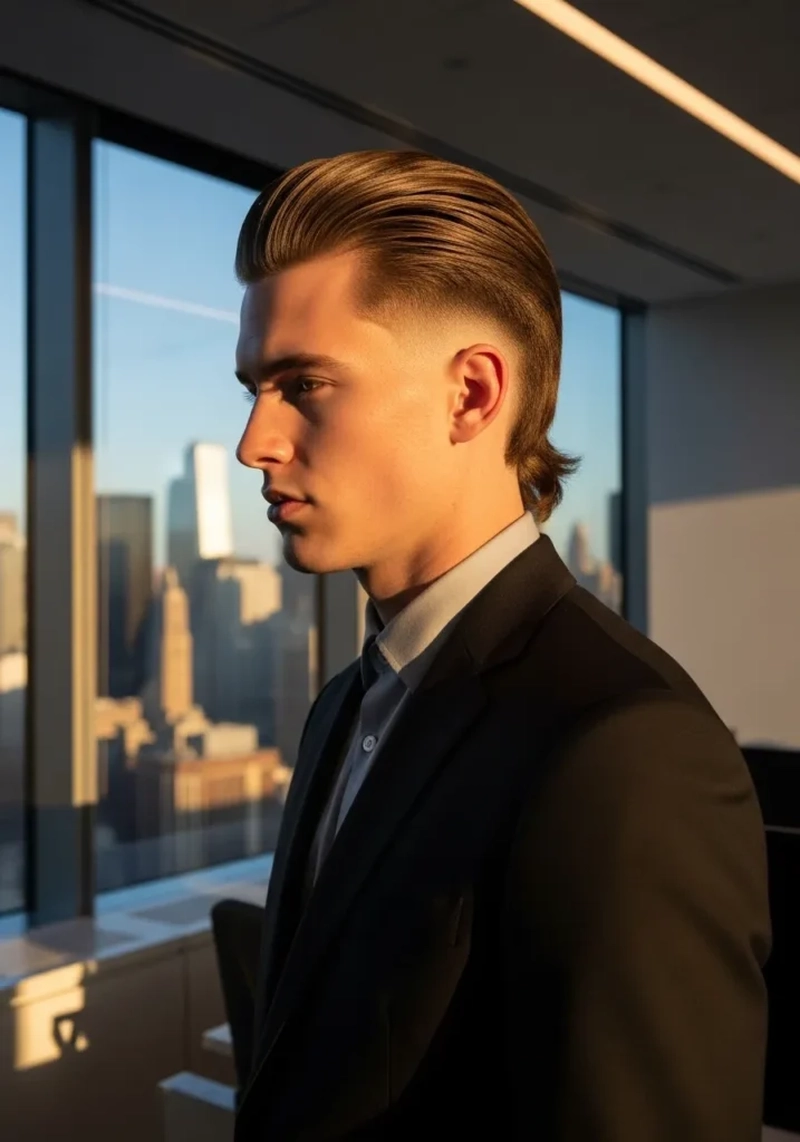
9. Shag High Taper Mullet
The shag mullet blends 1970s layering with a modern high taper. Layers start high on the head and continue through the back, creating a lived-in, undone quality. This variation works on nearly every hair type but looks best on wavy or slightly curly hair with medium density. Styling requires nothing more than a quick tousle with your fingers.
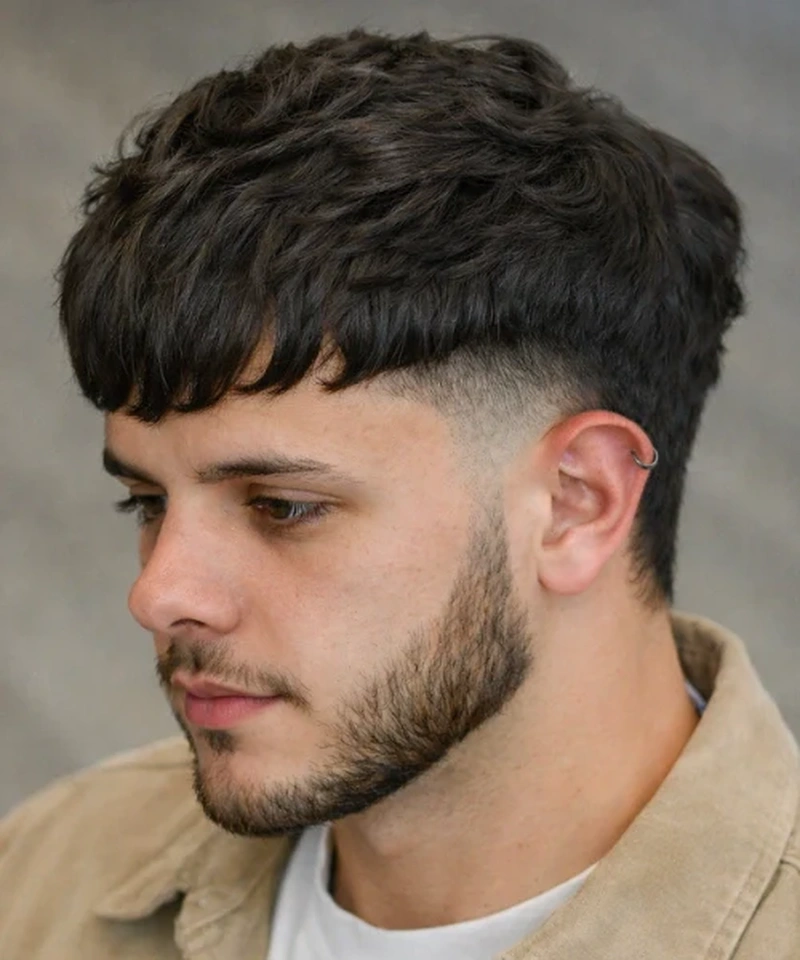
10. Wolf Cut High Taper Mullet
The wolf cut takes the shag concept further with heavier, more dramatic layers and pronounced volume at the crown. It draws inspiration from both the mullet and the modern shag. The high taper anchors the wilder top and back with clean, sharp sides. This cut makes a statement and suits men who are not afraid of volume.
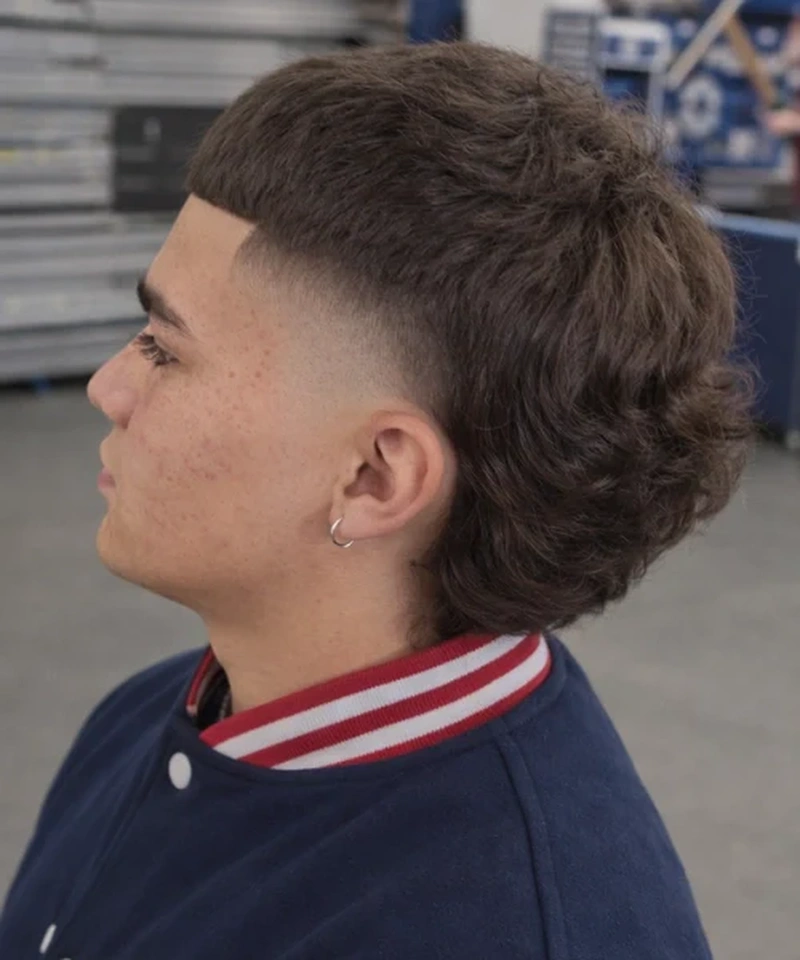
11. Short High Taper Mullet
Not every mullet needs to be long. The short version keeps the back at nape level or just below, making it more conservative and easier to manage. The high taper still creates strong contrast, but the overall silhouette stays close to the head. This works well for men who want to try the mullet shape without committing to significant length.
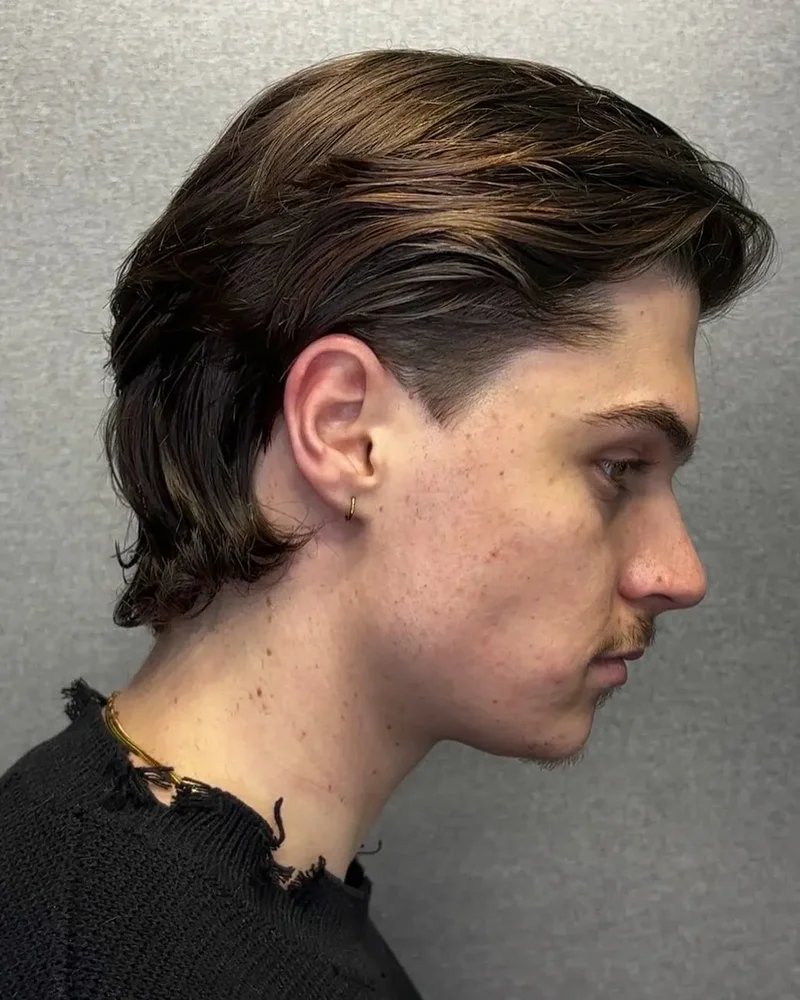
12. Asian Textured High Taper Mullet
Asian hair types tend to be thick, straight, and dense, which means the high taper mullet holds its shape well. Barbers often add heavy texture through the top and mid-lengths to prevent the hair from looking blocky. A matte paste or styling powder adds grip and separation.
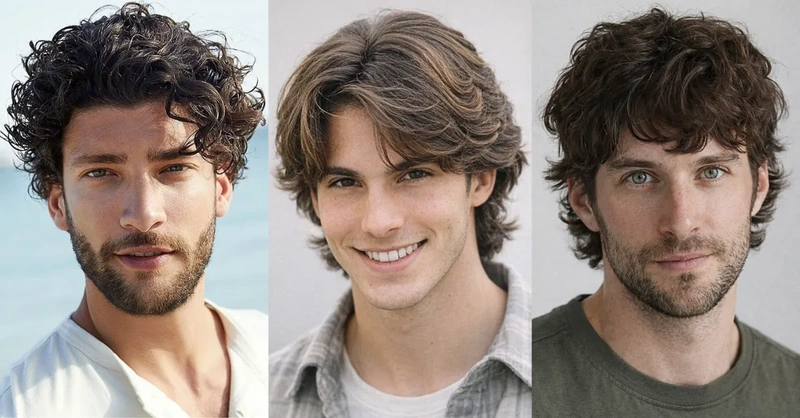
13. Side-Part High Taper Mullet
The side-part mullet adds structure and formality to an otherwise casual cut. A defined part line on one side creates a polished look that transitions into the longer back. This version works for men who need a cut that can shift between professional and casual settings. A low-shine pomade keeps the part neat without adding stiffness.
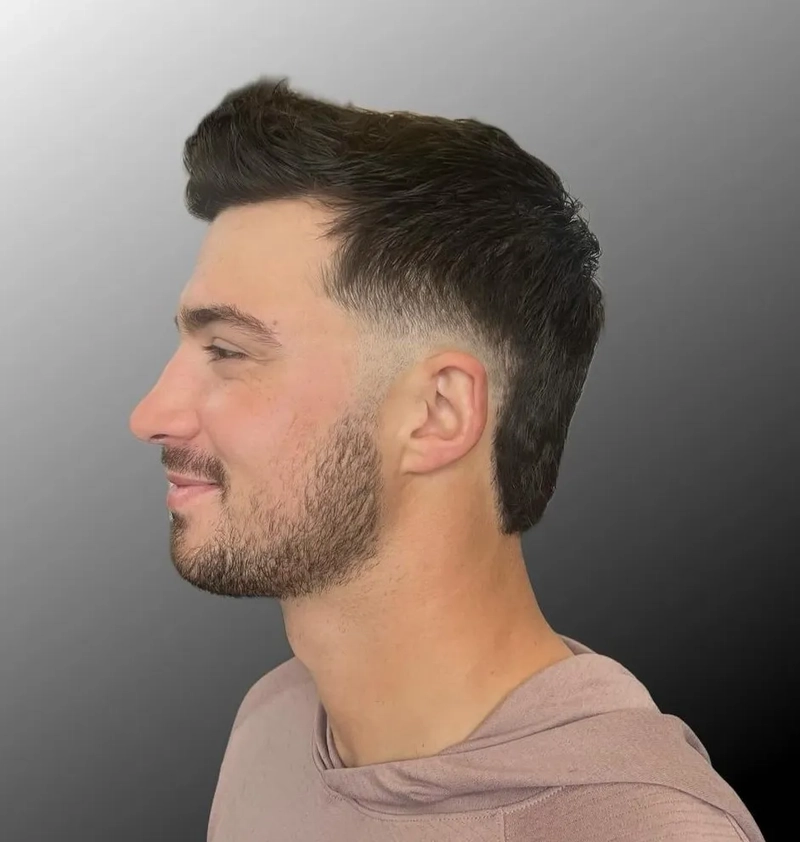
14. Slicked Back High Taper Mullet
Sweeping the top straight back transforms the high taper mullet into something sleek. The back length stays natural while the front gets pulled back with a comb and a medium-hold product. This variation suits square and rectangular face shapes. It requires a bit more product and comb time but the result is worth it.
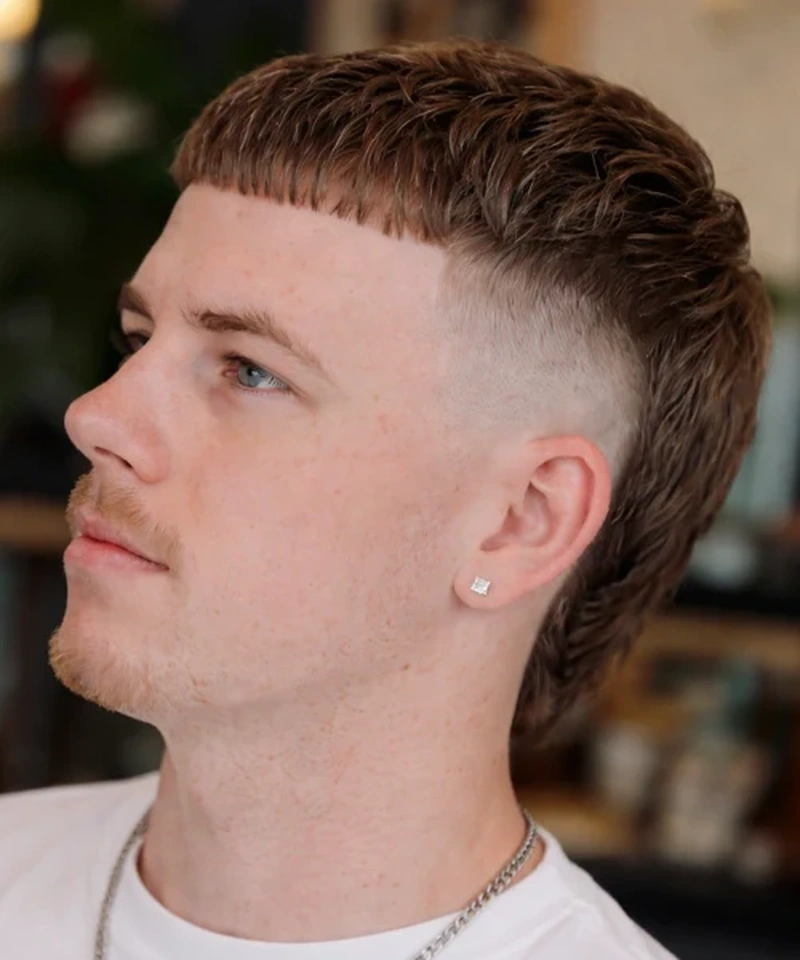
15. Messy Effortless High Taper Mullet
This is the “I woke up like this” version, but it still requires the right cut. Barbers remove bulk and add movement so the hair falls naturally into a textured, undone look. A quick blast with sea salt spray and finger styling is all you need. It suits men who want a stylish cut with minimal daily effort.
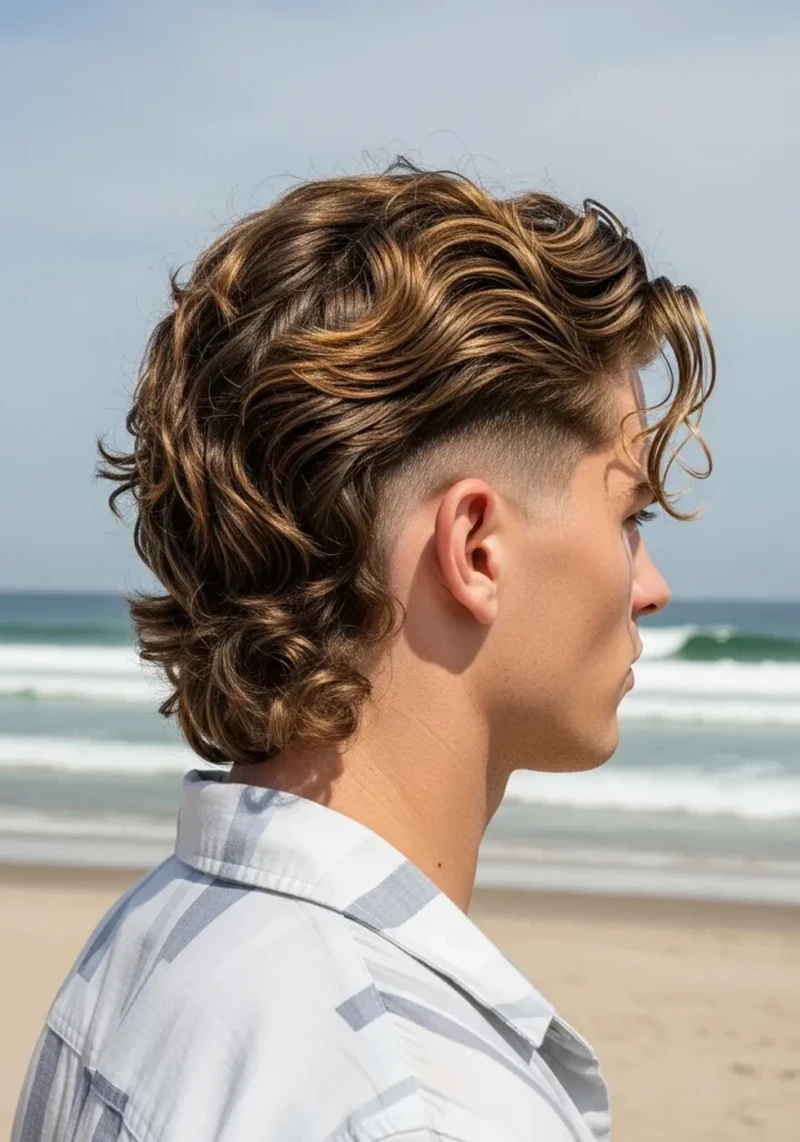
Does a High Taper Mullet Suit Your Face Shape?
The high taper mullet adapts to most face shapes. Here is how it interacts with each one.
Round face: Round faces benefit from height on top and volume through the back. The high taper removes width from the sides, which visually lengthens the face. A textured fringe adds angular structure to the forehead. Avoid versions that add width at the sides.
Square face: Square faces have a strong jawline and angular features. The high taper mullet softens these angles by adding flow and movement. Textured, wavy, or curly variations work best because they break up the rigid lines. Avoid blunt, straight-across fringes that mirror the jawline too closely.
Oval face: Oval faces are the most versatile. Nearly every high taper mullet variation flatters this shape. You can go bold with a skin fade or keep it subtle with a textured crop. The balanced proportions of an oval face mean you can experiment freely.
Diamond face: Diamond faces are widest at the cheekbones with a narrower forehead and chin. The high taper mullet adds width to the forehead through the top and fringe, balancing the cheekbone area. Longer back length draws the eye downward. Textured or side-part variations work particularly well.
How to Ask Your Barber for a High Taper Mullet
The right terminology makes all the difference when you sit in the chair.
“I want a high skin taper on the sides and neck. Start the taper near the temples and fade it down to the skin. Leave heavy weight behind the ears and through the back. Add some texture to the top with scissors, not clippers.”
If you want a specific variation, add these modifiers:
- For a burst fade: “Can you curve the fade behind the ear instead of going straight?”
- For an Edgar fringe: “Cut a blunt fringe that sits right above my eyebrows.”
- For more texture: “Use thinning shears or a razor to take out some bulk.”
- For a shorter back: “Keep the back at the nape, nothing past my collar.”
Always bring a reference photo. Even with clear instructions, a picture eliminates any chance of miscommunication.
How to Style a High Taper Mullet at Home
Styling takes under three minutes once you have the right products. Here is a simple routine that works for most variations.
Step 1: Prep with sea salt spray. Spritz sea salt spray onto damp towel-dried hair and work it through from roots to ends. This builds volume and creates natural texture. Let it air dry partially or blow-dry on low heat using your fingers.
Step 2: Add a matte product. Once hair is mostly dry, work a dime-sized amount of matte clay between your palms. Apply it through the mid-lengths and ends of the top. Avoid the roots unless you need extra hold.
Step 3: Finish with your fingers. Pull the hair into place using your fingers. Do not use a comb unless you want a slicked-back look. Let the back fall naturally.
Product recommendations by hair type:
- Straight hair: Matte clay or styling powder for texture and separation.
- Wavy hair: Sea salt spray alone, or sea salt spray plus a light paste.
- Curly hair: Curl cream for definition, plus a leave-in conditioner for moisture.
- Thick hair: Volumizing powder at the roots, matte clay through the lengths.
Frequently Asked Questions
How long does it take to grow a high taper mullet?
Most barbers recommend starting with at least 3 to 4 inches of growth on top and 5 to 6 inches in the back. That takes roughly 3 to 5 months from a short starting point. The awkward stage hits around 6 to 8 weeks, but a good barber can shape the cut early to look intentional during the grow-out phase.
Is a high taper mullet professional?
It depends on the variation and your workplace. A short high taper mullet with a clean skin taper and tidy back can work in most modern offices. More exaggerated versions with heavy length or a fringe might be better suited for creative industries or casual settings. When in doubt, keep the back shorter and the taper clean.
How often should I get a maintenance cut?
Every 3 to 4 weeks is the standard recommendation. The high taper fades quickly because the transition point sits high on the head where hair grows visibly. A skin fade version may need touch-ups every 2 to 3 weeks. The back length can be trimmed less frequently if you are growing it out.
What is the difference between a taper and a fade?
A taper shortens the hair gradually, typically leaving some length at the bottom. A fade cuts the hair down to the skin at the lowest point. All fades are tapers, but not all tapers are fades. A high taper can end at a skin fade or stop at a short guard length depending on your preference.
Can I pull off a high taper mullet with thinning hair?
Yes, but choose the right variation. A textured or messy version adds the illusion of density. Avoid slicked-back styles that expose the scalp. Adding sea salt spray and volumizing powder at the roots creates lift that makes thin hair appear fuller. A shorter back length also keeps the overall look balanced.