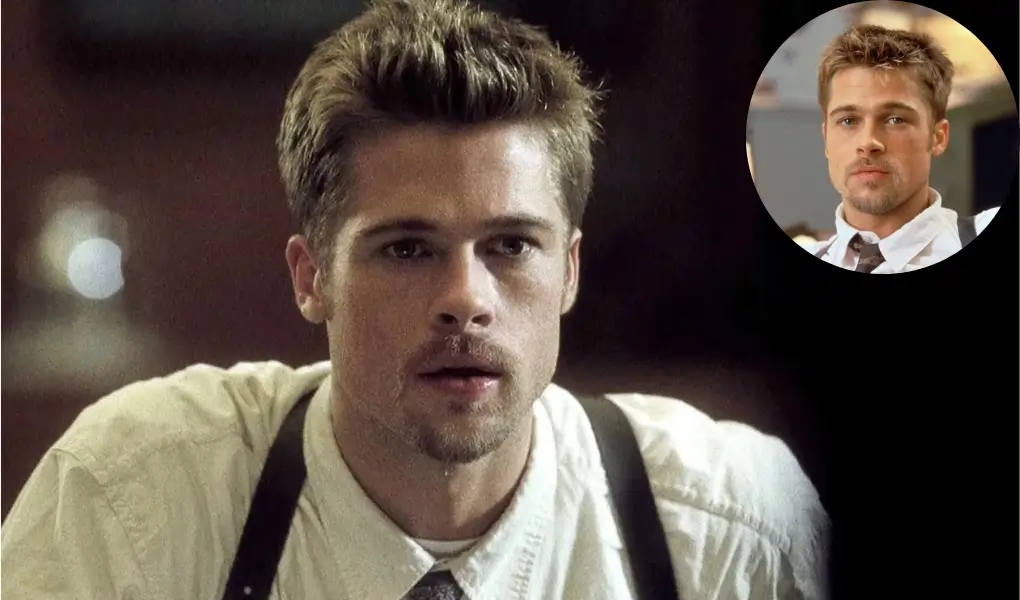
Brad Pitt’s haircut in Se7en isn’t iconic because it’s stylish. It’s iconic because it isn’t trying to be.
It looks rough, slightly unbalanced, and honestly a bit stressed—like the guy wearing it hasn’t slept well in weeks. Which makes sense, because David Mills is a detective spiraling through rain, crime scenes, and frustration.
What’s funny is how often this haircut is misunderstood. People remember “short and spiky Brad Pitt” and walk into a barbershop asking for a fade or a modern crop. That’s not this haircut. The Se7en cut lives in the uncomfortable middle ground between control and chaos, and that’s exactly what makes it work.
This guide isn’t about nostalgia or copying a screenshot frame-by-frame. It’s about understanding the structure, the intent, and how to translate a 1995 grunge haircut into something that still looks right in 2026.
What the Se7en Haircut Actually Is (and Why It Works)
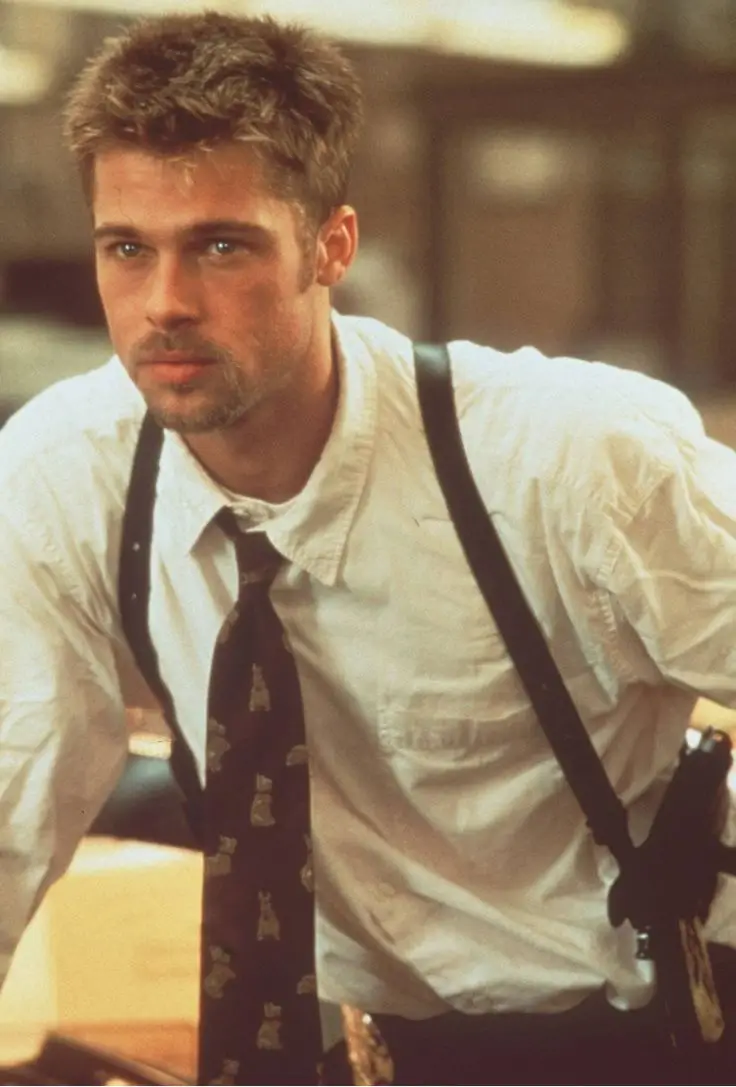
At a glance, the haircut looks simple. Short on the sides, textured on top, a little messy. But if it were that easy, more people would get it right.
The David Mills haircut is best described as a short, deconstructed crop. It’s cut mostly with scissors and a razor, not clippers. The edges are intentionally uneven. The shape follows the head instead of fighting it. Nothing is overly sharp or polished.
The reason it works so well on Pitt—and still works today—is because it feels human. It moves. It falls differently depending on the day. It looks better after 24 hours than it does fresh out of the chair.
A few defining traits:
-
Length on top sits around 2.5 to 3 inches
-
Sides are shorter, but softly blended—no fades, no skin
-
Ends are razor-cut and point-cut for broken texture
-
Neckline is natural and tapered, never boxed or squared
It’s not clean. It’s not dirty either. It’s lived-in.
That’s the whole point.
The Film Context Matters More Than People Think
Haircuts don’t exist in a vacuum, and Se7en is doing a lot of the heavy lifting here.
David Fincher shot the film in constant shadow, rain, and grime. Pitt’s hair is rarely styled to look “done.” In many scenes it’s damp, wind-tossed, or flattened by stress. The haircut had to survive all of that and still look believable on a real person, not a movie star.
That’s why the look is often described as “chaos and control.”
There’s structure underneath, but it’s deliberately disrupted.
It also sits firmly in the 90s grunge aesthetic, before hyper-clean fades and ultra-matte perfection took over men’s grooming. Back then, texture was raw. Products were minimal. Imperfection wasn’t fixed—it was embraced.
When you understand that context, it becomes clear why:
-
A fade kills the vibe
-
Over-styling ruins the realism
-
Shiny or wet-look products feel wrong
This haircut is supposed to look like it belongs to someone under pressure, not someone who spent 30 minutes in front of a mirror.
Why Most Barbers (and Clients) Get This Cut Wrong
The biggest mistake is asking for the haircut without explaining how it should be cut.
Most modern barbers default to clippers because that’s what clients usually want. Clippers create clean lines, tight blends, and uniform lengths. All great things—just not for this style.
The Se7en haircut relies on:
-
Scissor-over-comb instead of clipper guards
-
Razor cutting to shatter the ends
-
Point cutting to remove bulk and add vertical texture
When those steps are skipped, the haircut turns into one of three things:
-
A generic short back and sides
-
A modern textured crop that’s too polished
-
A spiky 90s throwback that looks dated instead of intentional
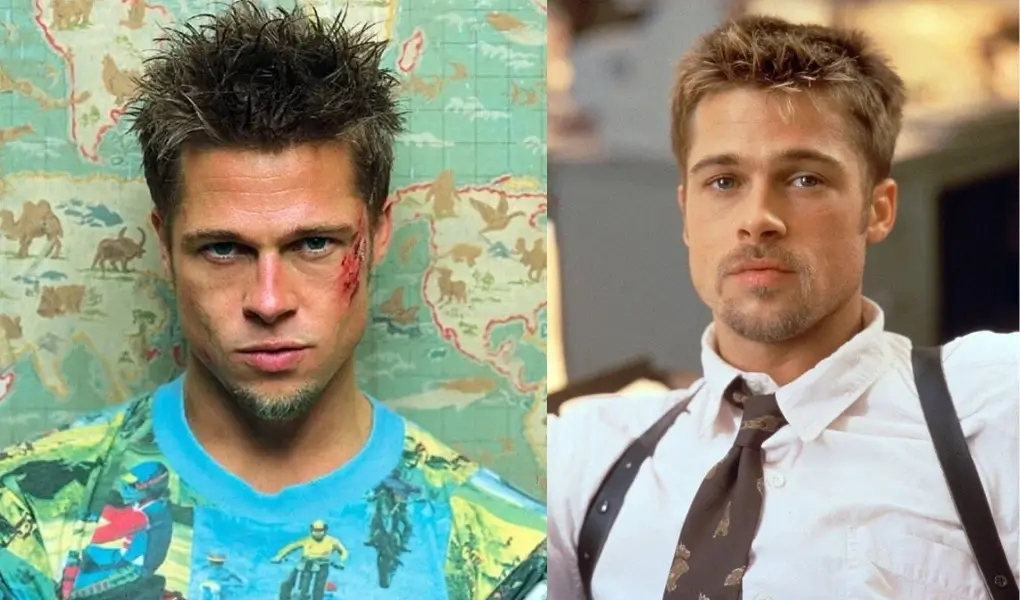
Another issue is people confusing Pitt’s other roles:
-
Fight Club is shorter and greasier
-
Fury is tighter and more aggressive
-
Meet Joe Black is longer and parted
The Se7en cut sits right in between all of them—and that middle ground is easy to miss if you’re not looking closely.
How to Explain the Se7en Haircut to Your Barber (Without Sounding Clueless)
This is where most people blow it. They sit down, say “Brad Pitt in Se7en,” and hope for the best. Unless your barber is a film nerd and razor-cut–friendly, that’s a gamble.
You don’t need fancy language, but you do need to be specific.
What you’re asking for is a short, deconstructed crop that’s cut mostly with scissors and a razor. No fades. No sharp lines. No “cleaning it up” at the end. The haircut should look slightly uneven on purpose.
Key things to say out loud:
-
Keep about 2.5–3 inches on top, shorter on the sides but softly blended
-
Scissor-over-comb, not clippers
-
Use a razor or deep point cutting to break up the ends
-
Leave the neckline natural and tapered, not squared
If your barber starts talking about skin fades, line-ups, or making it “crisp,” stop them early. Crisp is the enemy here.
A good sign you’re in the right chair?
They talk about texture, movement, and how the hair will fall after a day or two—not how sharp it’ll look when you leave.
The 2026 Way to Style It (Without Making It Look Overdone)
The original Se7en haircut existed in the pre-product era. Today, you do need product—but the goal is for it to look like you don’t.
This style lives or dies by matte texture and restraint.
Step 1: Start with grit, not hold
On damp hair, use a sea salt spray. Four to six sprays is enough. Scrunch with your fingers while blow-drying on low heat. No brush. Ever.
You’re not shaping yet—you’re building friction.
Step 2: Add lift where it naturally collapses
Once the hair is dry, apply a texture powder at the roots, especially at the crown and fringe. Massage it in and then leave it alone. Overworking it kills the effect.
This is what gives the hair that slightly unhinged, “I didn’t try” volume.
Step 3: Define, don’t sculpt
Finish with a matte clay, rubbed fully warm in your hands. Pinch the ends lightly. Twist a few pieces forward. Stop before it feels finished.
If you think it needs more product, it probably doesn’t.
The Products That Actually Work for This Look
Not all “matte” products are created equal. Anything creamy, shiny, or flexible in a glossy way will sabotage the whole thing.
What works best for this style:
| Product Type | Why It Matters |
|---|---|
| Sea Salt Spray | Creates grit and separation without shine |
| Texture Powder | Adds lift and dryness without weight |
| Matte Clay | Defines pieces while staying rough and reworkable |
Popular picks that consistently nail the Se7en texture:
-
Slick Gorilla Sea Salt Spray for the base
-
Blumaan Clay Texture Powder for lift
-
Kevin Murphy Rough Rider for finishing
These products absorb oil instead of reflecting light. That’s the difference between “detective in a rainstorm” and “guy who styled his hair in the car mirror.”
What This Haircut Is Not (and Why That Matters)
If you want this cut to look intentional instead of confused, it helps to know what to avoid.
This is not:
-
A skin fade or tight undercut
-
A shiny, wet-look spiky style
-
A buzzed or uniform crop
-
A nostalgic 90s curtain haircut
The Se7en haircut works because it sits in a narrow lane—short but textured, messy but controlled. Drift too far in either direction and it turns into something else entirely.
Why This Cut Still Works in 2026
Trends come and go, but this haircut sticks around because it feels real. It doesn’t scream fashion. It doesn’t try to impress. It looks better as the day goes on, which is rare in men’s grooming.
It also happens to be forgiving:
-
Works with straight or slightly wavy hair
-
Handles cowlicks well
-
Doesn’t collapse the second you sweat or move
Most importantly, it doesn’t look like you’re chasing a trend. It looks like you landed on a style that makes sense for an actual life.
And that’s probably why, nearly three decades later, people are still asking for it—whether they realize it’s the Se7en haircut or not.