You are not imagining the confusion. You can walk into a barbershop, ask for a “crop,” and walk out with two very different vibes depending on how your barber hears that word. One version is clean, sharp, and line-driven. The other is messy, airy, and built for movement.
Here’s the core distinction upfront.
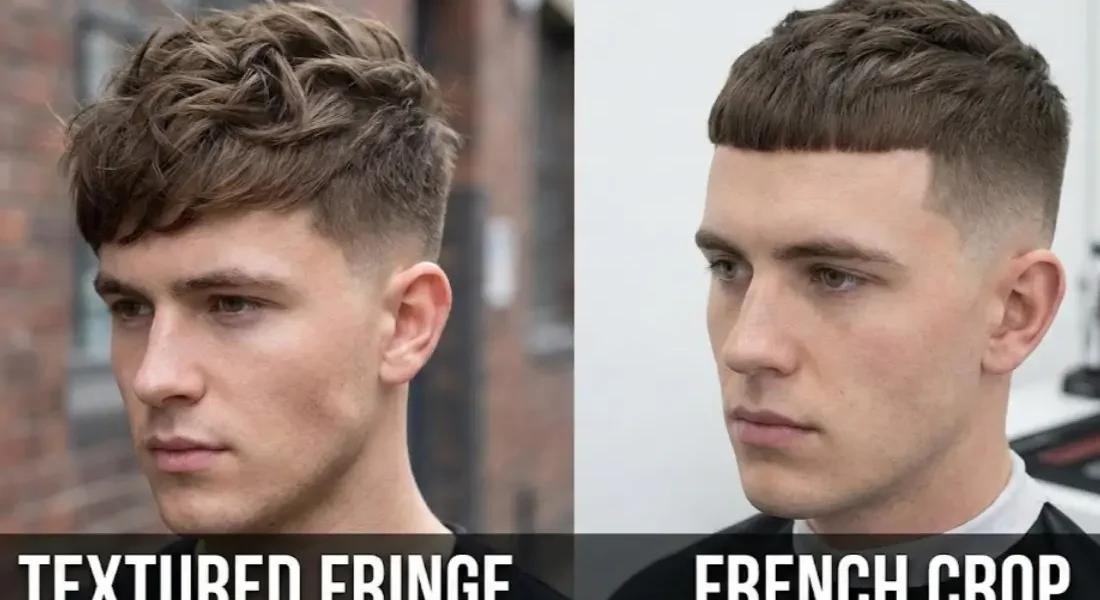
The French crop is about structure and a more defined, often blunt fringe. The textured fringe is about movement, choppy layers, and a softer, broken edge across the forehead.
By the end of this guide, you will know:
- What each cut actually is.
- How the fringe and sides change the entire look.
- Which face shapes and hair types match each style.
- How much effort each one really needs.
- Exactly what to ask your barber so you get the cut you pictured.
The French Crop: The Structured Classic
What is it?
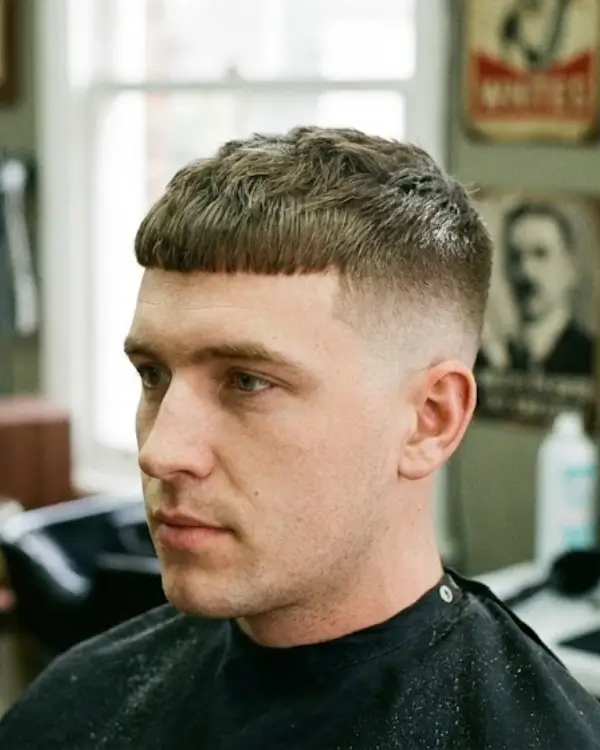
A French crop is a short-back-and-sides haircut with a distinct fringe that sits forward on the forehead. The fringe is often cut straighter and heavier than other crop variations, creating a clear outline at the front. This style is closely related to the Caesar cut family, which is known for short, horizontal bangs.
If you want the simple, practical version:
- Short sides.
- A compact top.
- A forward fringe that gives shape and control.
It also carries a long history of clean, disciplined grooming. Many modern descriptions link its popularity to military-influenced, no-fuss styling that later evolved into a sharper street look.
Key characteristics
The fringe
The fringe is the signature. In a classic French crop:
- It sits forward.
- It feels “weighted.”
- It often has a more blunt, visible edge.
That edge is what creates the strong, framed look. It is the haircut’s “line” moment.
The sides
The sides usually do the heavy lifting for the silhouette:
- A mid or high fade is common.
- The contrast makes the top look more compact and deliberate.
This can create a slightly boxy or squared outline in the best way.
Texture level
The French crop can have texture, but it is usually:
- Minimal to medium.
- Controlled, not chaotic.
- Neat even when styled loosely.
So even if your barber adds light point cutting, the overall impression stays polished.
Who is it for?
Face shapes
I recommend the French crop if you want structure that supports strong facial geometry.
It tends to suit:
- Oval faces, because nearly everything does.
- Square faces, because the sharpness matches the angles.
- Round faces, especially when the fade goes higher to add a bit of visual height.
Hair type
The French crop is happiest with:
- Straight to slightly wavy hair.
- Medium-to-thick density.
Thicker hair helps keep that blunt edge looking intentional rather than wispy.
The vibe
This is for guys who like:
- Clean lines.
- A modern, urban edge.
- A cut that looks “done” even when you did nothing that morning.
If your wardrobe leans crisp, monochrome, or smart-casual, this cut slots in effortlessly.
The Textured Fringe: The Modern Mess

What is it?
The textured fringe is a crop-adjacent look where the fringe is designed to move.
Instead of a single straight line across the forehead, the front is broken into uneven, choppy pieces. The top is layered to remove weight and create separation.
Think of it as the more relaxed, modern sibling of the classic crop.
Key characteristics
The fringe
This is the whole point of the cut.
- Choppy.
- Layered.
- Intentionally uneven.
A good textured fringe looks natural, but it is not accidental. The barber is removing bulk and sculpting movement.
The sides
The sides are more flexible than the French crop.
You can pair a textured fringe with:
- A low fade.
- A taper fade.
- Even a softer scissor-cut side if you want less contrast.
This helps keep the vibe lighter and less severe.
Texture level
This is where it separates from the French crop most clearly.
The textured fringe is:
- High texture.
- Piece-y.
- Built to look better with a little product.
Without texture, the cut can collapse and look like a regular short fringe.
Who is it for?
Face shapes
I’d steer you toward a textured fringe if your goal is to soften or balance sharper features.
It often works well for:
- Diamond faces.
- Heart faces.
- Oblong faces.
The broken fringe helps reduce the feeling of a long, uninterrupted forehead and adds width and softness at the front.
Hair type
This style plays nicely with:
- Wavy hair.
- Curly hair.
- Fine hair that needs lift.
Texturizing powder or a light pre-styler can make thin hair look fuller without turning it into a stiff helmet.
The vibe
This one feels:
- Relaxed.
- Effortless.
- A clean blend of streetwear and casual style.
If you like outfits that look low effort but are quietly put together, this is your haircut energy.
The Main Differences (Head-to-Head)
Visual comparison
If you remember nothing else, remember this.
- The French crop is structured and polished.
- The textured fringe is loose and flowy.
Both are short, modern, and easy to live with. But the visual message is different.
The “line” factor
This is the real design difference.
- The French crop usually shows a more visible horizontal line across the forehead.
- The textured fringe breaks that line into softer pieces.
That is why a textured fringe can be a smart move if you want a more forgiving front view.
Receding hairline and forehead concerns
Let’s be real and practical.
If you have:
- A larger forehead, or
- A slightly receding hairline,
the textured fringe often provides better camouflage because the uneven edge distracts the eye. A blunt line can still work, but it is less forgiving if your hairline sits higher or is uneven.
Styling effort
French crop
This is close to a “wake up and go” cut when done well.
Most mornings you can:
- Rinse.
- Towel dry.
- Push it forward with your hands.
A tiny amount of matte product can refine it.
Textured fringe
This is still easy, but you will do a little more.
To stop it from falling flat, you often need:
- A quick pre-styler.
- Finger styling.
- A light finishing product.
Not complicated. Just more deliberate.
Which One Should You Get? A Simple Decision Matrix
I’ll keep this part blunt, because that is what makes it useful.
Choose the French crop if:
- You want a sharp, confident, fashion-forward look.
- You like clean lines that frame the face.
- You want a haircut that looks tidy with minimal styling.
- You have thick hair that can hold a defined fringe.
This is especially good if you want your haircut to accent your jawline and cheekbones by keeping the front tidy and the sides tight.
Choose the textured fringe if:
- You want a softer, more relaxed front view.
- You have a larger forehead or mild recession you want to downplay.
- Your hair is wavy, curly, or fine and benefits from movement.
- You prefer an “undone” aesthetic.
This cut gives you more freedom to adapt your look day to day.
Styling Mini-Guide
These are quick, real-world routines you can actually stick to.
Styling the French crop
Best products
I recommend:
- A matte clay for control and shape.
- A light matte paste if your hair is finer.
You want grip without shine.
Simple technique
- Start with towel-damp hair.
- Use a small amount of product.
- Push everything forward.
- Shape the fringe into a neat edge.
If your fringe wants to split, blow-dry it forward for 30 to 45 seconds and then set it with your hands.
Styling the textured fringe
Best products
A good combo is:
- Sea salt spray as a pre-styler.
- Texture powder or matte clay as a light finisher.
Sea salt products are commonly used to boost natural texture and volume, especially in wavy or curly hair.
Simple technique
- Spray sea salt lightly on damp hair.
- Blow-dry while scrunching or lifting at the roots.
- Let the fringe fall forward naturally.
- Use fingers to separate pieces.
- Add a tiny amount of powder to lock in the messy shape.
Key rule: do not flatten the bangs. The whole point is controlled mess.
Barber Communication: What to Say So You Get the Right Cut
Because “crop” is a wide umbrella, your words matter.
Ask for a French crop like this:
- “Short back and sides.”
- “Keep the fringe blunt and a bit heavier.”
- “I want a clean, structured look.”
- “Mid or high fade, depending on what suits my head shape.”
Ask for a textured fringe like this:
- “Crop shape, but I want a choppy, layered fringe.”
- “Remove weight in the front.”
- “Keep movement on top.”
- “Low fade or taper so it stays softer.”
A good barber will immediately understand the difference once you mention fringe weight and texture.
Maintenance and How Often to Trim
French crop upkeep
Because the line is part of the look, it shows growth faster.
I recommend a trim about:
- Every 3 to 5 weeks.
That keeps the fringe crisp and the fade clean.
Textured fringe upkeep
This grows out more forgivingly.
You can usually go:
- 4 to 6 weeks
before it starts to lose its shape.
If your hair is fine, you may prefer tighter maintenance to keep the volume.
Common Mistakes That Ruin Each Look
French crop mistakes
- Going too soft on the fringe if you want a strong line.
- Leaving the sides too bulky if you want a sharp silhouette.
- Using shiny product that fights the clean, matte style.
Textured fringe mistakes
- Not adding enough texture on top.
- Cutting the fringe too blunt, which turns it into a French crop-lite.
- Skipping product entirely and expecting separation.
Texture is not optional here. It is the design.
Quick Face Shape Guidance
No haircut is magical, but the right one makes your face work with the style, not against it.
If your face is round
- A French crop with a higher fade can add visual length.
- A textured fringe can also work, but keep volume controlled so you do not add width.
If your face is square
- French crop looks strong and intentional.
- Textured fringe can soften the edges if you want a more relaxed vibe.
If your face is oblong
- Textured fringe often helps by breaking up length at the forehead.
- Avoid extreme height on top with either cut.
If your face is heart or diamond
- The textured fringe is usually easier to balance.
- The softer fringe reduces harsh contrast at the temples.
The Easy Summary in Two Lines
If your goal is to look sharp, minimal-maintenance, and clean-cut, I recommend the French crop. It is structured and reliable.
If your goal is to soften the front view and add effortless movement, the textured fringe is the smarter pick. It is modern, flexible, and more forgiving.
Conclusion
Both styles are excellent short-hair options that stay relevant because they solve real problems. They are easy to maintain, easy to style, and they work across different ages and personal styles.
The difference is the intent.
The French crop wins when you want a tidy, defined fringe and a structured shape.
The textured fringe wins when you want movement, softness, and a more relaxed finish.
Your best next step is simple. Save a couple of reference photos from this guide and show them to your barber. Names vary between shops, but pictures do not. That one habit will do more for your haircut results than any trendy label ever will.