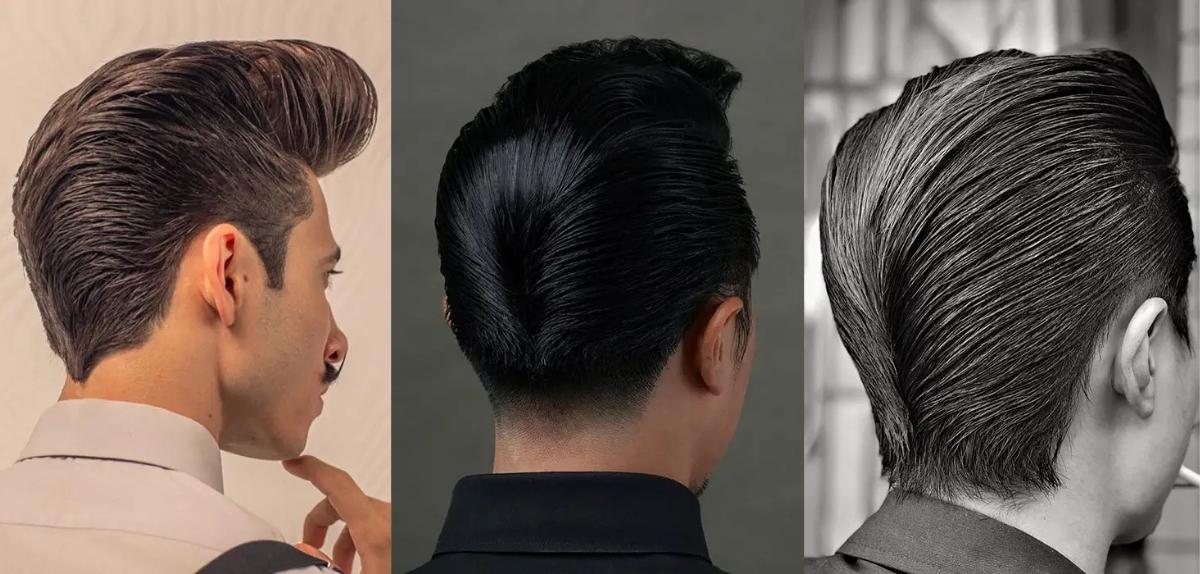
The ducktail haircut, often called the duck’s tail, D.A. or duck’s ass, is a slick, sculpted men’s style that pulls the hair back from the sides and meets in a clean ridge at the back of the head. From the rear, that line looks like the shape of a duck’s tail, which is how the cut got its name. It is a bold, vintage-inspired look that signals precision, personality and confidence.
In the 1950s this haircut became a symbol of rebellious cool, worn by rockabilly fans, teddy boys and “greasers” who loaded their hair with pomade and kept a comb in their back pocket. Today, barbers are bringing the ducktail back with fades, undercuts and more texture, so it works just as well in 2025 as it did in the jukebox era.
What Is A Ducktail Haircut?
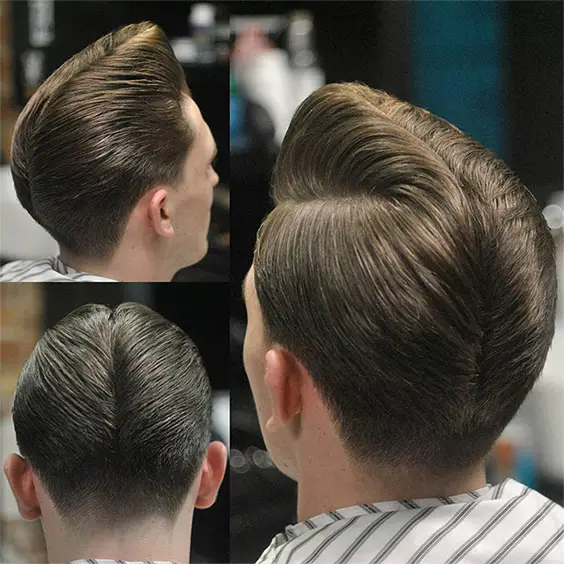
At its core, the ducktail is a slicked-back style with a defined center ridge at the back:
- Hair on the sides is combed back toward the middle.
- A fine-tooth comb is used to draw a part from crown to nape, creating the “tail.”
- The top can be worn as a pompadour, quiff, or textured sweep, depending on how modern or vintage you want it.
Traditionally, the look needs medium length hair and a greasy pomade to hold everything in place. Modern versions often swap heavy grease for matte clay or lighter pomade, but the backbone is still the same: sleek sides feeding into a sharp V or ridge at the back.
A Short History Of The Ducktail
- The ducktail is credited to Philadelphia barber Joe Cirello, who started cutting it in the early 1940s.
- It exploded in popularity in the 1950s alongside rock ’n’ roll, often linked with stars like Elvis Presley and James Dean, who helped popularize slicked-back, pomade-heavy styles.
- The style became part of the image of “greasers” and rebellious youth, especially in the US and UK, where teddy boys used the ducktail and pompadour to stand out from clean-cut crew cuts.
Modern grooming blogs note that the ducktail has seen a quiet comeback, especially in barbershops that focus on classic, vintage and rockabilly cuts, with textured ducktails and ducktail fades trending in recent years.
Key Features Of A Ducktail Haircut
To recognise or explain a ducktail to your barber, focus on these elements:
1. Back View: The Tail
- Hair from both sides is combed to meet in the center.
- A sharp part or ridge runs from crown to neckline, clearly visible from behind.
- The bottom can end in a V-shape, rounded tail or soft taper depending on how dramatic you want it.
2. Sides
- Sides are usually combed straight back, not down.
- Classic versions keep more length; modern versions often add a low, mid or high fade to sharpen the profile.
3. Top
- Can be flat and slick, pomped up with volume, or textured and loose.
- Longer tops allow for quiff or pompadour styling; shorter tops give a tighter, easier ducktail.
Who Does The Ducktail Suit?
The ducktail is surprisingly adaptable, but it works best if you:
- Have straight or slightly wavy hair with medium thickness.
- Can grow your sides long enough to comb them back cleanly.
- Like structured, groomed styles rather than very casual, messy looks.
Best Face Shapes
- Oval and rectangle: The volume and length balance your features very well.
- Square: The soft, slicked sides can flatter strong jawlines.
- Round: Pair the ducktail with extra height on top and a fade on the sides to add structure.
Classic vs Modern Ducktail Variations
1. Classic Greaser Ducktail
- Medium length on top and sides.
- Heavy, shiny pomade for that wet, slick look.
- Comb lines are clearly visible, with a pronounced tail at the back.
This is the closest to the 1950s “D.A.” and suits anyone who loves pure vintage style.
2. Ducktail With Fade
- Sides are tapered or faded, while the top and back keep enough length to form the tail.
- Works well with mid or high skin fades that keep the shape sharp and modern.
This version is more wearable for daily life and fits into current barbershop trends.
3. Undercut Ducktail
- Sides and back are buzzed or undercut, leaving a strong block of hair on top that is slicked back into a tail.
- Adds an urban, high-contrast twist while keeping the old-school silhouette.
4. Textured Ducktail
- Uses matte products and loose separation instead of heavy shine.
- The tail is softer, with strands pointing inward rather than a razor-sharp line.
- Ideal if you want the shape without looking too formal.
Modern style guides point out that textured ducktails paired with fades are among the biggest trends for this cut right now.
How To Ask Your Barber For A Ducktail
You can use simple language and still sound clear:
- Length
- Ask for medium length on top, with enough on the sides to comb back.
- If you want a fade, specify low, mid or high fade on the sides and back.
- Back Detail
- Say you want a classic ducktail ridge at the back, where both sides meet in the center to form a V or tail.
- Top Style
- Decide between:
- Slick pompadour or quiff
- Flatter, classic slick back
- Matte, textured finish
- Decide between:
Bringing a clear backside photo of a ducktail really helps. Barbers who specialise in classic cuts often recognise the term D.A. immediately.
How To Style A Ducktail Haircut (Step By Step)
You can style a basic ducktail at home if you have the right cut and a bit of patience.
Step 1: Start With Damp Hair
- Wash or lightly wet your hair.
- Towel-dry so it is slightly damp, not dripping.
Step 2: Apply Product
- For a vintage look, use a classic pomade with medium to high hold and shine.
- For a modern look, use matte clay or cream for a softer finish.
- Work a small amount from roots to ends, especially through the sides and back.
Traditional ducktail styling relied heavily on oil-based pomades to keep the hair in place all day, which is why wearers were often called “greasers.”
Step 3: Slick The Sides Back
- Using a fine-tooth comb, comb each side straight back toward the center.
- Imagine you are folding the sides in like wings.
Step 4: Create The Tail
- With the tooth edge of the comb, draw a line from crown to nape, pulling the hair from each side slightly toward that line.
- This forms the distinct ridge or part that looks like a duck’s tail.
Step 5: Style The Top
- For a pompadour or quiff, lift the front up and back, adding height.
- For a pure slick back, comb the top straight back with light tension.
- Adjust with your fingers to keep the front smooth and the back tail sharp.
Step 6: lock It In
- If needed, finish with a light mist of hairspray to control flyaways.
- During the day, you can re-touch with a comb, just as 1950s wearers did.
Quick Comparison Table
| Version | Sides | Finish | Best For |
|---|---|---|---|
| Classic Greaser | Full length | High shine | Pure vintage, rockabilly fans |
| Ducktail Fade | Low / mid / high | Matte or shiny | Modern everyday wear |
| Undercut Ducktail | Shaved / buzzed | High contrast | Street style, bold looks |
| Textured Ducktail | Soft taper | Matte, loose | Casual, low-shine styling |
Tips To Make A Ducktail Work In 2025
- Keep neckline and beard clean so the style looks intentional, not messy.
- If you work in a more conservative setting, lean toward a ducktail fade with a softer, matte top.
- For special events, increase the shine and height for a full rockabilly impact.
- Regular trims every 3–5 weeks keep the ridge and neckline sharp.
Final Thoughts
The ducktail haircut is a true classic that still feels powerful today. At its best, it combines old-school rebellion with modern barbershop precision, giving you a style that looks considered from every angle, especially the back. Whether you choose a high-shine greaser tail, a faded ducktail, or a textured modern version, the key is a clean cut, strong styling product and a clear center ridge.
If you want a haircut that tells a story the moment you turn your head, the ducktail is a statement style that earns its place back in rotation.