
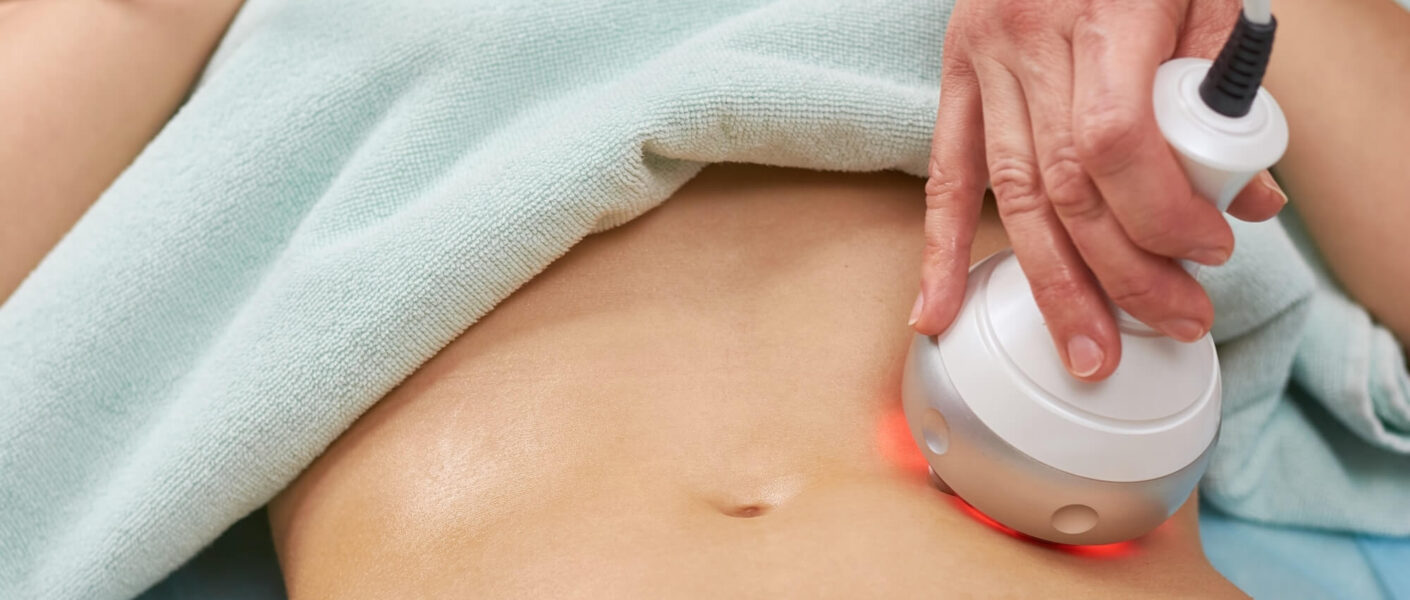
Achieving a flatter, firmer stomach is a common beauty and body confidence goal. However, even with regular exercise and a balanced diet, some people find that stubborn abdominal fat or slightly loose skin prevents them from achieving their desired silhouette.
This has contributed to growing interest in non-surgical body contouring treatments, particularly fat freezing, fat dissolving injections and ultrasound cavitation.
Although these treatments are often advertised as ways to achieve a tighter stomach without surgery, they work in different ways. More importantly, reducing fat and tightening skin are not the same thing.
Understanding these differences can help people choose treatments that are appropriate for their individual concerns.
Why your stomach might not look as firm as you want?
Before comparing treatments, it is important to understand what causes the appearance of a soft or sagging stomach.
For some people, the main concern is subcutaneous fat, the fatty tissue located directly beneath the skin.
Others experience loose skin following pregnancy, significant weight loss or natural ageing.
Some people have a combination of both, while abdominal muscle separation following pregnancy can also affect the appearance of the stomach.
These differences matter because a treatment designed to reduce fat will not necessarily tighten loose skin.
In fact, removing fat beneath skin that has already lost elasticity can sometimes make sagging more noticeable.
How fat freezing works on the stomach?
Fat freezing uses controlled cooling to target selected deposits of subcutaneous fat.
During treatment, a specialised applicator is placed against the skin, often drawing the fatty tissue into a cooling chamber.
The controlled temperature damages some of the fat cells within the treated area, allowing the body to gradually clear them through natural biological processes.
Over the following weeks and months, this may reduce the thickness of the fatty layer and improve the contour of the abdomen.
For people considering fat freezing for the stomach, the treatment may be suitable when the main concern is a defined pocket of pinchable fat rather than loose skin.
One advantage is that it does not involve surgical incisions, needles or general anaesthesia.
However, results are usually gradual and more modest than those achieved through liposuction.
Temporary bruising, swelling, numbness and discomfort can occur. A rare complication known as paradoxical adipose hyperplasia can also cause treated fatty tissue to enlarge instead of shrinking.
Does fat freezing actually tighten skin?
Although reducing a fatty bulge can create the appearance of a smoother stomach, fat freezing is primarily a fat reduction treatment.
It is not designed to remove excess skin or produce substantial skin tightening.
Some people may notice an improvement in their overall abdominal silhouette, but this should not be confused with a direct tightening effect.
If loose skin is the main concern, another treatment approach may be more appropriate.
What are fat dissolving injections?
Fat dissolving injections use substances injected into fatty tissue to damage fat cells.
Certain formulations contain ingredients such as deoxycholic acid, which disrupts fat cell membranes.
The body gradually clears the damaged cellular material, potentially reducing the treated fatty deposit.
Although these injections are sometimes marketed for stomach fat, the evidence and regulatory status vary considerably between products and treatment areas.
For example, deoxycholic acid injections authorised in the United States for reducing fat beneath the chin are not approved there for abdominal fat reduction.
Products marketed for stomach injections should therefore not automatically be assumed to be safe or clinically proven.
The treatment also involves needles, making it different from non-invasive approaches such as fat freezing.
Potential side effects include swelling, bruising, tenderness, infection, persistent lumps and tissue damage.
Can fat dissolving injections tighten stomach skin?
Fat dissolving injections primarily aim to reduce fatty tissue rather than stimulate meaningful skin tightening.
If someone has a small fatty deposit and good skin elasticity, reducing that deposit may improve their overall body contour.
However, injections cannot remove stretched skin or restore significant elasticity.
For people with substantial abdominal laxity, reducing fat without addressing the skin may not produce the desired result.
How ultrasound cavitation works?
Ultrasound cavitation uses sound wave energy to affect fatty tissue beneath the skin.
Depending on the device and treatment settings, ultrasound can create mechanical effects within fat cells that may contribute to their disruption.
A practitioner typically moves a handheld applicator across the treatment area using a conductive gel.
Unlike fat freezing, which relies on cooling, ultrasound technology uses acoustic energy.
Some clinical ultrasound devices have demonstrated measurable reductions in localised fat, although results vary significantly between different technologies.
It is important to distinguish professional focused ultrasound systems from lower-powered cavitation devices, as they do not necessarily have the same supporting evidence.
A course of treatments may be required, and the degree of improvement is not guaranteed.
Can ultrasound cavitation make the stomach firmer?
Ultrasound cavitation is generally used for reducing localised fat rather than directly tightening loose skin.
Although a reduction in abdominal fat may improve the appearance of the stomach, this does not mean the skin itself has become firmer.
Certain focused ultrasound technologies are designed to target tissue at different depths and may encourage collagen remodelling.
However, these should not be confused with every treatment marketed as ultrasound cavitation.
Anyone considering ultrasound should ask exactly which device is being used and whether there is clinical evidence supporting its intended purpose.
Which treatment is best for stomach tightening?
When comparing fat freezing, fat dissolving injections and ultrasound cavitation, the most important consideration is whether the problem involves excess fat or loose skin.
Fat freezing may be appropriate for selected individuals with localised abdominal fat who want a non-invasive treatment.
Ultrasound-based fat reduction may also be an option, depending on the technology and supporting clinical evidence.
Fat dissolving injections require particular caution because product safety, suitability and regulatory authorisation differ.
However, none of these treatments should be regarded as a reliable solution for significant loose stomach skin.
People specifically interested in non-surgical skin tightening for the stomach may wish to explore treatments that focus on collagen remodelling rather than fat removal alone.
Radiofrequency is one example of a technology that uses controlled heating to encourage changes in collagen and potentially improve mild skin laxity.
Even these treatments generally produce modest improvements and cannot replace surgery when substantial excess skin is present.
What about recovery time and comfort?
One reason non-surgical body contouring has become popular is the possibility of returning to everyday activities relatively quickly.
Fat freezing usually requires little formal recovery time, although tenderness, swelling or numbness can persist.
Ultrasound treatments may cause temporary redness, sensitivity or discomfort, with burns or tissue injury possible if equipment is used incorrectly.
Fat dissolving injections can cause more noticeable swelling and bruising, particularly when larger areas are treated.
Recovery experiences vary, and all three approaches require appropriate professional assessment.
Can you combine treatments for better results?
Some aesthetic clinics offer treatment plans combining fat reduction and skin tightening technologies.
The idea is to address different concerns separately, such as reducing a localised fatty deposit while improving mild skin laxity.
However, combining procedures does not automatically produce better results.
Each treatment introduces its own risks, costs and recovery considerations.
A qualified practitioner should assess whether the combination is appropriate and explain the evidence supporting the proposed plan.
Choosing the right approach for your stomach
Fat freezing, ultrasound cavitation and fat dissolving injections all aim to change body contours, but they are not interchangeable.
Fat freezing uses cooling to reduce selected fatty deposits, ultrasound cavitation uses sound wave energy, and fat dissolving injections introduce substances directly into fatty tissue.
For someone whose main concern is a stubborn pocket of stomach fat, an appropriately selected fat reduction treatment may offer modest improvements.
For someone experiencing loose or sagging skin, treatments specifically designed to encourage collagen remodelling may be more relevant.
Significant hanging skin, however, generally cannot be corrected through non-surgical procedures.
Ultimately, achieving a firmer-looking stomach begins with understanding what is causing the concern.
Choosing a treatment based on individual anatomy, realistic expectations and professional advice is far more important than following the latest body sculpting trend.
