
We spend hundreds on serums, stand in front of mirrors debating outfit choices, and scroll endlessly for styling inspiration. But what if one of the most powerful beauty and style upgrades available to you costs nothing and starts from within?
Your posture.
How you hold your body affects how your clothes drape, how your skin glows, how tall and lean you appear, and how confident you feel walking into a room. And physical therapy is the most effective, clinically grounded way to reset that posture for good.
This guide breaks down exactly how posture transforms your look, why physical therapy is the right tool for the job, and what you can expect if you decide to try it.
Why Posture Is the Beauty Secret Everyone Overlooks
When we think about beauty, we tend to focus on skincare, makeup, or fitness. But as the beauty publication New You put it, “one of the most overlooked aspects of beauty is posture. How we carry ourselves can dramatically impact how we look and feel, instantly and over time.”
Think about it. You can buy the perfect blazer, get the perfect haircut, and apply flawless makeup, but if your shoulders are rounded, your head juts forward, and your spine is compressed, all of that effort gets undermined. Your body is the hanger your clothes sit on. If the hanger is bent, the clothes look off no matter how expensive they are.
Posture is not just about standing up straight. It is about creating space in your body so that everything, from your wardrobe to your facial tension, falls into better alignment.
How Posture Changes How Your Clothes Fit
Let’s start with the style angle because this is where the change is most immediately visible.
The Drape Problem
According to a detailed guide from Terdanta on how clothes really fit, your posture directly impacts how fabric falls on your body. When you stand tall with your shoulders relaxed and your core gently engaged, your torso naturally lengthens. This allows fabric to fall smoothly, following the lines the designer intended.
When you slouch, things go wrong quickly. The Terdanta article explains that a slouched posture compresses the midsection, causing fabric to “pool or wrinkle around the belly or lower back.” A rounded back makes a shirt ride up in the rear and create horizontal creases. A forward head position causes fabric to pull across the upper back.
The result? A shirt that should fit perfectly looks ill-fitting, even when the size is right.
Why Ready-to-Wear Fails Most Bodies
Allan David, a bespoke tailor in Calgary, sees the consequences of posture on fit every single day. In his article on bespoke tailoring and posture, he explains that ready-to-wear garments are designed for an “average” body that assumes perfect symmetry and proportion.
The problem is that almost nobody actually has that body. David describes two clients with nearly identical chest measurements who need completely different patterning because one has “a pronounced forward head posture, rounded upper back, and forward-rolled shoulders” while the other stands upright with square shoulders.
The first posture compresses the front of the chest and expands the back. The second does the opposite. Same size on paper. Totally different fit in reality.
David makes the key point: “The position of the shoulder and neck determines the entire balance of the garment. If those are off, nothing else will sit correctly.”
The Two-Way Street Between Clothes and Posture
Here is something important to understand: your clothes affect your posture too. A biomechanical study published in a physiology journal found that restrictive clothing “greatly impacts postural posture and musculoskeletal biomechanics.” Long-term use of tight, restrictive garments can put you at risk for postural dysfunction, low back pain, neck discomfort, and irregular gait.
This means if you wear clothes that force your body into a poor position (think ultra-tight waistbands, rigid structured jackets that lock your shoulders forward, or shoes that throw off your alignment), you can actually train your posture to get worse over time.
The takeaway: better posture makes your clothes fit better, and better-fitting, body-supportive clothes help you maintain better posture. Physical therapy addresses the first half of that equation.
How Posture Changes How You Look (The Beauty Benefits)
Now for the beauty side. This is where things get really interesting because the effects go far beyond just looking taller.
1. You Look Taller and Leaner
When you elongate your spine, engage your core, and lift through the crown of your head, your body stretches into its optimal alignment. New You describes this as “a 360-degree approach to elongation” that creates “a more sculpted, elegant silhouette that is noticeable from every angle.”
This is not about pulling your shoulders back in a forced, military way. It is about creating space in the spine and lifting from within. The visual effect is immediate: you look longer, leaner, and more proportioned.
2. Your Muscle Tone and Skin Quality Improve
This one sounds surprising but the science is straightforward. Proper posture places your muscles under gentle, constant tension that keeps them engaged. This active engagement promotes better circulation, which delivers oxygen and nutrients to your tissues.
According to New You, this enhanced circulation “enhances muscle tone and skin quality” and supports healthy fascia (the connective tissue beneath your skin), “reducing the appearance of sagging and contributing to a more toned, youthful look.”
In other words, standing well is a form of passive exercise for your tissues.
3. Your Hormones Shift in Your Favor
Your posture influences your hormonal balance. Studies show that upright posture increases testosterone (associated with confidence) and decreases cortisol (the stress hormone).
This hormonal shift can reduce puffiness, improve skin clarity, and give you a natural, radiant glow. Slouching, on the other hand, compresses the ribcage and restricts breathing, which leads to lower energy levels and less vibrant skin.
4. You Look Younger
A lifted posture has a visible anti-aging effect. When your spine is aligned and your muscles are engaged, your face benefits too. You get less tension in the neck and jaw, fewer expression lines caused by poor alignment, and an overall more vibrant, lifted look.
Good posture also allows for deeper, more efficient breathing. This improved oxygenation helps flush out toxins and promotes a healthy glow. New You calls this combination of alignment and breath “a natural facelift effect.”
5. You Project Confidence (and Confidence Is Beautiful)
There is a reason confident people are perceived as more attractive. How you hold yourself affects how others see you. An open, aligned posture exudes poise, approachability, and self-assurance.
MyPainKit puts it simply: “Good posture simply is more attractive, and makes you more confident.” STRONG Fitness Magazine notes that posture makes “the difference between a strong body and a crumpled physique.” Visbody adds that standing tall “projects a positive image, enhancing self-esteem and even influencing your brain chemistry to promote happiness and focus.”
Why Physical Therapy Is the Right Solution
You might be wondering: if posture is so important, why not just remind yourself to stand up straight?
Because for most people, poor posture is not a willpower problem. It is a muscle imbalance and mobility problem. Your body has adapted to whatever positions you spend the most time in (looking at phones, sitting at desks, carrying bags on one shoulder). Certain muscles have become tight and short. Others have become weak and overstretched. You cannot simply will your way out of that.
This is where physical therapy comes in.
What Physical Therapy Actually Does for Posture
According to ScolioAustin, “physical therapy offers effective techniques to reset your posture, helping you stand tall and move comfortably” through core strengthening and shoulder mobility exercises.
Jacob PT adds that physical therapy helps you “improve flexibility, build muscle strength, and support your spine’s natural curve.” It reduces strain, improves balance, and prevents chronic pain.
Here is the key insight from a physical therapist who treats posture-related problems daily: people do not come into the clinic complaining of bad posture. They come in with neck pain, knots in their upper shoulders, and headaches. “Many of them wouldn’t be in any pain if they just spent some time addressing their posture.”
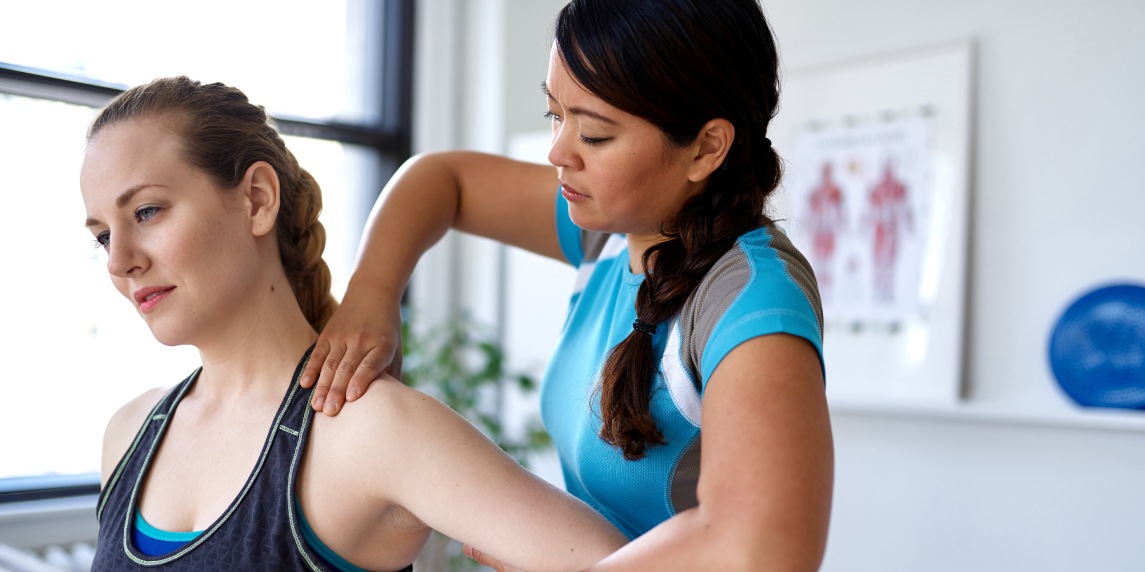
Physical therapy does not just tell you to stand up straight. It identifies which muscles are tight, which are weak, which joints lack mobility, and which movement patterns are reinforcing your slump. Then it gives you a targeted plan to fix all of it.
What a Physical Therapy Posture Program Looks Like
If you decide to see a physical therapist for posture correction, here is what you can generally expect.
Assessment
The therapist will look at how you stand, how you walk, how your shoulders and head sit, and whether you have asymmetries (like one shoulder dropping lower than the other, which Allan David says is one of the most common issues he sees in his tailoring clients). They will check your spine’s curves, your hip alignment, and your breathing pattern.
Targeted Exercise Plan
Based on what they find, they will prescribe specific exercises. According to multiple PT sources, a posture program typically includes:
- Stretching tight muscles: especially the chest muscles (pectoralis), the front of the shoulders, the hip flexors, and the upper trapezius. These are the muscles that pull you forward when they get short.
- Strengthening weak muscles: especially the deep core, the upper back (rhomboids and lower trapezius), the back of the shoulders (rotator cuff), and the glutes. These are the muscles that should hold you upright but go quiet when you slouch.
- Mobility work: to restore movement in your thoracic spine (upper back) and shoulders so you can physically get into a tall position without strain.
- Breathing retraining: because slouched posture restricts your diaphragm. Learning to breathe deeply into your back and sides helps decompress your spine and oxygenate your tissues.
Progression
As you improve, the exercises progress. You move from isolated movements (like lying down doing scapular squeezes) to integrated patterns (like standing rows, overhead reaches, and eventually full-body movements that reinforce tall posture under load).
UCSF’s rehabilitation science department even runs a dedicated “Stand Tall” class using “specialized exercise and postural training” to “strengthen core and back muscles, improve posture and bone health.”
How Long Until You See (and Feel) Results
This is a question everyone asks, and the honest answer is: it depends on how long you have had your current posture and how consistently you work on it.
That said, here is a realistic timeline based on what PT sources suggest:
- First few sessions: You will likely feel awareness. You start noticing when you slouch. You may feel some relief in neck and shoulder tension as tight muscles start to release.
- Two to four weeks of consistent work: You may notice changes in how your clothes fit. Terdanta notes that even small shifts in posture can transform how a well-fitting shirt looks on you. You might catch yourself in a mirror and notice you look taller.
- Six to twelve weeks: This is when muscle changes become more durable. The weak muscles that were failing to hold you up get stronger. The tight muscles that were pulling you forward lengthen. Your default standing position starts to look different without you having to think about it.
- Three months and beyond: Posture becomes more automatic. The hormonal benefits (lower cortisol, higher testosterone) compound over time. New You notes that posture creates “a visible transformation, enhancing everything from height perception to muscle tone, skin vitality, and even mood” over time.
The key word is consistency. Ten minutes of targeted work daily beats an hour once a week.
Simple Things You Can Do at Home Right Now
You do not need to wait for a PT appointment to start improving your posture. Here are five things you can do today, drawn from the PT sources above.
1. Do a Posture Check Every Hour
Set a phone reminder. When it goes off, lift through the crown of your head, roll your shoulders up, back, and down, gently engage your lower belly, and take three deep breaths. This takes 15 seconds and interrupts the slouch pattern.
2. Stretch Your Chest
Stand in a doorway, place your forearms on the doorframe, and gently step forward until you feel a stretch across your chest. Hold 30 seconds. Do this two or three times a day. Tight chest muscles are the number one culprit for rounded shoulders.
3. Strengthen Your Upper Back
Lie face down, arms in a goalpost shape, and lift your hands and elbows off the floor by squeezing your shoulder blades together. Hold two seconds, lower slowly. Do two sets of 10. This wakes up the muscles that should be holding your shoulders back.
4. Breathe Into Your Back
Lie on your back with knees bent. Place your hands on your lower ribs. Breathe in through your nose and feel your back and sides expand, not just your belly. Do this for two minutes. This restores the breathing pattern that slouching takes away.
5. Walk Like You Mean It
A physical therapy social post sums up the simplest cue: “realign your posture, open your chest, and lengthen your spine, so you look taller and move with confidence.” When you walk, imagine a string pulling the top of your head toward the sky. Let your arms swing naturally. Look ahead, not down.
Who Should Consider Physical Therapy for Posture
You do not need to be in pain to benefit. Consider seeing a PT if any of these apply to you:
- You spend most of your day sitting and looking at screens.
- You frequently get neck tension, shoulder knots, or tension headaches.
- You notice one shoulder sits higher than the other or your head juts forward.
- Your clothes fit oddly even when they are the right size.
- You feel like you look shorter or more compressed than you used to.
- You want to improve your appearance and confidence without spending money on new clothes or treatments.
Physical therapy is covered by many insurance plans, and direct access laws in most US states mean you can often see a PT without a doctor’s referral. If you are in the Charleston area, Rebecca’s Physical Therapy in Mount Pleasant is a strong option for getting started with personalized posture correction.
The Bottom Line
Your posture is the foundation of how you look. It determines how your clothes drape, how tall and lean you appear, how toned your muscles look, how clear your skin glows, and how confident you feel. It is the one beauty and style investment that costs nothing but pays dividends everywhere.
Physical therapy is the most reliable way to fix it because it addresses the root causes (tight muscles, weak muscles, limited mobility) rather than just telling you to stand up straight. It gives you a personalized plan, professional guidance, and measurable progress.
As New You puts it: “Posture shapes the way you look, feel, and move through the world. Standing tall creates a powerful presence, making you appear taller, leaner, and more vibrant. It enhances circulation, lifts your mood, and even gives your skin a natural glow.”
So the next time you are trying to figure out why an outfit is not working, or why your skin looks dull, or why you feel less confident than usual, check in with your body first. The fix might not be in your closet. It might be in your alignment.
Stand tall, style better, and let physical therapy help you get there.
