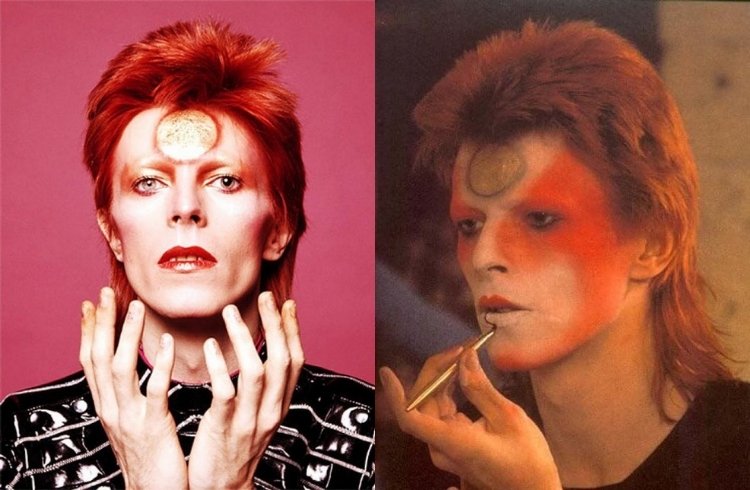
When you picture David Bowie in his Ziggy Stardust era, the hair is as unforgettable as the music. That fiery red mullet—sharp, bold, and unapologetically dramatic—was more than just a haircut. It became a cultural statement, one that blurred the lines of gender, redefined glam rock style, and cemented Bowie as a true fashion icon.
The cut stood out because it wasn’t subtle; it was exaggerated, high-volume, and perfectly sculpted to command attention on stage and in photos.
Recreating this look today isn’t about copying the past—it’s about channeling the same fearless energy Bowie embodied.
Style Analysis and Key Characteristics
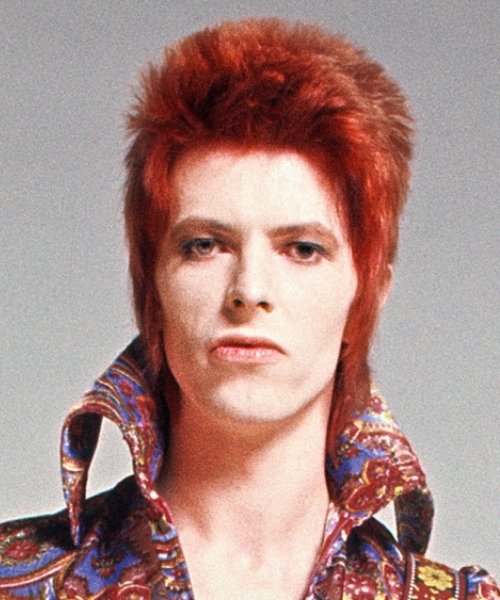
The Ziggy Stardust mullet belongs firmly in the early 1970s glam rock scene, where bigger and bolder was always better. Its most defining feature is the disconnection: short, tight sides and crown that suddenly give way to long, flowing length in the back. This separation creates the “business in the front, party in the back” look, but with Bowie’s spin—it was sharper, more elevated, and always styled for maximum impact.
- Disconnected Back: The sides and top stay cropped close, while the back flows freely, creating a strong visual divide.
- High Volume and Layering: The crown area is layered heavily, producing a lifted, rounded silhouette that almost hovers above the head.
- Bold Perimeter Shape: The front and sides are cut into strong, rounded lines, often angled slightly forward for an alien-like edge.
- Color: Although optional, a vivid fiery red or copper tone completes the look. Bowie’s choice of color amplified the drama and gave the mullet its iconic Ziggy identity.
This style works best for medium-to-thick hair with either straight or wavy texture, ensuring the volume doesn’t collapse. But the real key? Confidence. This haircut is unapologetically loud—meant for those ready to step into the spotlight just like Bowie did.
Tools and Preparation
Before you even pick up the scissors, the right setup makes all the difference in pulling off Bowie’s signature Ziggy Stardust mullet. This isn’t a quick trim—it’s a technical, layered cut that relies on precision and the right tools to build volume and maintain that dramatic disconnection.
Essential Tools
- Professional Cutting Shears (6-inch or longer): For sharp, controlled perimeter and layering.
- Blending/Texturizing Shears: To soften transitions and remove bulk without losing volume.
- Clippers (Optional): Ideal for keeping the sides and nape tight, but not always necessary if you want a softer finish.
- Fine-tooth and Wide-tooth Combs: Fine for precision sectioning; wide for detangling and distributing product.
- Sectioning Clips: Keep the “business” and “party” zones separate as you work.
- Round Brush: A must-have for styling height at the crown.
Preparation Steps
- Wash and Condition: Always start with clean hair—this allows the layers to fall naturally and makes sectioning easier.
- Towel-Dry: The cut works best on slightly damp hair, where natural texture is visible but manageable.
- Apply Volume-Boosting Product: A strong mousse or root-lift spray sets the stage for the exaggerated height. Even during the cutting process, this product helps visualize how the layers will build volume once styled.
By prepping the hair properly, you create a foundation that makes the cut easier to execute and ensures the final look has that Bowie-worthy lift and drama.
Sectioning Strategy: The “Business vs. Party” Divide
The Ziggy Stardust mullet thrives on one principle—disconnection. To achieve that sharp contrast between the short crown and sides and the flowing length in the back, sectioning has to be precise. Think of it as mapping out two different haircuts that will live side by side but never fully blend.
The Mohawk/Crown Section (The Volume)
Start by carving out a central strip from the corners of the eyebrows (or natural recession points) back to the crown or occipital bone. This becomes the “volume zone,” where most of the heavy layering and height will live.
The Disconnection Line (The Perimeter)
From the top of the ear, draw a curved diagonal line that extends back to the nape. Everything below this line becomes the “party” section—the long back panel. Clip it out of the way for now. This clear boundary is what makes the mullet look so distinct.
The Side Panels (The Short Sides)
Next, separate the hair between the recession point and the top of the ear. These panels will be cut shorter and often tapered, framing the face and ensuring that the dramatic crown volume doesn’t overwhelm the style.
This careful divide sets the groundwork for the cut’s signature contrast: sharp, sculpted “business” in the front and explosive “party” at the back.
The Cutting Technique
With the sections cleanly divided, the haircut comes alive through three main phases. Each phase builds on the last, balancing Bowie’s sharp edges with his signature volume.
Phase 1: Cutting the Side Panels (The “Business”)
- Use shear-over-comb or clipper-over-comb to create a tight, tapered look.
- Keep the sides short and controlled, blending into a defined sideburn or sharp point near the ear.
- Maintain crisp, squared lines along the perimeter—this ensures the contrast with the longer back is bold and intentional.
Phase 2: Cutting the Top Layers (The Volume and Shape)
- Work in 1-inch vertical sections within the Mohawk/Crown area.
- Elevate each section to 90° for uniform layering, ensuring maximum lift at the roots.
- Use a traveling guide while slightly over-directing toward the center to keep weight at the edges.
- Cut the fringe bluntly so it sits just above the brows, then soften with texturizing to give it that alien-glam edge.
Phase 3: Cutting the Back Panel (The “Party”)
- Release the nape section and decide the length (collarbone or longer keeps it true to Bowie).
- Cut the perimeter blunt to give structure.
- Add internal layering with vertical sections to reduce bulk and add movement, so the hair fans and lifts naturally when styled.
The result: a haircut with deliberate disconnection, high crown volume, and enough flow at the back to echo Bowie’s stage-ready drama.
Finishing, Blending, and Styling
This is where Bowie’s mullet goes from just a haircut to a full-on statement. The finishing phase locks in the contrast, pumps up the volume, and delivers the high-drama Ziggy Stardust look.
Refinement
- Check the transition between the crown layers and the long back. The disconnection should remain visible, but use deep point-cutting or notching to soften any shelf-like edges.
- Texturize the ends throughout to keep the style airy and flexible, rather than heavy and flat.
Styling for Volume
- Apply a strong-hold mousse to the crown and fringe area, focusing on the roots.
- Blow-dry using a large round brush, lifting the hair straight up and directing airflow at the roots to maximize lift.
- Mist with a strong-hold hairspray from underneath to freeze the height in place while maintaining movement on top.
Optional Color Finish
- For the true Ziggy vibe, apply a fiery copper, red, or orange tone across all sections.
- The vivid shade amplifies the drama of the cut and adds the futuristic edge that made Bowie’s look unforgettable.
Once styled, the result is unmistakable: a high-volume, disconnected mullet that captures the fearless, theatrical energy of Bowie’s early 1970s persona. It’s more than a haircut—it’s glam rock history reborn.
Conclusion: Reviving Bowie’s Glam Legacy
David Bowie’s Ziggy Stardust mullet wasn’t just a haircut—it was a rebellion against convention. With its sharp disconnection, explosive crown volume, and fiery color, it embodied the fearless spirit of glam rock and blurred the lines of beauty, gender, and performance.
Recreating this look today isn’t about living in the past—it’s about tapping into Bowie’s unapologetic energy. Whether you go for the full copper-red statement or a more wearable version, this cut still turns heads and makes the same declaration Bowie made in the ’70s: style is art, and art should never be ordinary.