
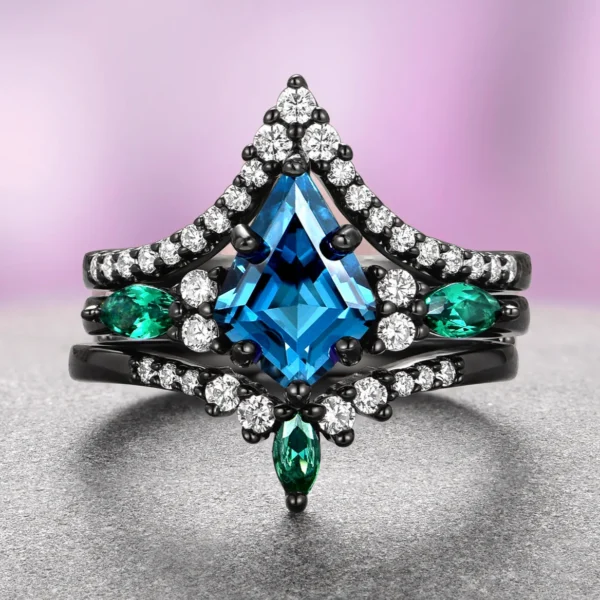
Black has quietly become one of the most versatile looks in modern ring design. It reads as clean and contemporary rather than loud, and it pairs with almost anything a person already wears. Yet “black” is not a single thing. Two rings can both be described as black and still look completely different in the hand, because a black ring gets its color from either a surface finish or the material itself, and because the texture of that surface changes how the color behaves. Understanding those differences is the fastest way to choose a ring that matches the mood you are actually after.
This guide walks through the choices in plain terms: the difference between matte and polished black, how an applied finish compares with a naturally dark material, how black behaves alongside colored stones, how it shifts under different lighting, and how to match all of that to the way you live and dress. None of it requires technical expertise. It just asks you to look closely and decide what you want the ring to say.
Matte Black Versus Polished Black
The single biggest decision is texture. A polished black surface is reflective. It catches light in bright points, shows a hint of your surroundings, and gives the ring a sleek, almost liquid quality. Because it reflects, a polished black band tends to look dressier and a little more dramatic, and it visually recedes and advances as your hand moves. If you like jewelry that has presence and a bit of shine, polished black delivers that without the warmth of a traditional metallic tone.
A matte or brushed black surface does the opposite. It scatters light instead of bouncing it back, so the color looks deep, even, and understated. Matte black tends to read as modern and quiet, the kind of finish that looks intentional rather than flashy. It also shows fewer surface reflections, which some people prefer because the color stays consistent from every angle. Between the two extremes sit satin and softly brushed finishes, which offer a middle path: a gentle glow rather than a mirror or a flat matte. If you are choosing a black finish such as an applied plating color, it helps to understand what black ruthenium is and how that kind of surface treatment creates a dark tone with a subtle, cool character.
Applied Black Finishes Versus Naturally Dark Materials
Black in a ring comes from one of two broad sources, and it is worth knowing which you are looking at. The first is an applied finish, where a dark tone is added to the surface of a metal to give it color. Applied finishes tend to produce a rich, uniform black with a cool undertone, and they can be paired with either matte or polished textures depending on the design. The second source is a naturally dark material, where the color is part of the substance itself rather than a coating on top of it.
In general terms, applied finishes often give designers the most control over tone and shine, which is why so many contemporary black rings use them. Naturally dark materials, by contrast, tend to carry a distinctive character of their own, sometimes with faint variation across the surface that an applied finish would not have. Neither approach is better in the abstract. What matters is the look you prefer: the even, engineered depth of a finished surface, or the inherent quality of a material that is dark all the way through. Reading a product description carefully usually tells you which category a ring falls into.
How Black Looks Next to Colored Stones
One of the strongest reasons to choose a black finish is contrast. A dark surface acts like a backdrop, and colored stones tend to look brighter and more saturated against it. Blues and greens in particular gain a vivid, jewel-like intensity when they sit in a black setting, because the eye reads the color against the darkness with nothing competing beside it. Warm stones such as reds and ambers pick up a striking, glowing quality for the same reason.
The effect is a little like framing. A pale or white metal setting shares the spotlight with the stone, while a black surround steps back and lets the color lead. This makes black a smart choice if the whole point of the ring is a bold central color, or a scatter of small bright accents. If you want the stones to feel soft and blended instead, a black finish may be too much contrast, and a lighter tone would suit better. So the question to ask is simple: do you want the color to pop, or to whisper? Black pushes firmly toward pop.
How a Black Finish Reads in Different Light
Black is more responsive to lighting than people expect, and it is worth picturing a ring in more than one setting before deciding. In bright daylight, a polished black surface shows its reflections most clearly, revealing highlights and a sense of depth, while a matte black looks its deepest and most solid. Under warm indoor lighting, black softens and can take on a faint charcoal or gunmetal character rather than reading as pure ink. In dim or evening light, a black ring becomes a quiet silhouette, which is part of its appeal for understated wear.
Texture drives most of this. A reflective finish is essentially a mirror, so it changes constantly as the light and your hand move, giving the ring a lively quality. A matte finish is far more stable and looks nearly the same across conditions, which is reassuring if you want predictability. If you can, look at any black ring near a window and again under a lamp. The two views tell you far more than a single studio photo, because they show you the full range of how the finish will actually behave day to day.
Matching the Finish to Lifestyle and Wardrobe
A black ring is unusually easy to style, which is a large part of its modern appeal. Because black is neutral, it sits comfortably next to almost any outfit and any other jewelry tone, from bright silver-white metals to warm golden ones. It does not fight with a wardrobe the way a strong color can. That said, the finish you pick should still suit your habits and your taste.
- A matte black band tends to look relaxed and contemporary, and it blends easily into everyday, casual, and minimalist wardrobes.
- A polished black ring leans dressier and more expressive, making it a natural pick for evenings, events, or anyone who likes a bit of shine.
- Satin and softly brushed blacks are the flexible middle ground, comfortable in both work settings and off-duty looks.
- If you already wear a lot of one metal tone, black acts as a calm anchor that ties mixed pieces together rather than clashing with them.
Think about how visible you want the ring to be. Matte keeps things subtle; polished draws the eye. Both are easy to live with, so the choice is really about the impression you want to give. For a sense of how these finishes appear across a range of real designs, browsing this curated black-ring edit is a useful way to compare textures and tones side by side before you settle on one.
Questions to Ask Before You Choose
Once you know the vocabulary, narrowing the field is quick. Running through a short set of questions turns a vague preference for “something black” into a clear, confident choice you will be happy to wear.
- Do I want reflective shine or a deep, even matte? This is the first and most defining decision.
- Is the black coming from an applied surface finish or a naturally dark material, and do I have a preference between the two?
- Will there be colored stones, and do I want them to pop with high contrast or stay soft and blended?
- Where will I wear this most, and how will the finish read in that light, whether daylight, office, or evening?
- Does the finish suit my everyday style, or is it meant to stand apart for special occasions?
Answering these in order tends to point straight at the right ring. If you want understated and modern, lean matte. If you want drama and reflection, lean polished. If color is the star, let black frame it. There is no universally correct answer, only the one that fits your eye and your life.
A black ring is one of the most flexible statements in jewelry: neutral enough to wear with anything, distinctive enough to feel deliberate. Focus first on the texture, then on how the color plays against any stones and how it behaves in the light you live in. Get those two things right and the finish will look considered rather than accidental, which is exactly what a well-chosen black ring should feel like on the hand.