Medically Reviewed by: Dr. A. Mehta, MD, Board-Certified Dermatologist (Hair & Scalp Disorders)
Last Updated: January 2026
If braids biologically increased hair growth speed, they would be a standard medical recommendation for treating hair thinning and hair loss. They are not.
Instead, dermatologists and trichologists consistently describe braids as a protective styling method that supports length retention, not accelerated follicle growth.
This article explains the science clearly: how hair actually grows, what braids can realistically do, where the myth comes from, and how to use braids in a way that protects both the scalp and the hairline.
Quick Answer
Do braids make hair grow faster?
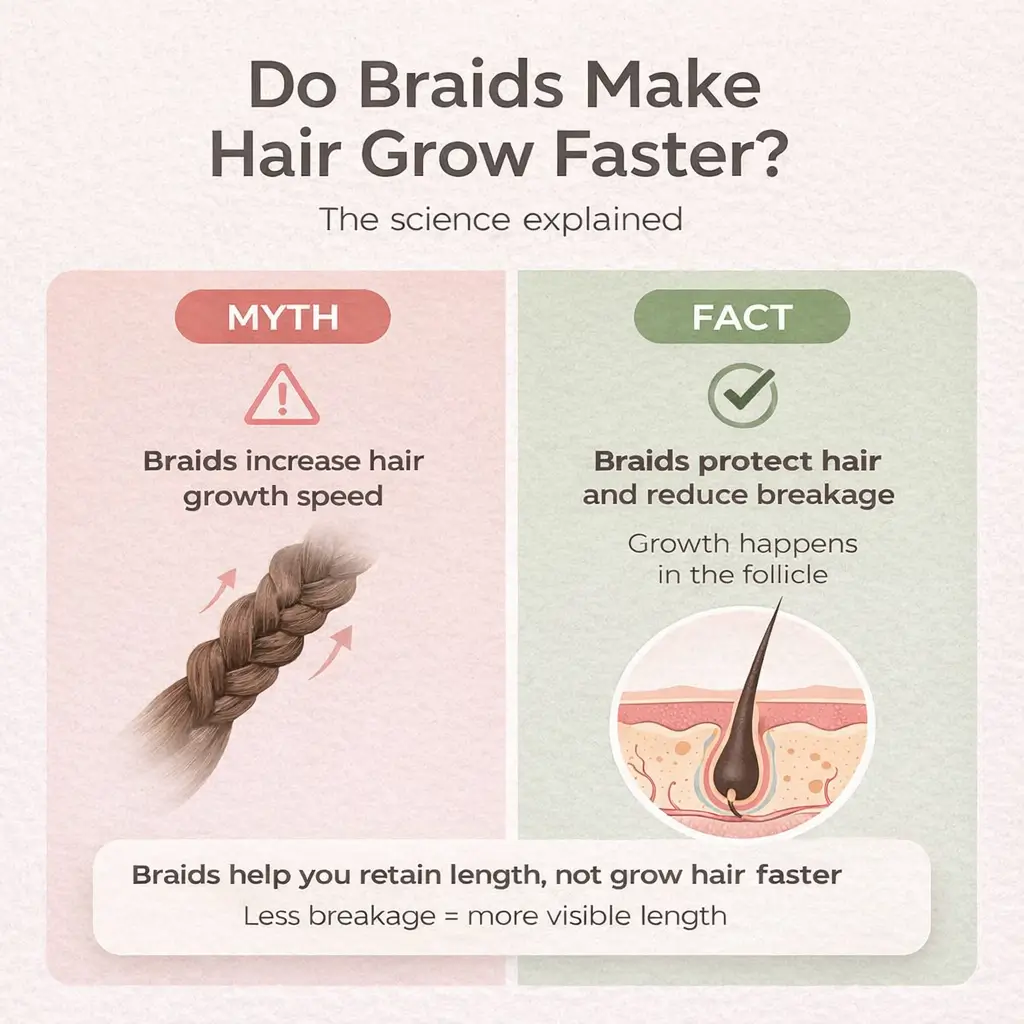
No. Braids do not change the biological growth rate of hair follicles.
What do they help with?
Braids reduce breakage, limit daily manipulation, and protect fragile ends, allowing you to retain more of the hair you naturally grow each month.
The common belief that hair grows “faster” in braids usually comes from seeing more retained length after weeks of reduced damage.
How Hair Growth Actually Works
The Hair Growth Cycle
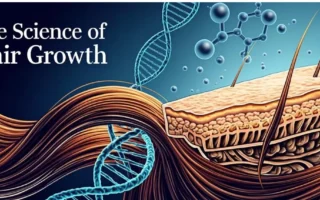
Hair growth is controlled by follicles beneath the scalp and follows a predictable biological cycle:
- Anagen (Growth Phase): Active growth lasting 2 to 7 years, largely determined by genetics
- Catagen (Transition Phase): Short phase where growth stops and the follicle shrinks
- Telogen (Resting Phase): Hair rests and eventually sheds before a new cycle begins
During the anagen phase, hair grows approximately 0.3 to 0.5 millimeters per day, according to the National Institutes of Health (NIH). This rate is influenced by genetics, hormones, age, and overall health.
Once hair emerges from the scalp, it is biologically inactive tissue. Braids, oils, wigs, or topical products applied to the hair shaft cannot alter follicle activity happening beneath the skin.
Braids vs Hair Growth: Fact vs Myth
Why Braids Do Not Speed Up Growth
Hair growth occurs below the surface of the scalp. Styling methods, including braiding, do not send signals to follicles to increase production speed.
Claims that braids “boost circulation enough to increase growth” are not supported by clinical dermatology research. While gentle scalp massage may improve comfort or reduce tension, it does not override genetically programmed growth rates.
In other words, braids do not make hair grow faster. They simply reduce the reasons hair breaks off before you can see that growth.
How Braids Support Length Retention
Braids protect hair from the most common causes of breakage:
- Daily friction from clothing and bedding
- Frequent detangling and brushing
- Heat styling damage
- Progressive split ends
When breakage decreases, retained length increases. This creates the appearance of faster growth even though the follicle growth rate remains unchanged.
If your hair grows about 1.2 cm per month but you lose half of that length to breakage from daily styling, you may only see 0.6 cm of visible progress. Wearing braids for six weeks reduces that breakage, allowing the full growth to remain. The growth didn’t change, but the results did.
The Protective Benefit of Braids When Done Correctly
When installed with appropriate tension and maintained properly, braids can function as an effective protective style.
Styles That Typically Support Retention
- Medium-sized box braids with balanced weight
- Knotless braids that reduce tension at the root
- Loose cornrows for short-term protection
Extremely small braids, heavy extensions, or styles that pull tightly at the hairline place excessive stress on follicles and increase the risk of damage.
When Braids Can Undermine Hair Growth Goals
Traction Alopecia Explained
Traction alopecia is hair loss caused by prolonged or repetitive tension on the follicle.
What happens biologically:
Continuous pulling creates chronic inflammation around the follicle. Over time, this inflammation can lead to fibrosis, or scar tissue formation, which permanently blocks new hair growth from that follicle.
Early warning signs include persistent scalp soreness, bumps along the hairline, and thinning at the temples or nape. Addressing tension early is critical, as late-stage traction alopecia may be irreversible.
Scalp Itching and Buildup
Itching while wearing braids is usually caused by dryness, product buildup, sweat accumulation, or sensitivity to synthetic hair coatings. It is not a reliable sign of hair growth.
Weight and Overextended Wear Time
Heavy extensions and leaving braids installed beyond six to eight weeks increase the risk of breakage during removal and place unnecessary stress on follicles. Longer wear does not improve outcomes and often reverses progress.
How to Use Braids Safely for Healthier Hair
Before Braiding: Build the Right Foundation
Installing braids on a compromised base traps problems against the scalp for weeks.
- Clean and clarify the scalp: Removing sweat, dead skin, and residue reduces inflammation and itch once airflow is limited
- Detangle gently from ends upward: This minimizes snapping of weakened strands near the root
- Moisturize and seal the ends: Ends are the oldest part of the hair shaft and most prone to splitting
During Wear: Protect the Follicle
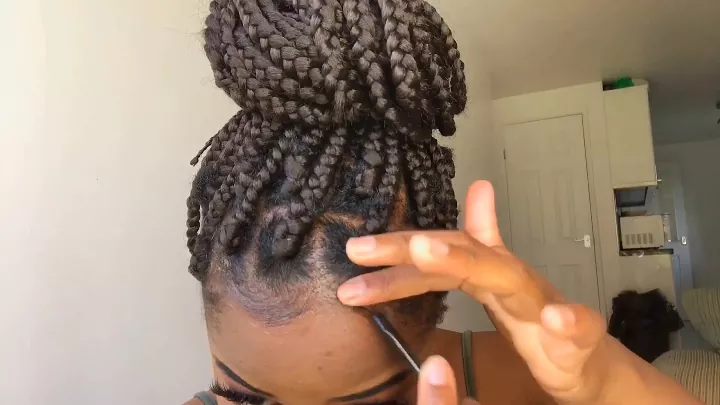
Braids should feel secure but never painful. Discomfort is an early warning sign, not a sign of effectiveness.
- No prolonged tightness beyond 24–48 hours: Ongoing soreness indicates excessive tension
- Light scalp cleansing every 1–2 weeks: Helps maintain a stable environment for normal hair cycling
- Avoid heavy oils that trap debris: Lightweight scalp products reduce itch and buildup
Removal Matters More Than Most People Realize
A significant amount of braid-related breakage happens during takedown, not during wear.
Shed hairs naturally accumulate while braided and must be released carefully. Slow sectioning, finger detangling before comb use, and generous slip from conditioner or oil help separate shed hair without snapping active strands.
Rushing removal can undo weeks of successful length retention in a single session.
Frequently Asked Questions
Do braids help hair grow faster?
No. Braids do not change follicle growth speed. They reduce breakage, allowing you to retain more of the hair that naturally grows each month.
Why does my hair look longer after wearing braids?
Because less hair breaks off. Reduced manipulation, tucked ends, and minimal heat allow accumulated growth to remain visible.
Are knotless braids safer than traditional box braids?
They can be, because tension is distributed more gradually at the root. However, excessive weight or poor installation can still cause damage.
Can braids cause hair thinning or hair loss?
Yes. Chronic tension from tight or heavy braids can lead to traction alopecia if not addressed early.
How long should hair rest between braid installs?
Most scalps benefit from one to two weeks of rest to allow inflammation to settle and natural shedding to normalize.
How long is it safe to keep braids in?
For most people, four to six weeks is optimal. Extending beyond eight weeks increases the risk of matting and breakage during removal.
Is scalp itching a sign of hair growth?
No. Itching usually signals dryness, buildup, or irritation and should be addressed promptly.
Final Verdict
Braids do not increase the biological speed of hair growth. What they offer is protection from mechanical damage, allowing more of your naturally grown hair to remain intact.
When installed gently, worn for an appropriate duration, and removed carefully, braids can support healthier long-term outcomes. When installed tightly or worn excessively, they can undermine hair density and follicle health.
The science is clear: braids help you keep length, not create it.